

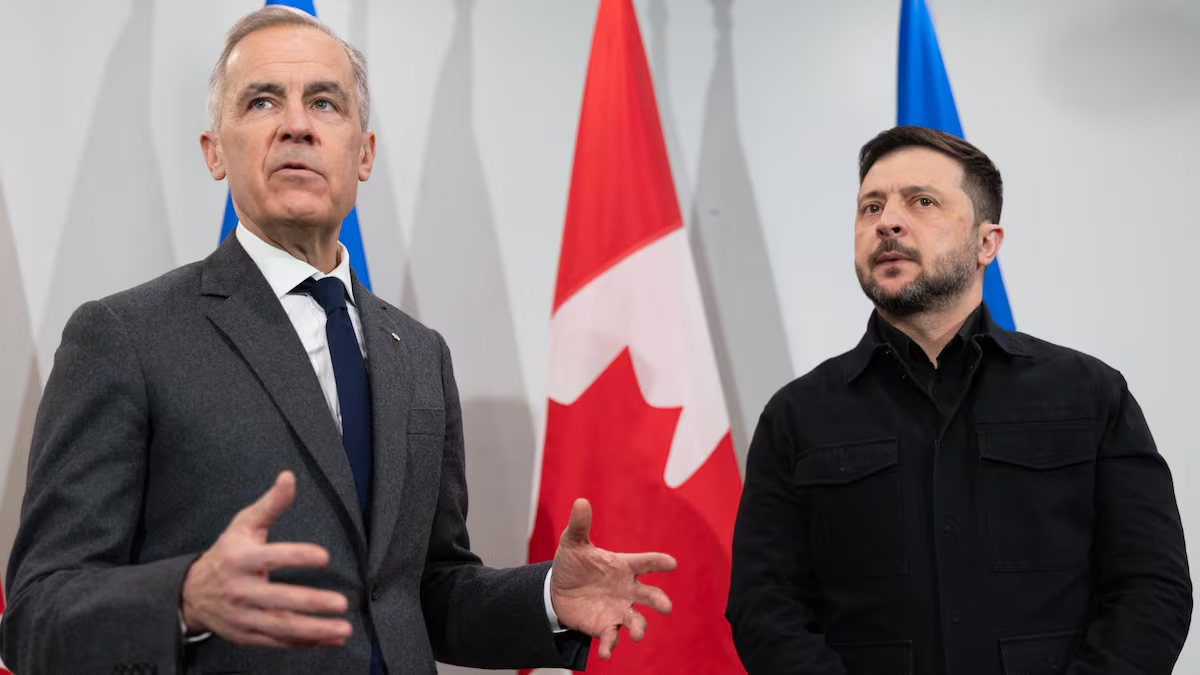
Diplomatic tensions between Canada and Russia escalated this week after Moscow sharply criticized a newly announced Canada-Ukraine drone production partnership, accusing Canada of fuelling the conflict in Ukraine and warning that it would respond to Ottawa’s actions.
The dispute centres on a recently announced agreement involving Ukrainian drone manufacturer Airlogix and Ontario-based Sentinel R&D. The partnership could result in drones being produced in Canada and supplied to support Ukraine’s defence efforts as the country continues to resist Russia’s ongoing military aggression.
During a media briefing in Moscow, Russian Foreign Ministry spokesperson Maria Zakharova strongly criticized the agreement, describing Canada as a “warmonger” and accusing Ottawa of contributing to the conflict. Zakharova also stated that she intended to publicly disclose the address of the Canadian company involved in the partnership, a move that further heightened concerns about the increasingly hostile rhetoric surrounding the issue.
Russian officials argued that the agreement enables Ukraine to secure military-related supplies through third-party countries and claimed that Canada’s actions contradict its public calls for peace and stability. Moscow has repeatedly criticized Western nations for providing military assistance to Ukraine and has accused NATO countries of prolonging the conflict.
Russia’s ambassador to Canada has also condemned the arrangement, alleging that Canada is seeking economic benefits from the conflict. Russian officials indicated that the drone production agreement is being considered in Moscow’s broader military and political assessments regarding the war in Ukraine.
In Ottawa, Defence Minister David McGuinty dismissed the criticism and emphasized that Canada remains committed to supporting Ukraine. Speaking to reporters on Parliament Hill, McGuinty said Canada would not be intimidated by Russian statements and would continue working alongside allies to assist Ukraine in defending its sovereignty and territorial integrity.
McGuinty noted that criticism from Moscow was not unexpected given the ongoing support being provided by NATO countries to Ukraine. He reaffirmed Canada’s commitment to monitoring developments while maintaining what he described as steadfast support for the Ukrainian people.
The latest exchange reflects the continuing geopolitical tensions stemming from Russia’s actions in Ukraine. Russia first occupied and annexed Crimea in 2014 before launching a full-scale invasion of Ukraine in 2022. The conflict has since become one of the most technologically advanced wars in modern history, with drones playing an increasingly central role in surveillance, targeting, logistics, and battlefield operations.
Military analysts note that drone technology has evolved rapidly during the conflict and now accounts for a significant share of battlefield activity and casualties. As a result, partnerships focused on drone production and innovation have become strategically important for Ukraine and its allies.
The Canada-Ukraine agreement underscores Ottawa’s continued support for Kyiv at a time when Western nations are seeking new ways to strengthen Ukraine’s defence capabilities. However, it has also drawn sharp reactions from Moscow, adding another layer of tension to an already strained relationship between Canada and Russia.
Despite Russia’s criticism and warnings, Canadian officials have indicated that support for Ukraine remains a key component of Canada’s foreign and defence policy. As the war continues into its third year since the full-scale invasion, diplomatic disagreements between Russia and Western nations show little sign of easing.