

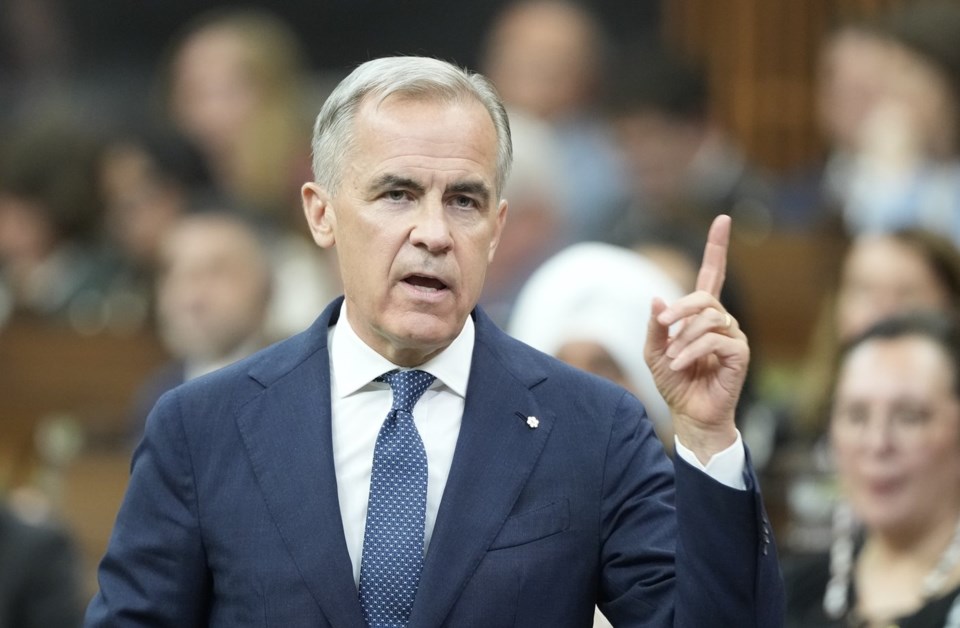
Prime Minister Mark Carney convened a virtual meeting with Canada’s premiers on Wednesday as the federal government prepares for critical trade negotiations with the United States and Mexico amid growing uncertainty over the future of the Canada-United States-Mexico Agreement (CUSMA).
The meeting came at a pivotal moment following comments from U.S. President Donald Trump indicating that his administration is not inclined to renew the trade pact before the scheduled July 1 review deadline. The remarks have raised concerns among governments, businesses, and investors on both sides of the border about the future of North America’s most important trade agreement.
According to the Prime Minister’s Office, Carney briefed provincial and territorial leaders on the status of ongoing discussions with the United States regarding the future of CUSMA and outlined Canada’s strategy for upcoming negotiations. The agreement governs trade among Canada, the United States, and Mexico and plays a critical role in supporting millions of jobs and billions of dollars in cross-border commerce.
Following the meeting, Doug Ford said the premiers were assured that Canada would continue negotiating in good faith while working toward a successful outcome. Ford noted that businesses are increasingly concerned about uncertainty surrounding trade rules and are seeking stability and predictability for future investment decisions.
Ford, who recently met with industry leaders and policymakers in Washington, D.C., said uncertainty remains the dominant issue raised by American and Canadian business groups. He emphasized that companies on both sides of the border want clarity regarding the future of trade relations and the regulatory environment in North America.
In addition to trade discussions, federal and provincial leaders reviewed Canada’s long-term energy and infrastructure plans. Carney presented details of the federal government’s national electricity strategy, which aims to double Canada’s electricity generation capacity by 2050 to meet growing demand driven by population growth, industrial expansion, and the transition to cleaner energy sources.
The meeting also marked the first gathering of premiers since Danielle Smith announced plans for a referendum this fall on whether Albertans should hold a future vote on provincial separation. The announcement has intensified national discussions about federal-provincial relations and economic priorities.
At the same time, tensions continue between Alberta and British Columbia regarding proposals to expand pipeline infrastructure to Canada’s West Coast. Carney has signalled support for advancing discussions on major energy projects while working with provincial governments to strengthen Canada’s economic competitiveness.
Following the meeting, Smith said premiers had an opportunity to discuss their priorities concerning trade relations with both the United States and Mexico. She also highlighted the importance of developing Canada’s energy sector and strengthening the national economy during a period of global uncertainty.
Smith said there was broad support among provincial and territorial leaders for collaborative efforts to unlock Canada’s energy potential and position the country as a leading global energy producer.
The discussions occurred only weeks before the formal review of CUSMA begins on July 1. Trade experts view the upcoming review as one of the most consequential economic negotiations facing Canada in recent years, particularly given the uncertainty created by the Trump administration’s position on the agreement.
Separately, National Chief Cindy Woodhouse Nepinak met with Carney on Wednesday to discuss Indigenous priorities and federal legislative initiatives. Their discussions focused on preparations for a First Ministers’ meeting on First Nations issues later this year, as well as the federal government’s legislative agenda and upcoming 2026 budget.
Woodhouse Nepinak emphasized the importance of involving First Nations as full partners in major national initiatives, including infrastructure projects, clean water investments, economic development, and emerging technologies such as artificial intelligence. She also reaffirmed the commitment of First Nations communities to stand alongside Canadians in responding to trade pressures and tariffs imposed by the United States.
As Canada prepares for potentially difficult negotiations with its largest trading partner, Wednesday’s meeting highlighted a growing effort by federal, provincial, territorial, and Indigenous leaders to present a united front on issues affecting the country’s economic future. With the July review fast approaching, governments across Canada are focused on protecting jobs, maintaining market access, and ensuring long-term economic stability in an increasingly uncertain global environment.