

As Canada prepares to welcome thousands of international soccer fans for the upcoming FIFA World Cup, Rogers Communications has announced a major $27 million investment to strengthen cellular and 5G+ network capacity in Toronto and Vancouver ahead of the global tournament.
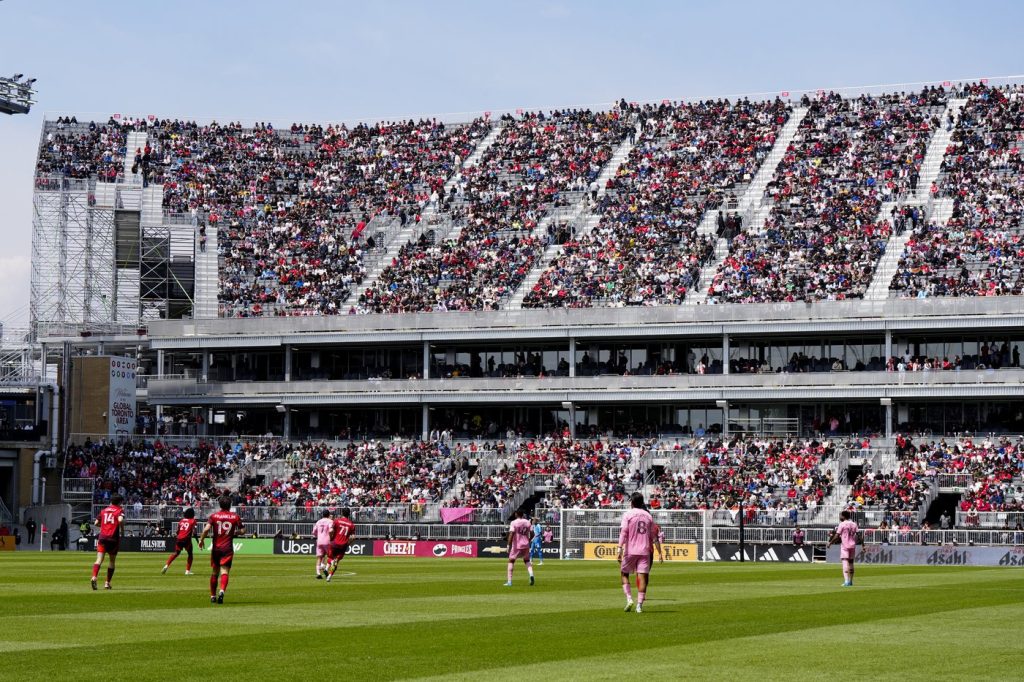
The telecommunications giant revealed that approximately $22 million has been invested in and around BMO Field in Toronto, while another $5 million has been dedicated to improving wireless infrastructure across key areas of Vancouver, including BC Place.
Canada is scheduled to host 13 FIFA World Cup matches in June and July, with six matches taking place in Toronto and seven in Vancouver. To accommodate the expected surge in fans, BMO Field has expanded its seating capacity by nearly 18,000 temporary seats, bringing the venue’s total capacity to over 45,000 spectators.
According to Rogers officials, the upgrades are aimed at ensuring uninterrupted mobile connectivity as massive crowds gather at stadiums, fan zones, transit hubs, hotels, and entertainment districts throughout the tournament.
Neel Dayal, Senior Director of Partnerships and Innovation at Rogers Communications, said modern sports fans expect seamless digital experiences while attending major events.
“Everybody is a social media star and everybody wants to share those moments that are really special to them,” Dayal said during the Canadian Telecom Summit in Toronto, emphasizing the importance of reliable wireless performance during globally significant events.
The improvements in Toronto include enhanced in-stadium wireless systems equivalent to adding 16 cell towers in downtown Toronto, along with additional 5G+ spectrum to improve upload and download speeds. Rogers also upgraded network infrastructure around Pearson International Airport, Union Station, TTC subway stations, hotels, and fan gathering areas.
Temporary mobile towers — known as Cells on Wheels and Cells on Light Facilities — will also be deployed in high-traffic zones throughout both cities to manage increased data demand during the tournament.
In Vancouver, Rogers expanded on its earlier $10 million network enhancement project completed ahead of Taylor Swift’s Eras Tour in 2024, which had already tested the network’s ability to handle enormous volumes of live uploads and streaming activity.
Industry experts say mobile connectivity has become a critical component of the modern fan experience, from accessing digital tickets to sharing live videos, making purchases, and navigating crowded venues.
The 2026 FIFA World Cup will be the largest in the tournament’s history, featuring 48 nations and 104 matches across host cities in Canada, the United States, and Mexico. Toronto and Vancouver are expected to welcome hundreds of thousands of visitors during the month-long event, creating a major economic and tourism boost for both cities.