

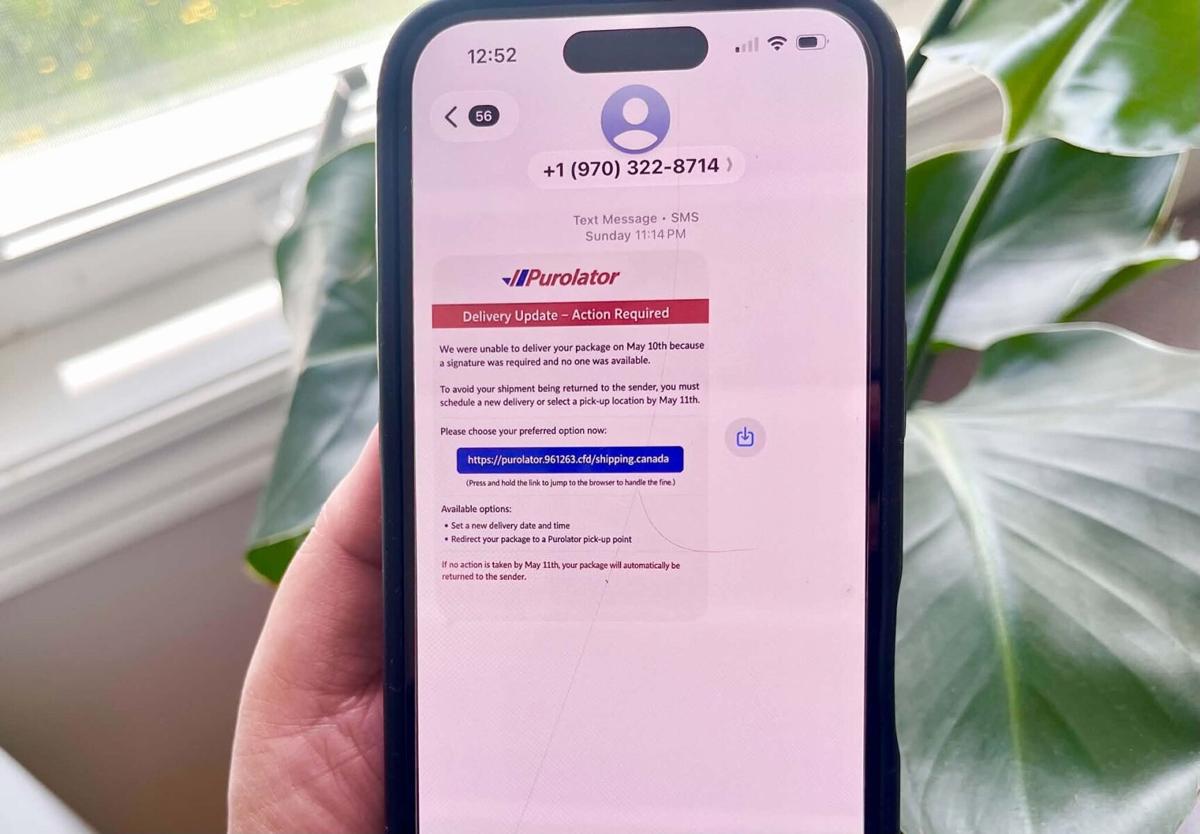
Ontario residents are being warned about a new wave of scam text messages impersonating Purolator, with cyber experts saying fraudsters are now using image-based texts to bypass smartphone security protections.
The latest “smishing” scam — short for SMS phishing — has been circulating across Ontario this week and is designed to trick recipients into clicking fake delivery links and handing over personal or financial information.
Scammers Using Image Texts to Evade Detection
Unlike traditional scam texts that include clickable links in plain text, the new messages arrive as image files containing screenshots of fake delivery notices.
The scam message claims a package could not be delivered because no one was available to sign for it. Recipients are then pressured to act immediately by setting up a new delivery or pickup location before the package is supposedly returned.
The message also directs users to a suspicious website link and references a “fine” or fee that must be resolved.
Abbas Yazdinejad, assistant professor of cybersecurity and director of the Decentralized Cybersecurity & Artificial Intelligence Lab, said the switch to image-based messages is deliberate.
“Normal filters can easily scan text and detect suspicious links, but when the link is inside an image, detection becomes harder,” Yazdinejad explained.
Cybersecurity experts warn that while simply receiving or opening the image is usually low risk, the real danger comes when users manually type the fraudulent link into a browser or provide personal information on fake websites.
Purolator Confirms Messages Are Fake
Purolator confirmed the circulating messages are fraudulent and not connected to the company.
One major red flag is the sender’s number. The scam texts were reportedly sent from regular U.S.-based phone numbers, while legitimate Purolator notifications usually come from short five-digit verification codes.
The company also warned customers that scammers can manipulate caller IDs and sender names to make messages appear legitimate.
Key Warning Signs of the Scam
Purolator and cybersecurity experts say residents should watch for several warning signs, including:
- Urgent or threatening language demanding immediate action
- References to penalties, fines or unexpected fees
- Suspicious links that do not use official Purolator domains
- Requests for personal, banking or credit card information
- Messages sent from unusual phone numbers
Purolator emphasized that it does not request:
- Credit card or banking information by text or email
- Passwords or account credentials
- Wire transfers or electronic payments for deliveries
- Personal information through WhatsApp or social media
What Customers Should Do Instead
Residents who receive suspicious delivery notifications are advised not to click links or respond to messages directly.
Instead, customers should:
- Visit Purolator’s official website manually
- Enter tracking numbers directly into the official tracking tool
- Contact Purolator using verified contact information
- Run antivirus or malware scans if they visited suspicious websites
- Contact their bank immediately if financial details were shared
Victims or targeted individuals are also encouraged to report scams to local police and the Canadian Anti-Fraud Centre.
Cybersecurity experts warn that delivery scams continue evolving rapidly, especially as criminals increasingly use artificial intelligence, image-based phishing and spoofed messaging systems to bypass traditional digital security filters.