

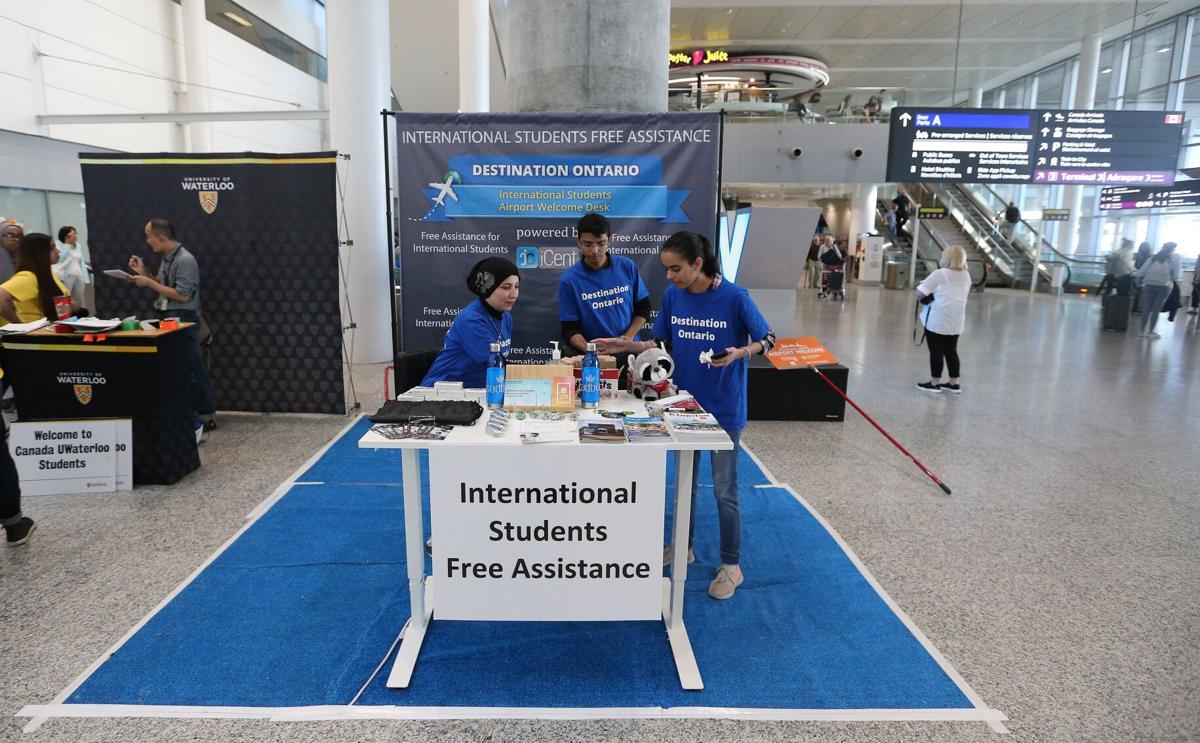
Canada is experiencing a major decline in new international student enrolment following federal immigration restrictions introduced over the past two years, although the overall number of international students in the country has fallen more gradually than initially expected, according to a new report from Statistics Canada.
The study found that the number of new international students entering Canada’s public post-secondary institutions dropped dramatically by 64 per cent, falling from 216,867 students in the 2023-24 academic year to an estimated 77,939 students in 2025-26.
The largest impact has been felt at colleges, where new international student intake declined by approximately 75 per cent over the two-year period. Universities also experienced a substantial decrease, with new enrolment dropping by 46 per cent.
Despite the steep decline in new admissions, the overall reduction in Canada’s international student population has been comparatively moderate because many students already enrolled continued their studies.
Statistics Canada estimates the total international student population declined by four per cent during the 2024-25 academic year and by 26 per cent in 2025-26, representing an overall decrease of roughly 124,000 students nationwide over two years.
As a result, Canada’s international student population has now fallen back to approximately 300,000 students — levels similar to those seen during the 2021-22 academic year amid the COVID-19 pandemic.
The report attributes the decline largely to recent federal government policies aimed at reducing the number of temporary residents in Canada and easing pressure on housing, infrastructure and public services.
Since 2024, the federal government has introduced caps on study permits while also tightening eligibility requirements for post-graduation work permits, particularly for non-degree programs. The government has stated its goal is to reduce temporary residents to five per cent of Canada’s total population, down from the current estimated 6.5 per cent.
The impact has varied across academic fields. Programs related to business, humanities, arts, social sciences, health and education experienced a combined decline of approximately 33 per cent in international enrolment over the two-year period.
Meanwhile, science, technology, engineering and mathematics (STEM) programs saw a comparatively smaller decline of 26 per cent, suggesting continued demand for technical and high-skilled education pathways.
Ontario is expected to experience the most significant regional impact, with full-time international student enrolment projected to decline by approximately 36 per cent — or nearly 92,000 students — over the two years.
Ontario’s share of Canada’s international student population is also expected to fall from 60 per cent to 54 per cent.
Other regions are projected to experience smaller declines, including 26 per cent in Atlantic Canada, 14 per cent in Quebec, 17 per cent in the Prairie provinces and 24 per cent in British Columbia.
Education experts say the declining numbers could create significant financial challenges for colleges and universities that have become increasingly dependent on international tuition fees in recent years.
The report also signals a major shift in Canada’s immigration and education landscape, as policymakers attempt to balance economic needs, labour shortages and pressures linked to rapid population growth.