

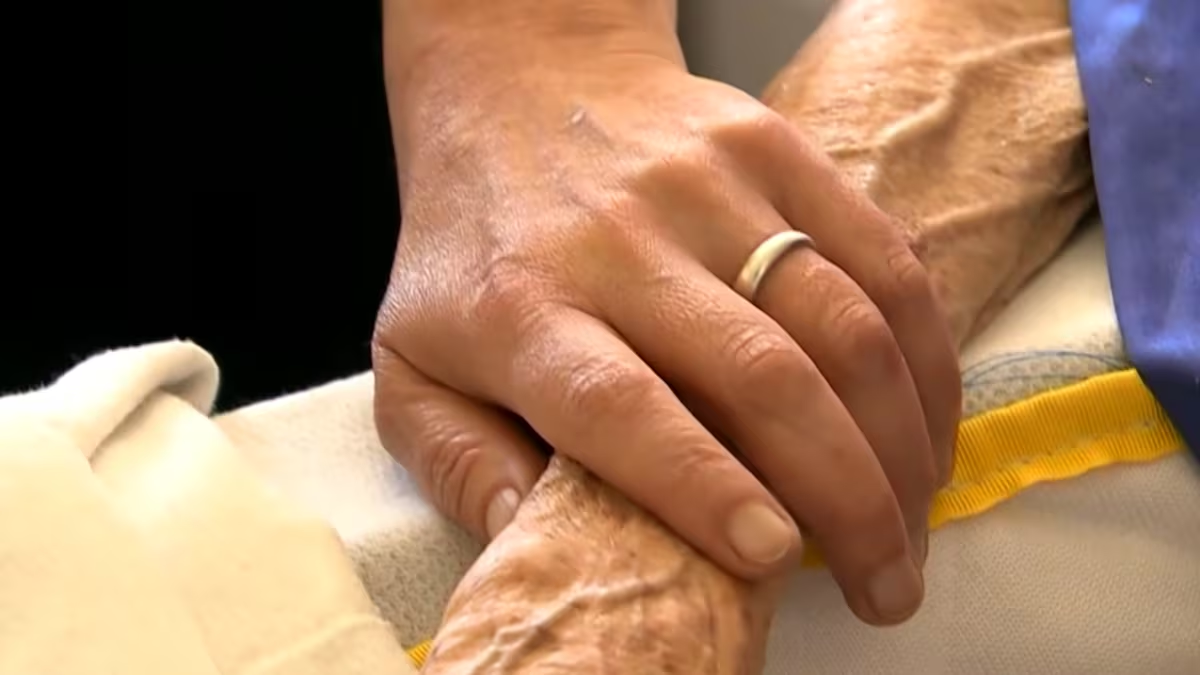
A new national survey has exposed a profound ethical divide across Canada, as citizens remain sharply split on whether doctors should be allowed to refuse providing Medical Assistance in Dying (MAID) based on religious or moral beliefs. The findings highlight a complex intersection of personal faith, patient rights, and the evolving role of healthcare in one of the country’s most sensitive debates.
According to research conducted by Research Co., public opinion is almost evenly divided. While 42 per cent of Canadians oppose allowing healthcare providers to refuse MAID on religious grounds, 41 per cent believe such refusals should be permitted. The remaining respondents remain undecided, underscoring the uncertainty and nuance surrounding the issue.
The divide becomes even more apparent when viewed across regions and demographics. Opposition to faith-based refusals tends to be higher in provinces like Alberta and Quebec, while support varies elsewhere. Older Canadians, particularly those aged 55 and above, are more likely to reject the idea of doctors opting out of providing assisted dying services, reflecting generational differences in how ethical and medical responsibilities are perceived.
At the core of the debate is a fundamental question: should a doctor’s personal beliefs ever limit access to legal medical services? While MAID is permitted under Canadian law, physicians are not legally required to provide it, and many healthcare institutions navigate this by transferring patients to other providers or facilities that can accommodate such requests.
Interestingly, the survey reveals a contrast in public attitudes toward other medical services. Support for allowing doctors to refuse abortion services on religious grounds is notably lower, suggesting that Canadians may view end-of-life care differently from other areas of healthcare when it comes to balancing personal belief and professional duty.
For communities across the country, including those in Ontario and the Greater Toronto Area, the findings reflect a broader societal conversation that is far from settled. As Canada continues to refine its approach to MAID and healthcare rights, policymakers may face increasing pressure to address both patient access and provider conscience in a way that respects diversity while ensuring equitable care.
In the end, the debate over MAID is not just about policy—it is about values, dignity, and the kind of healthcare system Canadians want to build. And as this survey shows, the nation remains deeply divided on where that balance should lie.