

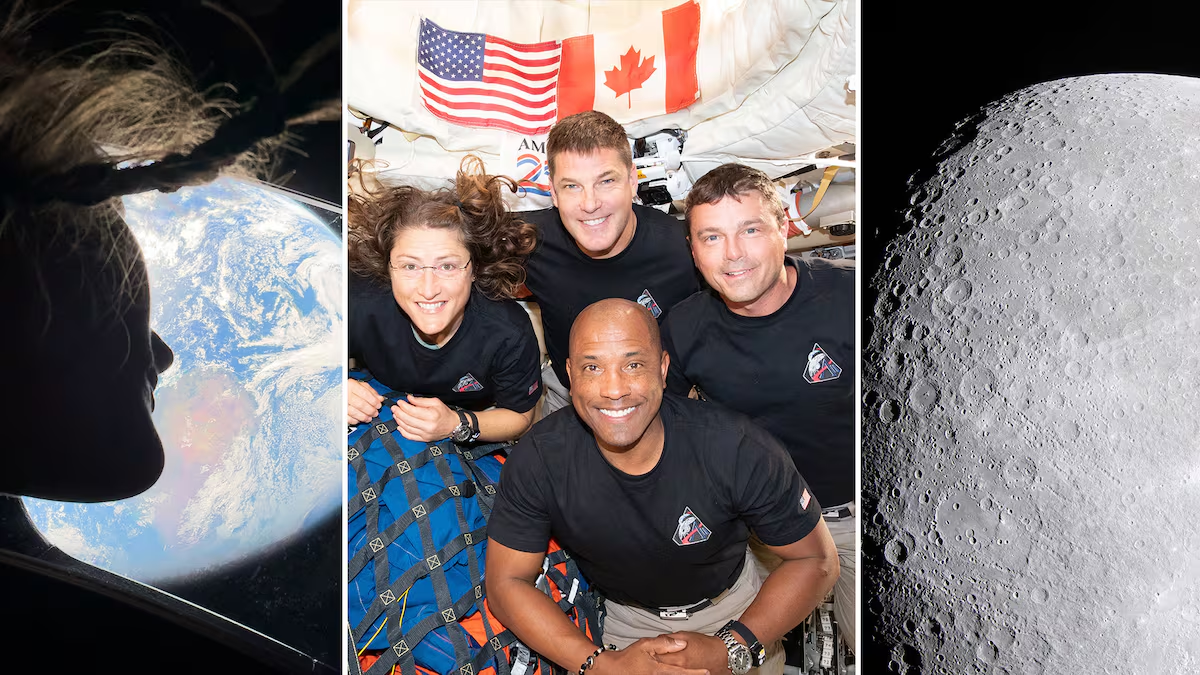
After a journey that has redefined modern space exploration, the crew of Artemis II is now on the brink of a dramatic return to Earth—one that will test precision, technology, and human endurance in equal measure. Hurtling through space at nearly 40,000 kilometres per hour, the Orion capsule carrying four astronauts, including Canadian Jeremy Hansen, is preparing to plunge back through Earth’s atmosphere in a blazing descent that will culminate in a Pacific Ocean splashdown.
The final phase of the mission is as complex as it is intense. As the capsule re-enters the atmosphere, it will be engulfed in a searing fireball reaching temperatures of approximately 2,700 degrees Celsius, with its heat shield serving as the only barrier protecting the crew. Every step—from trajectory correction burns to module separation and parachute deployment—has been meticulously timed, forming a high-stakes sequence where precision is critical.
This mission has already secured its place in history. Hansen and his fellow crew members have travelled farther into space than any humans before them, marking a milestone not seen since the Apollo era. For Canada, Hansen’s role represents a defining moment, highlighting the nation’s growing contribution to global space exploration and inspiring communities across the country.
Beyond the technical achievement, the journey has also been deeply human. From sharing conversations with leaders and students back on Earth to capturing breathtaking images of the planet from space, the crew has bridged the vast distance between Earth and the moon in ways that resonate far beyond science. One image, described by mission control as a reminder that “we are still one world,” has become symbolic of the mission’s broader significance.
The mission has also pushed the boundaries of research. Onboard experiments, including cutting-edge “organ chip” technology, are expected to unlock new insights into how space travel affects the human body—knowledge that could shape the future of long-duration missions and even medical science on Earth.
As the spacecraft descends and recovery teams stand ready, the focus now shifts to execution. Weather conditions, timing, and coordination will all play crucial roles in ensuring a safe return. Once recovered, the astronauts will undergo medical evaluations before returning to mission control in Houston, closing the final chapter of this extraordinary expedition.
Artemis II is more than a mission—it is a statement of what is possible when nations collaborate, technology advances, and humanity dares to explore. As the capsule streaks back toward Earth, it carries not just astronauts, but the hopes of a new era of discovery—one that is already looking beyond the moon.