

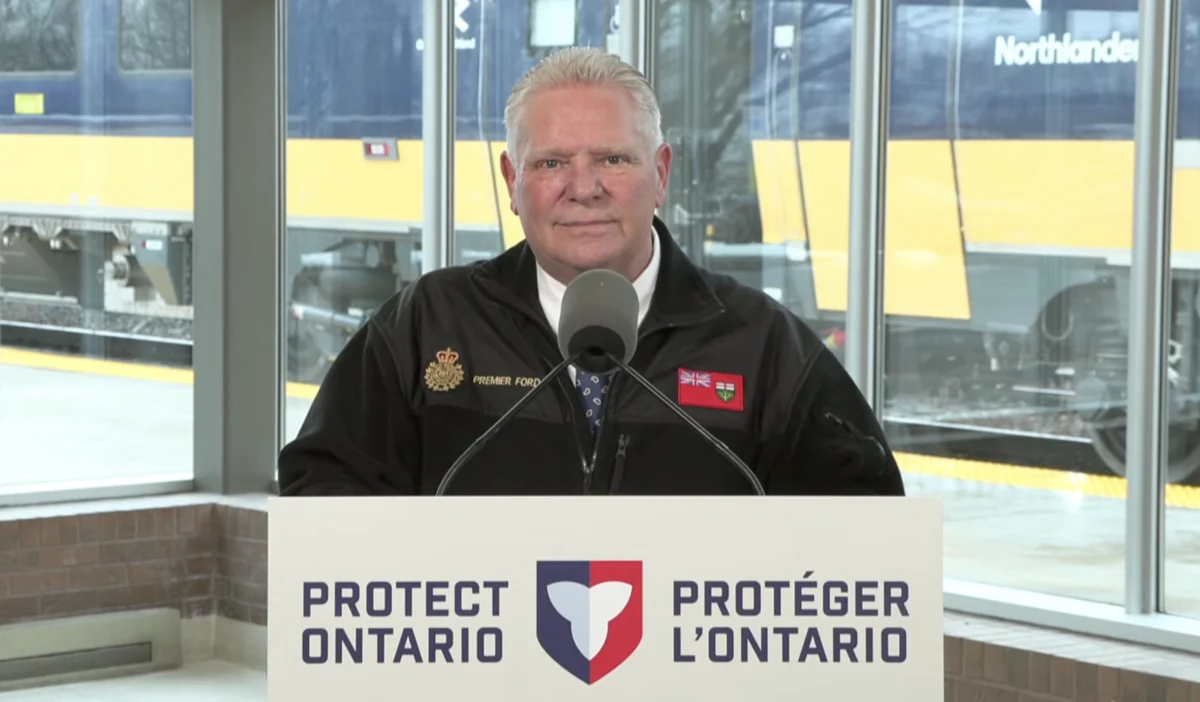
- Doug Ford Unconcerned by Potential Liberal Majority, Highlights Cooperation with Mark Carney
In a political moment that could reshape the balance of power in Ottawa, Doug Ford is making one thing clear—he’s not losing sleep over the possibility of a federal Liberal majority. Speaking with characteristic bluntness, the Ontario premier brushed aside speculation about political shifts in the capital, insisting his focus remains firmly on results for Ontarians rather than party lines.
Ford’s remarks come as Mark Carney edges closer to securing a majority government, following a series of high-profile floor crossings that have pushed the Liberals to the brink of full control in Parliament. Yet, rather than engaging in partisan rhetoric, Ford struck a pragmatic tone, emphasizing that cooperation—not political labels—is what matters most.
“I don’t look at political stripes and I don’t give two hoots,” Ford said, underscoring his willingness to work with leaders across the spectrum. It’s a stance that reflects a broader shift toward collaboration at a time when economic pressures, housing challenges, and infrastructure needs demand coordinated action between provincial and federal governments.
That cooperation is already yielding tangible results. Ford pointed to a recent multi-billion-dollar agreement with Ottawa aimed at accelerating homebuilding by cutting residential development charges in half for three years. Paired with a federal move to ease the burden of harmonized sales tax on new homes, the initiative could translate into significant savings for buyers and help address Ontario’s ongoing housing shortage—an issue deeply felt in fast-growing communities across the province.
Despite occasional political theatre, including light-hearted moments that hint at their evolving dynamic, Ford described his working relationship with Carney as “extremely well,” reinforcing the message that governance, not partisanship, is driving decisions. At a time when public confidence often hinges on collaboration, the tone signals stability rather than confrontation.
Still, the road to a Liberal majority has not been without controversy. The recent wave of MPs switching parties has raised questions about political accountability, with critics arguing that such moves should require fresh mandates from voters. Ford, however, distanced himself from the debate, noting that elected officials will ultimately answer to their constituents at the ballot box.
With key byelections set to determine whether the Liberals secure full control, the political landscape could soon shift decisively. But for Ontario’s premier, the message remains consistent—regardless of who holds power in Ottawa, the priority is ensuring the province continues to receive support and deliver progress.
As the federal picture evolves, Ford’s approach highlights a practical reality of modern governance: in a time of complex challenges, cooperation may matter far more than political colours.