

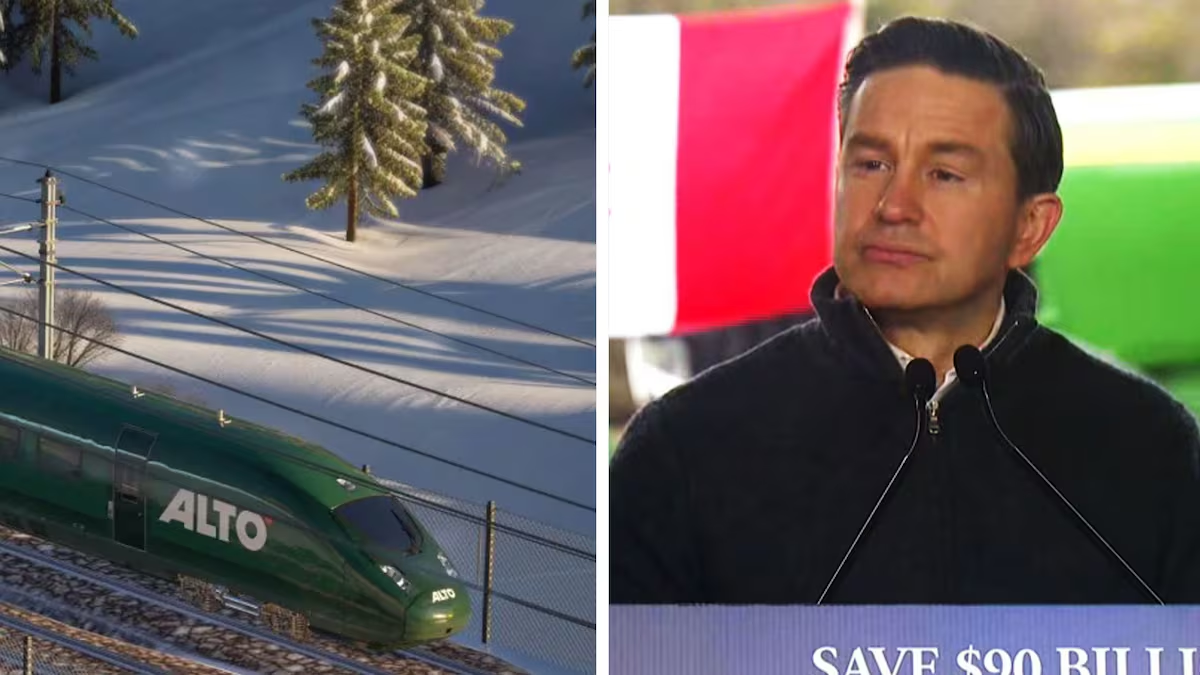
OTTAWA, March 31, 2026 – Conservative Leader Pierre Poilievre is calling on the federal government to cancel the proposed high-speed rail project linking Toronto and Quebec City, describing it as an expensive and unnecessary use of taxpayer funds.
Speaking in Peterborough, Ontario, Poilievre criticized the initiative as a multibillion-dollar “boondoggle,” arguing it would disrupt communities while offering limited benefits to many Canadians. He warned that the project could lead to farmland and private property being expropriated, affecting residents who may not even have access to the rail service due to limited stops.
The project is being overseen by Alto, which estimates the total cost of the proposed network could range between $60 billion and $90 billion. The first phase, expected to connect Montreal and Ottawa, is scheduled to begin construction around 2029 or 2030, forming part of a broader 1,000-kilometre corridor intended to transform rail travel in central Canada.
Plans for the network include seven stops—Toronto, Peterborough, Ottawa, Laval, Montreal, Trois-Rivières and Quebec City—with trains operating on dedicated electric tracks at speeds of up to 300 kilometres per hour. Travel times would be significantly reduced, with journeys between Toronto and Montreal taking about three hours, and less than an hour between Montreal and Ottawa.
Despite these projections, opposition to the project has been growing in several communities. A coalition of farmers, municipal leaders and residents has raised concerns about land expropriation, environmental disruption and limited local access. In eastern Ontario, multiple municipalities have passed resolutions opposing proposed routes, while agricultural groups in both Ontario and Quebec have called for the project to be paused.
There are also competing views at the municipal level. While some communities oppose the plan, Kingston city council has expressed conditional support for a southern route, provided the city is included as a stop and the line follows Highway 401 to minimize environmental impact—conditions not currently part of the proposal.
Poilievre also pointed to existing challenges with Via Rail, arguing that improving current rail services would be a better use of funds. He suggested that the billions earmarked for the high-speed rail project could instead be directed toward reducing national debt, lowering taxes and addressing inflation.
He further criticized the timeline, stating that Canadians would not see the benefits of the project for more than a decade, contrasting it with the rapid construction of the historic Canadian Pacific Railway in the late 19th century.
The high-speed rail proposal remains a major infrastructure initiative under consideration, with ongoing debate over its cost, impact and long-term value to Canadians.