

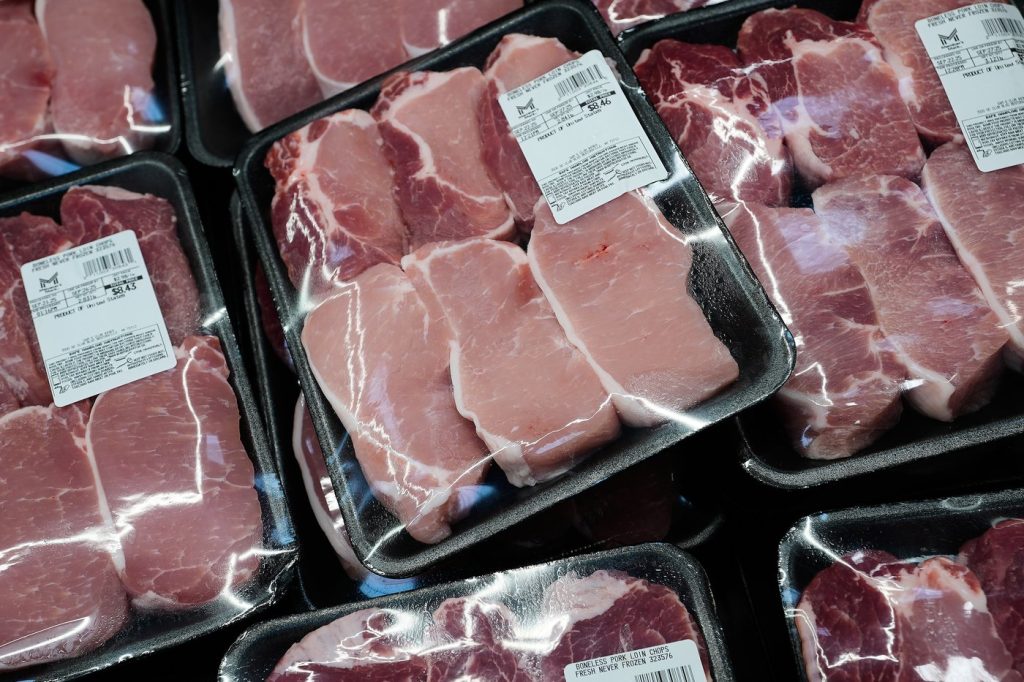
Debate grows over transparency after Health Canada approves PRRSV-resistant pigs for food
A coalition of farmers and environmental organizations is calling on Health Canada to introduce mandatory labelling for pork derived from gene-edited pigs, arguing Canadians deserve to know how their food is produced.
Earlier this year, Health Canada approved the sale of pigs genetically edited to resist Porcine Reproductive and Respiratory Syndrome Virus (PRRSV), a disease that can cause severe illness and death in swine herds. The federal agency concluded the animals are safe for human consumption.
In a statement to The Canadian Press, Health Canada said that addressing PRRSV could help farmers reduce herd losses, lower antibiotic use and improve animal welfare. The department also stated that the gene-edited pigs do not present greater health risks than conventional pigs and are nutritionally equivalent.
Because regulators identified no safety concerns, Health Canada said special labelling will not be required.
The pigs were developed by Genus PLC and have been edited by removing a portion of a gene that makes them vulnerable to PRRSV. According to the department, aside from that change, the animals are comparable to other pigs currently raised on Canadian farms.
However, critics argue that the absence of mandatory labels limits consumer choice.
Lucy Sharratt, coordinator of the Canadian Biotechnology Action Network, says Canadians would have no way of knowing whether gene-edited pork is on store shelves if it enters the market.
She points to polling suggesting strong public interest in identifying genetically engineered foods and says transparency is key to maintaining public trust.
Canadian law does not require food products to be labelled as genetically engineered, though voluntary standards exist for companies that choose to disclose that information.
Concerns are also growing about the future of those voluntary standards. The Canadian General Standards Board, which oversees the existing labelling framework, is scheduled to close on March 31. Advocacy groups say it is unclear what will happen to the standards once the board winds down.
A letter sent last week to Health Minister Marjorie Michel, signed by members of the Canadian Biotechnology Action Network, the National Farmers Union and Safe Food Matters, argues that mandatory labelling is “essential,” particularly as gene-editing technology advances and more products could seek approval.
Producers are also weighing potential market impacts.
René Roy, chair of the Canadian Pork Council and a pork producer in Quebec, says he is uncertain whether consumers in Canada or abroad would embrace gene-edited pork. He indicated he does not plan to raise PRRSV-resistant pigs on his farm at this time.
Canada exports roughly 70 per cent of its pork production, valued at approximately $5.5 billion annually, meaning international market acceptance remains a significant consideration for producers.
Vincent Breton, president of Quebec-based duBreton, a company certified organic in Canada and the United States, said that if labelling remains voluntary, companies that choose not to use gene-editing technology may bear added costs to demonstrate their products are conventional or organic.
Both Breton and Sharratt have said their concerns are not necessarily about the science itself, but about ensuring customers can make informed purchasing decisions.
Health Canada maintains that its review process is rigorous and informed by international standards developed over decades in consultation with global bodies such as the World Health Organization and the Food and Agriculture Organization of the United Nations.
The department says it evaluated data submitted by Genus PLC using internationally recognized scientific assessment methods. It also noted that similar pigs are authorized for food use in the United States, Brazil, Colombia and the Dominican Republic, though they are not yet available in food systems.
Ultimately, Health Canada says it will remain up to individual Canadian pork producers to decide whether to raise the gene-edited animals if they become commercially available.
As the debate unfolds, the issue is likely to centre on balancing innovation in agriculture with public confidence in food regulation. Whether Ottawa moves toward mandatory labelling could shape not only consumer trust at home but also the future direction of gene-edited products in Canada’s agri-food sector.