

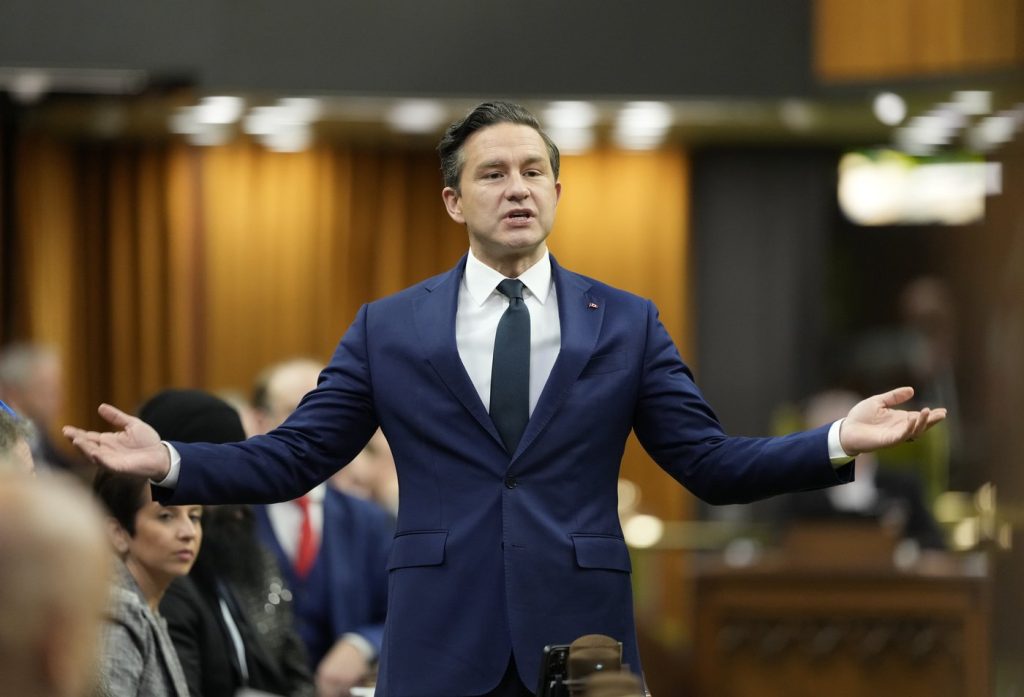
Conservative Leader Pierre Poilievre is calling on the federal government to immediately approve a pipeline to Canada’s Pacific Coast, warning that recent U.S. actions in Venezuela could threaten Canada’s oil exports to American refineries.
In a letter to Prime Minister Mark Carney posted on social media Tuesday, Poilievre said the United States’ weekend military action in Venezuela has “altered the global energy landscape” and could lead to increased competition for Canadian heavy crude in the U.S. market.
U.S. President Donald Trump ordered a military raid on Caracas that resulted in the capture of Venezuelan President Nicolás Maduro, who was taken to New York to face charges. Trump has also said he intends to take control of Venezuela’s oil industry and encourage American companies to revive the sector.
Canada and other democracies have long condemned Maduro’s government following the 2018 and 2024 elections, which were widely viewed as illegitimate, as well as years of reported human rights abuses.
Poilievre said Canada was right not to recognize what he called an “illegitimate regime” and reaffirmed his support for the Venezuelan people’s right to choose their own future. However, he warned that Venezuela’s heavy crude production could rebound quickly, putting it in direct competition with Canadian oil at U.S. refineries designed to process heavy crude.
“Every barrel the United States sources from Venezuela could mean one less barrel these refineries would buy from Canada,” Poilievre wrote. “We therefore need new markets to sell to, and we need them quickly.”
According to the U.S. Energy Information Administration, Venezuela holds the world’s largest proven crude oil reserves—about 303 billion barrels, or roughly 17 per cent of global reserves. While the country’s oil industry has suffered years of neglect and sanctions, some analysts say production could double or even triple from current levels of about 1.1 million barrels per day with sufficient investment, even if a full recovery would take longer.
Poilievre also criticized Carney for not clearly stating his support for an oil pipeline to British Columbia’s West Coast, noting that many Liberal MPs oppose such projects.
In November, the federal Liberals signed a memorandum of understanding with the Alberta government committing to work toward at least one coastal pipeline to move Alberta bitumen to Asian markets. The agreement specifies that any pipeline would be privately financed, with Indigenous communities receiving benefits and opportunities for co-ownership.
The memorandum also states that a pipeline application will be ready for submission to the federal major projects office by July 1. That office was created early in Carney’s mandate to accelerate approvals for large infrastructure projects.
Poilievre said Conservatives are calling on the government to approve the proposed pipeline within 60 days of receiving the application.
Alberta Premier Danielle Smith echoed that message on Monday, saying developments in Venezuela underscore the need to quickly diversify Canada’s oil export markets.
“These events emphasize the importance that we expedite the development of pipelines,” Smith wrote on social media, including a route to the coast. She added that Alberta is working to submit an application to the major projects office and expects the federal government to act “with urgency.”