

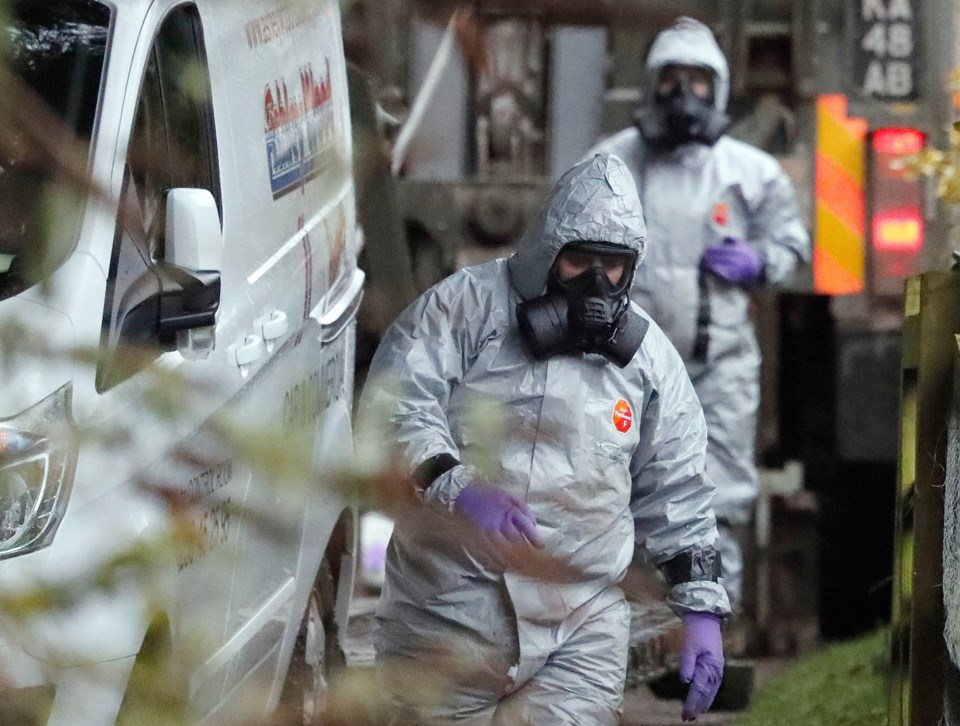
Britain has imposed sanctions on Russia’s GRU military intelligence agency and summoned Moscow’s ambassador after an official inquiry concluded that President Vladimir Putin authorized the 2018 nerve agent attack on British soil.
The government announced Thursday that the entire GRU apparatus would face sanctions for what officials described as “reckless” operations, including the Novichok poisoning in Salisbury that targeted former Russian military intelligence officer Sergei Skripal. Skripal, who spied for Britain and was jailed in Russia before being freed in a 2010 spy swap, had settled in the U.K. years before the attempted assassination.
Skripal and his daughter Yulia fell gravely ill in March 2018 after Novichok was applied to the door handle of his Salisbury home. A responding police officer, Nick Bailey, was also poisoned. All three survived, but the contamination later claimed another life: Dawn Sturgess, a British woman who unknowingly sprayed the nerve agent on her wrist from a discarded perfume bottle months later. Her partner survived but also became critically ill.
Russia has repeatedly denied involvement, and Putin at the time dismissed Skripal as a “scumbag” of no importance to the Kremlin. But the inquiry, led by former U.K. Supreme Court Justice Anthony Hughes, determined that the attack “must have been authorized at the highest level” and that Sturgess died as a direct consequence of the GRU’s assassination attempt.
U.K. authorities have charged three suspected GRU operatives in connection with the Skripal attack, though extradition is unlikely given the absence of a treaty with Russia.
The sanctions announcement also identified eight alleged GRU cyber officers accused of targeting Yulia Skripal with malware five years before the poisoning.
Novichok, a Soviet-era military-grade nerve agent, is believed by Western experts to have been manufactured solely in Russia, though Moscow insists other nations possess the capability to produce it.
Prime Minister Keir Starmer called the inquiry’s findings “a grave reminder of the Kremlin’s disregard for innocent lives,” adding that Dawn Sturgess’s death stands as a permanent symbol of Russia’s “reckless aggression.”