

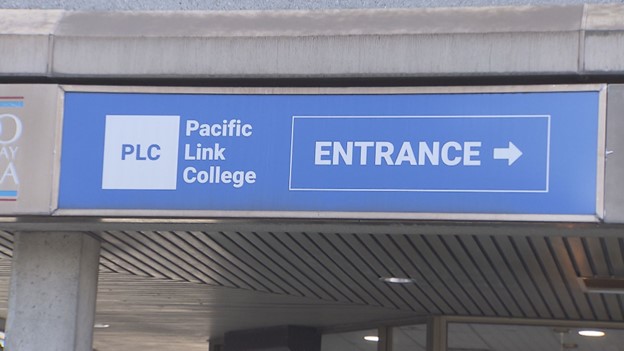
Hundreds of international students are searching for answers — and for new schools — after Pacific Link College in Surrey was abruptly shut down by British Columbia’s private-college regulator. The Private Training Institutions Regulatory Unit (PTIRU) cancelled the college’s designation certificate in October, ordering it to immediately stop delivering all programs amid a long list of serious violations.
The sudden closure has thrown students into uncertainty. Charukesh Kavya Chandrika Sivaprasad, who came from Kerala, India to study at Pacific Link, said a virtual information session hosted by the regulator was packed with worried classmates desperate for guidance. Students were told to begin filing for refunds, many of them unsure how to navigate the process without outside support.
The shutdown did not come as a surprise to advocates. Pacific Link College has been the subject of repeated complaints for years. In May, OMNI News reported that it was one of two private institutions ordered to refund students. Balraj Kahlon, co-founder of One Voice Canada, said his group has been fielding complaints since 2019, and the May report prompted even more students to come forward.
Documents reviewed by OMNI News reveal a pattern of misconduct cited by PTIRU: deceptive marketing claims, admitting students who did not meet requirements, unapproved programs being delivered, instructors lacking minimum qualifications, and work placements that did not match program objectives. Investigators also flagged a problematic attendance policy that allowed up to 90 consecutive days of absence, along with evidence of non-attendance and widespread academic failures.
Sivaprasad, who was nearing completion of his program, said he has now been told the college owes him roughly $18,000 — a refund amount verified by OMNI News. Others, he said, have heard nothing from the school, which has since taken down its website and is not responding to inquiries.
The Ministry of Post-Secondary Education and Future Skills confirmed it launched an inspection earlier this year, uncovering “serious violations” of the Private Training Act. That finding led to the cancellation of Pacific Link’s certification and the immediate halt of all training programs on Oct. 8.
Kahlon said the regulator’s intervention, while justified, came far too late. He argues that earlier action could have protected far more students from financial and academic harm. After years spent advocating for vulnerable newcomers navigating the private-college system, he said the sector remains rife with abuses — and that volunteers should not be left to act as watchdogs.
He warns that even now, as Pacific Link students look for new institutions, many of the replacement colleges offering seats have troubling histories of their own. “When I saw the list, I recognized names of colleges we’ve fought cases against for student refunds,” he said. “Even their hands aren’t clean.”
Kahlon estimates roughly 300 students are now trying to secure placement elsewhere or salvage their studies. With many lacking guidance, they face the risk of falling into more predatory programs. He argues B.C. should follow Ontario’s lead and block certain institutions from enrolling international students until stronger oversight is in place. “You should only bring students here if the program actually leads somewhere,” he said.
Despite a slowdown in the arrival of new international students following recent federal policy changes, Kahlon said thousands already in B.C. remain vulnerable. Without stronger regulation and more proactive enforcement, he warns, private colleges will continue to operate with little accountability — and students will continue to pay the price.