

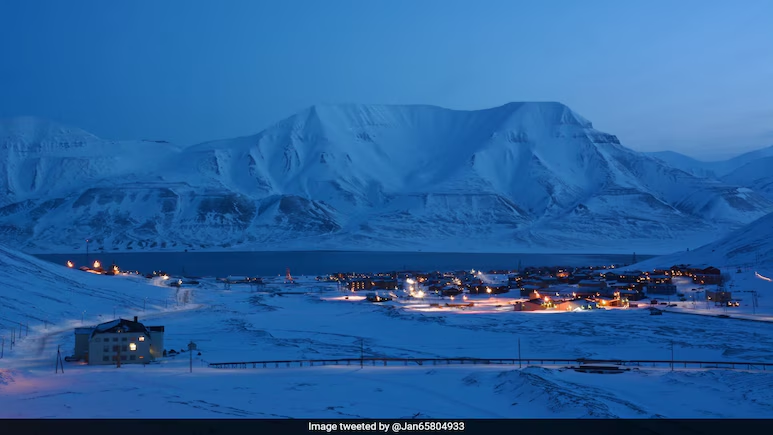
High above the Arctic Circle, Canada’s Alert base is about to plunge into more than four months without sunlight. Located on the northeastern tip of Ellesmere Island in Nunavut—just 817 kilometres from the North Pole—Alert is the northernmost permanently inhabited place on Earth. It hosts a small military and scientific community that endures some of the planet’s harshest conditions.
The polar night phenomenon begins there in mid-October, when the sun dips below the horizon and doesn’t rise again for 136 consecutive days. This year, residents saw their final sunset on October 13. The sun won’t return until February 27, according to the BBC. In the meantime, Alert will rely entirely on artificial light, as temperatures plunge to below –40°C and the psychological challenges of prolonged darkness set in.
Alert isn’t alone in experiencing this extended winter night. Across the Arctic and Antarctic Circles, several regions go through weeks or months without daylight each year:
- Svalbard and Jan Mayen, Norway – Polar night lasts about 111 days, from October 26 to February 15.
- Tromsø, Norway – The largest northern city in Norway spends 49 days without sunlight, from late November to mid-January.
- Utqiaġvik (formerly Barrow), Alaska – Endures around 65 days of darkness from mid-November to late January.
- Murmansk, Russia – Experiences roughly 40 days of polar night each winter.
- Ilulissat, Greenland – Faces extended darkness starting in late October.
- South Pole Station, Antarctica – Plunges into nearly six months of continuous night from March to September, a period used for vital scientific research.
Polar night occurs due to the tilt of Earth’s axis, which causes the sun to remain below the horizon during the winter months in high-latitude regions. The closer one gets to the poles, the longer this period lasts. Conversely, these same regions experience the “midnight sun” during summer—when the sun never sets, bathing the landscape in constant daylight.
For the personnel stationed at Alert, the months ahead mean isolation, intense cold, and adapting to a world where the sun simply doesn’t rise—a stark reminder of the extremes at the top of the world.