

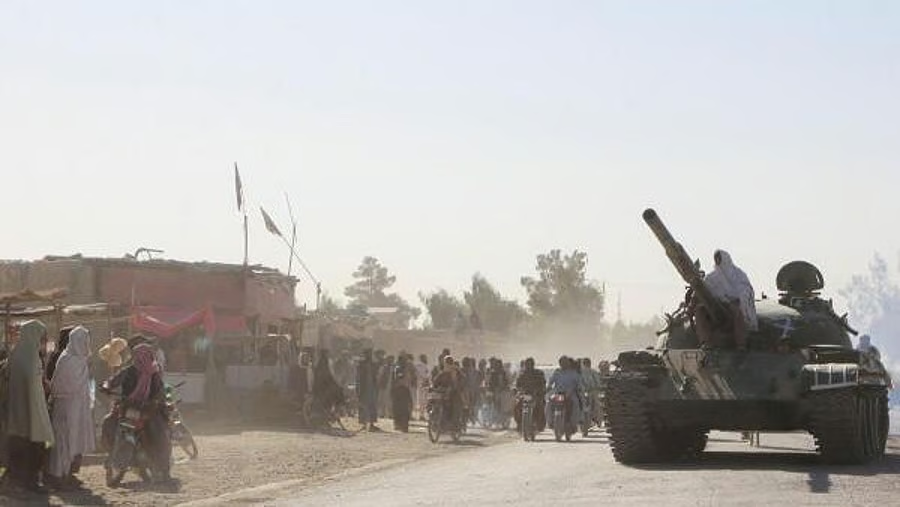
Kandahar/Islamabad — Pakistan conducted airstrikes in Afghanistan’s southern Kandahar province early Tuesday, marking a sharp escalation in hostilities between the two neighbours following days of intense fighting that has left dozens dead on both sides.
According to Afghan officials, Pakistani warplanes struck targets in the Spin Boldak district of Kandahar province, a key border crossing area between the two countries. The strikes reportedly hit suspected Tehreek-e-Taliban Pakistan (TTP) hideouts, killing and injuring scores of people. Residents described a series of loud explosions in the pre-dawn hours, with plumes of smoke rising from residential and mountainous areas.
The Afghan Taliban’s Ministry of Defence condemned the strikes, calling them a “violation of Afghanistan’s sovereignty and territorial integrity.” In a statement, it warned that “such provocative actions will bear serious consequences,” signalling a potential worsening of bilateral ties that have already been fraying for months.
Pakistani security officials said the strikes were part of “targeted counter-terrorism operations” aimed at TTP militants who have intensified attacks inside Pakistan in recent weeks. Islamabad has long accused the Taliban government of harbouring TTP fighters, a group ideologically aligned with the Afghan Taliban but focused on toppling the Pakistani state.
Tensions between the two countries flared last week when heavy cross-border clashes broke out in the Chaman–Spin Boldak region, resulting in dozens of casualties, including civilians. Pakistani forces accused TTP fighters of launching coordinated attacks from Afghan soil, while the Taliban said Pakistani troops had fired indiscriminately across the border.
This latest escalation comes as Pakistan faces a surge in domestic insecurity. Over the past year, TTP attacks have intensified, particularly in the northwestern Khyber Pakhtunkhwa province, straining the country’s security forces. Islamabad has repeatedly pressed Kabul to act against TTP sanctuaries, but the Taliban has resisted pressure, citing historical ties with the group and denying claims that it shelters militants.
Analysts warn that the airstrikes could mark a dangerous new phase in Pakistan–Afghanistan relations. “Islamabad appears to be signalling that it is willing to cross red lines to defend its security interests,” said a South Asia security expert based in New Delhi. “But such unilateral action risks destabilizing the already volatile border regions and provoking retaliation.”
The Kandahar airstrikes are likely to draw international attention amid growing concerns about regional instability. Both Pakistan and Afghanistan are grappling with economic crises and internal unrest, raising fears that escalating military action could undermine border security and spill over into wider conflict.
As of Tuesday afternoon, there were conflicting casualty figures. Local sources in Kandahar claimed more than 30 people had been killed, including both militants and civilians, while Pakistani officials maintained that the strikes only targeted “terrorist hideouts.” Independent verification remains difficult due to restricted access to the area.
The United Nations and several regional powers are expected to urge restraint in the coming days as the risk of further military escalation looms large.