

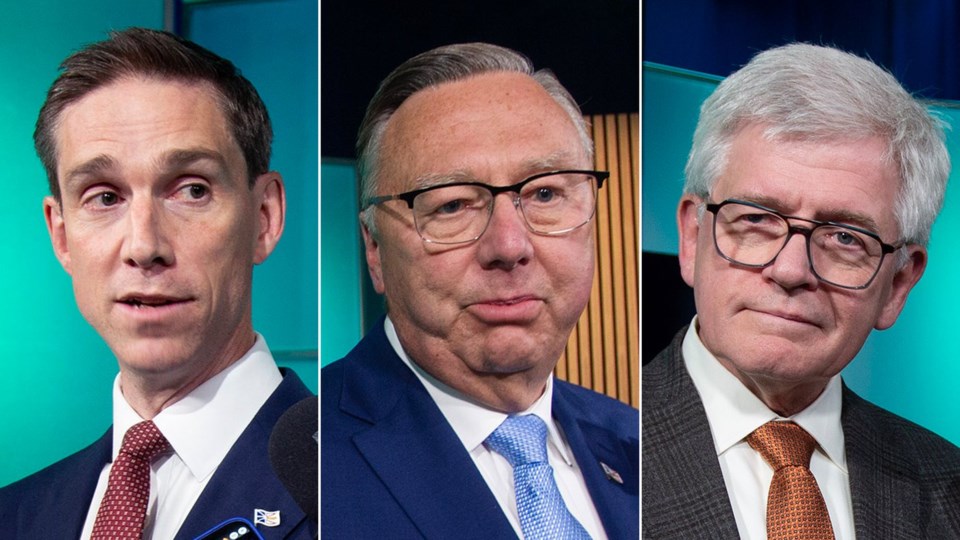
Newfoundland and Labrador voters delivered a decisive message on Tuesday, ousting the governing Liberals after a decade in power and handing a narrow majority to Tony Wakeham’s Progressive Conservatives.
The autumn election came down to a nail-biting finish. As ballots were counted, Wakeham’s Tories pulled ahead of Premier John Hogan’s Liberals after a see-saw battle, ultimately winning 21 of the legislature’s 40 seats—a gain of seven. The Liberals secured 15 seats, losing six, while the New Democrats doubled their presence to two seats. Two prominent Independents were also re-elected.
In his victory speech, Wakeham likened the campaign to a basketball game. “I’ve spent over 30 years coaching basketball, and you learn that no stat is less important than the score at halftime,” he told supporters. “It was only a couple of months ago that a whole lot of people were looking at the halftime score and thinking this election was over. Tonight, we all know it—there is nothing quite like a comeback.”
The Progressive Conservatives won 44.37 per cent of the popular vote, edging out the Liberals’ 43.43 per cent. Wakeham’s campaign focused heavily on health care, crime, and economic concerns, repeatedly asking voters whether their lives had improved under the Liberals’ four-term run.
He also took aim at Hogan’s proposed multibillion-dollar energy agreement with Quebec, vowing to have the deal independently reviewed before any final approval. “I will not sign any deal that Newfoundlanders and Labradorians do not approve in a referendum,” Wakeham pledged.
One of the new government’s top challenges will be addressing the province’s ballooning debt, which is projected to hit nearly $20 billion next year—the highest per capita debt in the country.
The Tory victory reflects shifting political winds. Earlier this year, Pierre Poilievre’s federal Conservatives picked up rural seats in Newfoundland despite Prime Minister Mark Carney’s national Liberal win. Similarly, the provincial PCs made gains across rural Newfoundland and Labrador.
For the Liberals, the loss followed a wave of cabinet resignations before the campaign began, including several senior ministers. Hogan, who centered his campaign on the Quebec energy deal, urged Wakeham in his concession speech to stay the course on Churchill Falls. “It is the best opportunity to secure our province’s future,” Hogan said. “Listen to the experts because there is no better deal, but there is a better future for our province.”
The NDP, led by Jim Dinn, celebrated modest gains despite limited expectations. “It’s going to be the NDP putting forward the ideas that will benefit all people of this province,” said Dinn, a 65-year-old former teacher who retained his St. John’s seat.
Automatic recounts will be triggered in any ridings decided by 10 votes or fewer, though the closest margin was 18 votes in Lewisporte–Twillingate, where the Tories narrowly beat the Liberals.