

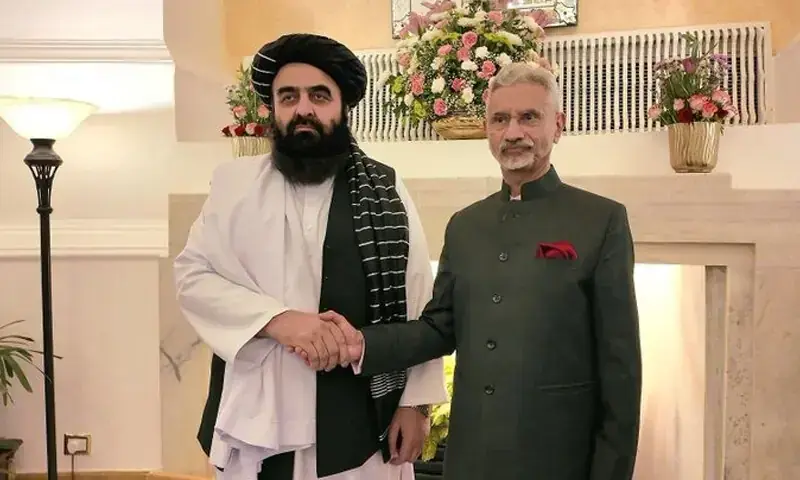
NEW DELHI/KABUL — India announced on Friday that it will reopen its embassy in Kabul, four years after closing it following the Taliban’s takeover of Afghanistan in 2021. The decision was revealed during talks between Indian Foreign Minister Subrahmanyam Jaishankar and Afghan Taliban Foreign Minister Amir Khan Muttaqi, marking the first visit to India by a Taliban leader since their return to power.
India had shut its diplomatic mission in Kabul when the U.S.-led NATO forces withdrew and the Taliban swiftly seized control of the capital. A smaller “technical mission” was opened in 2022 to facilitate trade, medical support, and humanitarian aid. That limited operation will now be upgraded back to a full embassy, Jaishankar confirmed.
“India is fully committed to the sovereignty, territorial integrity and independence of Afghanistan,” Jaishankar told Muttaqi during their meeting in New Delhi. “Closer cooperation between us contributes to your national development, as well as regional stability and resilience.”
Diplomatic Shift After Years of Distance
India’s move aligns it with around a dozen countries—including China, Russia, Iran, Pakistan, and Turkiye—that have maintained embassies in Kabul. Russia remains the only nation to have formally recognized the Taliban administration, while most others, including India, have adopted a cautious engagement strategy.
According to the Hindustan Times, Jaishankar emphasized India’s role as “a contiguous neighbour and a well-wisher of the Afghan people,” noting New Delhi’s interest in supporting Afghanistan’s development and stability.
Taliban Sees India as a ‘Close Friend’
Muttaqi welcomed the announcement, highlighting India’s humanitarian support in the wake of recent natural disasters.
“Afghanistan looks at India as a close friend. Afghanistan wants relations based on mutual respect, trade and people-to-people relations,” Muttaqi was quoted as saying.
He also noted that India was the first country to respond with aid following a recent earthquake in Afghanistan, underlining growing diplomatic warmth despite the lack of formal recognition of the Taliban government by New Delhi.
Geopolitical Context
The announcement comes shortly after Muttaqi attended a regional meeting in Moscow, where Afghanistan’s neighbours—including Pakistan, Iran, China, and several Central Asian states—issued a joint statement opposing the deployment of foreign military infrastructure in the region. The declaration was widely interpreted as a message to U.S. President Donald Trump, who has stated his objective of retaking control of Bagram Air Base near Kabul.
While India still does not officially recognize the Taliban regime, the reopening of its embassy is a clear signal of pragmatic diplomatic re-engagement. New Delhi has previously maintained a strong relationship with the pre-Taliban Afghan governments and has invested billions in infrastructure, education, and development projects across the country.
The move is expected to bolster India’s regional influence and facilitate closer economic, humanitarian, and political cooperation with Afghanistan, even as the international community continues to grapple with the question of formal recognition of the Taliban.