

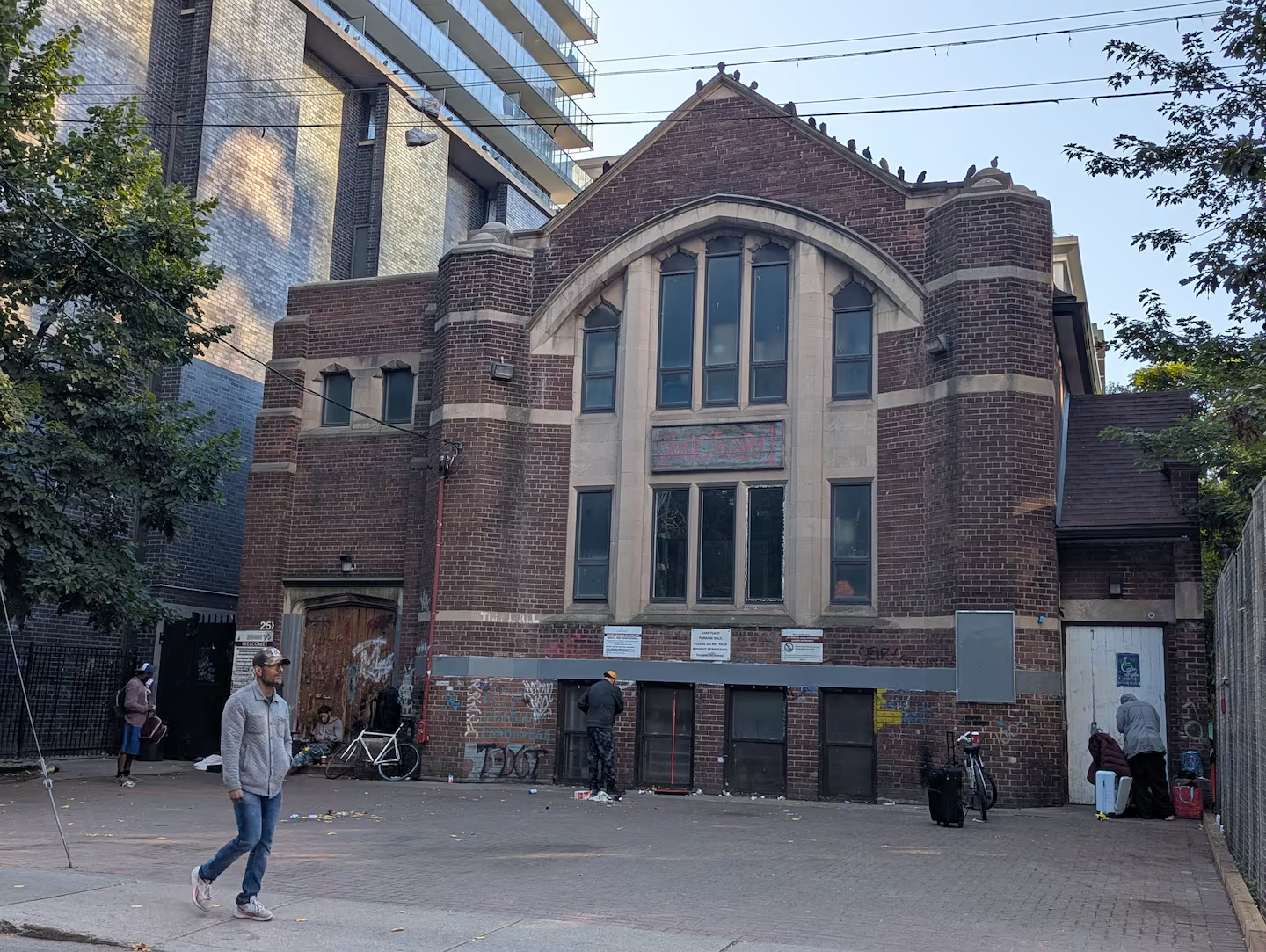
A legal showdown is brewing in downtown Toronto as the condominium board of CASA Condos at 33 Charles St. has filed a $2.3-million lawsuit against its neighbour, Sanctuary Ministries, a long-running church and drop-in centre serving unhoused and marginalized residents since 1992.
The condo corporation alleges Sanctuary has allowed “illegal, illicit, disruptive, interfering and egregious conduct” on its property — including open drug use, alcohol consumption, violent altercations, and harassment of residents — creating what it calls a “haven” for dangerous behaviour. The board is seeking damages, as well as a sweeping court injunction to ban Sanctuary’s clients from trespassing, threatening, or harassing condo residents and to compel Sanctuary to keep its property free from disruptive activity.
Condo Board President Peter McDonald said the lawsuit is about restoring safety for the building’s 421-unit community. “The number one issue is that people are afraid to walk along Charles Street,” he told CP24, calling Sanctuary “not a good neighbour” and accusing it of enabling criminal behaviour.
Sanctuary Ministries has vowed to fight back, insisting that its mission is to provide dignity and support to Toronto’s most vulnerable residents. “We’ve now been sued by the condominium next door because they feel inconvenienced by the homelessness that they see,” Sanctuary said in a statement. “A lawsuit won’t solve the housing crisis. We urge the condominium to drop the suit. If they don’t, we will defend against their allegations in court.”
Legal experts say the case will be difficult to prove in court, as it asks a social service provider to control the actions of all who visit or congregate nearby. Real estate lawyer Mark Weisleder noted the suit is likely as much about “making a statement” as it is about damages, but said it highlights the tension between urban revitalization and social services.
Urban planning scholar Luisa Sotomayor called the lawsuit an “exercise in power and privilege,” suggesting it reflects the gentrifying pressures reshaping Toronto’s downtown. “They want the location, the lifestyle, but seeing poverty is not part of that equation,” she said. “This is a battle for who belongs.”
The case could set a precedent for how Toronto balances property owners’ rights with the presence of social service providers in increasingly upscale urban neighbourhoods. Sanctuary must now file its statement of defence or a Notice of Intent to Defend if it intends to contest the claims.