

Canada and India’s relationship remains one of the most complex bilateral partnerships in modern diplomacy, shaped by over a century of shared history, a robust Indian diaspora in Canada, and alternating cycles of cooperation and tension.
The formal relationship began in 1947 after India’s independence, with Canada positioning itself as a bridge between New Delhi and the West. Early collaboration included major development aid and energy projects under the Colombo Plan, capped by Prime Minister Jawaharlal Nehru’s historic 1949 address to Canada’s Parliament.
However, disputes over Cold War alignments, Kashmir, and India’s nuclear ambitions soon emerged. A major rift followed India’s 1974 nuclear test using a Canadian-supplied reactor, leading Ottawa to freeze nuclear cooperation for decades. The 1985 Air India Flight 182 bombing by Canada-based Sikh extremists deepened mistrust, with India accusing Canada of mishandling extremist networks.
Despite these challenges, Indian immigration to Canada accelerated, especially among Punjabis, helping embed Indian culture into Canada’s social fabric. The 1990s brought renewed engagement through trade and cooperation in space research, counterterrorism, and legal assistance. Yet India’s 1998 nuclear tests triggered fresh Canadian sanctions.
A breakthrough came in the late 2000s with Prime Minister Stephen Harper’s India visit and reciprocal diplomacy from Prime Minister Manmohan Singh, culminating in a Nuclear Cooperation Agreement and uranium trade deals. Bilateral trade and student exchanges surged.
The Trudeau era from 2015 onward brought both outreach and renewed disputes. His 2018 trip to India was overshadowed by controversy over a convicted Sikh extremist’s presence at an event, and his public support for India’s farmers’ protests in 2020 further strained ties. Relations hit a low in 2023 after Canadian authorities alleged Indian involvement in the assassination of Khalistani figure Hardeep Singh Nijjar, leading to diplomatic expulsions and reduced consular operations.
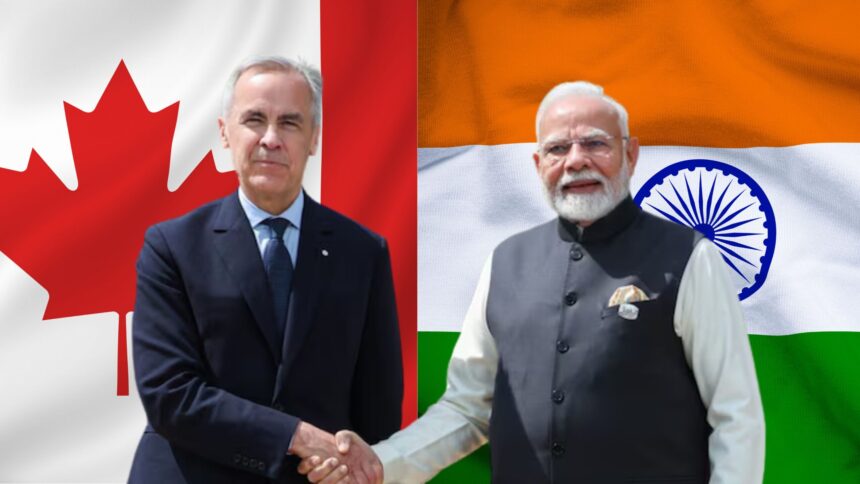
A tentative thaw began in 2025 under Prime Minister Mark Carney, who, alongside Indian Prime Minister Narendra Modi at the G7 Summit in Vancouver, emphasized cooperation in clean energy, AI, and counterterrorism, while reviving free trade talks. However, Carney’s solemn statement marking the 40th anniversary of the Air India tragedy underscored lingering sensitivities.
Trade remains a key pillar, with bilateral commerce reaching $9.36 billion in 2023. India exports pharmaceuticals, textiles, and auto parts, while Canada supplies coal, fertilizers, and wood products. Both sides have voiced interest in advancing a Comprehensive Economic Partnership Agreement, though talks have repeatedly stalled.
Today, more than 1.8 million Canadians are of Indian origin, making India the top source of immigrants, international students, and temporary workers. Cultural exchanges, direct flights, and sporting links like cricket and kabaddi continue to anchor the relationship.
Observers say the challenge for both Ottawa and New Delhi will be balancing domestic political pressures with strategic cooperation — a test that will define the future of this vital yet often strained partnership.