

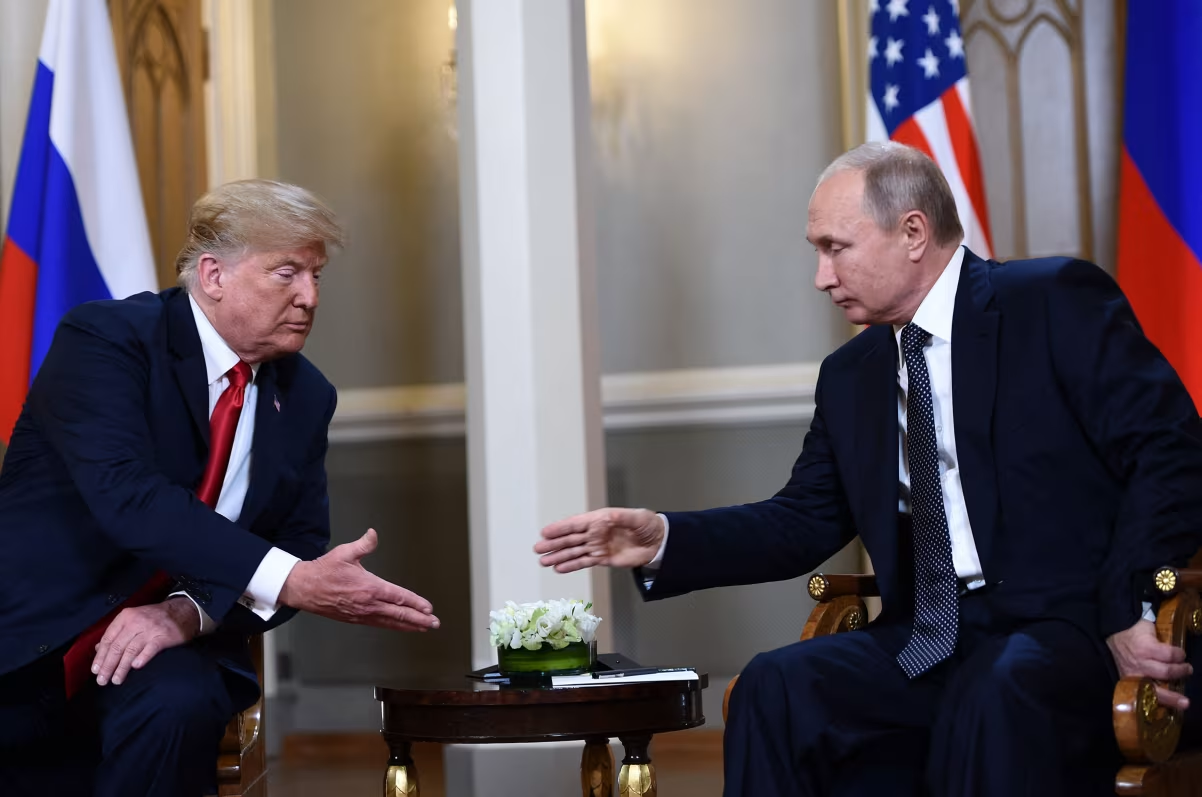
President Donald Trump is set to meet Russian President Vladimir Putin in Alaska on Friday for their first face-to-face talks in six years, aiming to end Russia’s prolonged war in Ukraine. While Trump has long touted his warm relationship with Putin, sources say he has recently been asking European leaders and White House aides what has changed about the Russian leader, reflecting frustration over stalled peace efforts.
Since taking office, Trump has promised a swift peace deal, but Putin has resisted ceasefire proposals and intensified attacks on Ukraine. US intelligence assessments remain skeptical, indicating that Putin’s core objectives have not shifted — he still seeks to keep Ukraine out of NATO, block foreign peacekeepers, and maintain control over seized territories, with the potential to launch further offensives.
European officials warn that Moscow’s offer to end the war in exchange for its long-held demands would amount to submission, not compromise. Some believe Trump may have a unique ability to strike a deal, but others fear the Kremlin is using the summit to claim a diplomatic win without making genuine concessions.
Trump has signaled a tougher stance, warning of “very severe consequences” if Putin is not serious about peace, though he has not detailed what measures might follow. Despite this, Trump maintains confidence in his ability to read Putin quickly, stating he will know within minutes if an agreement is possible.
Privately, Trump’s frustration has grown, with aides reporting increasingly blunt language when discussing Putin. Special Envoy Steve Witkoff has also voiced concern that Russia is stalling negotiations. Intelligence officials caution that Putin remains a “hard target,” operating within a tight circle and shaped by years of pandemic-era isolation that reinforced his reliance on hardliners.
Experts say Putin’s determination to win the war has only deepened, with some noting that he views victory in Ukraine as essential to his political survival. Ukrainian President Volodymyr Zelensky has warned that Putin will try to deceive Trump, using the meeting to project strength while continuing military pressure. European allies remain uneasy, particularly after discussions suggesting possible territorial concessions, though Trump has said such decisions rest with Ukraine.
Analysts caution that Putin’s motivations are increasingly ideological and imperial rather than transactional, making negotiations even more challenging. As the summit approaches, Trump faces a delicate balance — seeking peace without rewarding aggression, while testing whether Putin’s stance has truly changed or remains as unyielding as ever.