

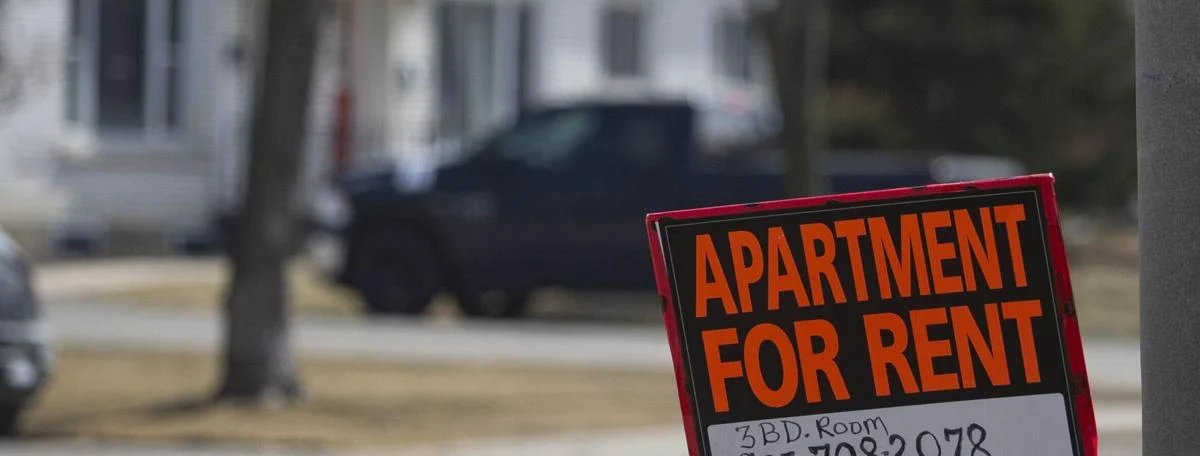
After years of rising rental costs, a new trend may be offering renters in Ontario a breath of relief: average asking rents are starting to fall in several cities across the province.
According to a new report from the Canada Mortgage and Housing Corporation (CMHC), average asking rents for one- and two-bedroom apartments have dropped year-over-year in four of seven key Ontario markets, including Toronto. In Canada’s largest city, average rents have fallen by roughly 10 per cent.
“We’re definitely seeing a trend here,” said Victor Tran, a real estate and mortgage expert with Rates.ca. “There’s an overabundance of supply—especially in the condo market—which is creating more choice for tenants and pushing prices down in urban centres.”
Tran believes the decline is likely to continue, particularly in Toronto and even in cities like Vancouver, as new units hit the market and demand slows due to affordability concerns.
Adding to the good news for renters is a recent move by the Ontario government to cap rent increases for 2026 at 2.1 per cent—its lowest rate in four years. The cap, which applies to existing tenants, is tied to inflation and is intended to protect renters from economic volatility.
“This shows the government is aware of the challenges renters are facing,” said Ontario Housing Minister Rob Flack in a statement. “We’re doing what we can to keep costs manageable.”
In addition to Toronto, other Ontario markets that have seen a decrease in rent include Oshawa, with a 6 per cent drop, and Barrie, down by 3 per cent. However, not all regions are following this trend. Rents in Niagara Falls have actually climbed 6 per cent, and St. Catharines has seen a 2 per cent uptick.
“It always comes down to supply and demand,” said Tran. “We’re not quite sure why some areas are still rising, but limited inventory could be a factor.”
For tenants unhappy with their current situation, there may be room to negotiate. “I’ve had clients successfully ask their landlords for rent reductions,” said Tran. “For landlords, it’s often better to keep a reliable long-term tenant at a slightly lower rate than risk a vacancy.”
Tran also cautioned that while renting may be more affordable in some markets, property investment remains risky. Many first-time landlords assume lenders will finance 100 per cent of rental income, but banks are cautious. “If a unit sits empty, even for a month, it can put the property owner in financial jeopardy,” he warned.
For new renters, Tran recommends doing thorough research on both the unit and the landlord. “Ask questions—why is the landlord renting? What are their long-term goals?” he said. “You don’t want to move into a unit only to find out it might be sold within a few months.”
He also emphasized the importance of understanding tenant rights under the Residential Tenancies Act. “Many tenants still think they have to follow rules like ‘no pets’ when in fact, those aren’t enforceable,” Tran noted. “Knowledge is power—and nowadays, tenants are more informed than ever thanks to resources like Google and ChatGPT.”
As the rental market shifts, tenants may finally have the upper hand in Ontario’s urban centres. But with trends varying from region to region, renters should still tread carefully—and smartly.