

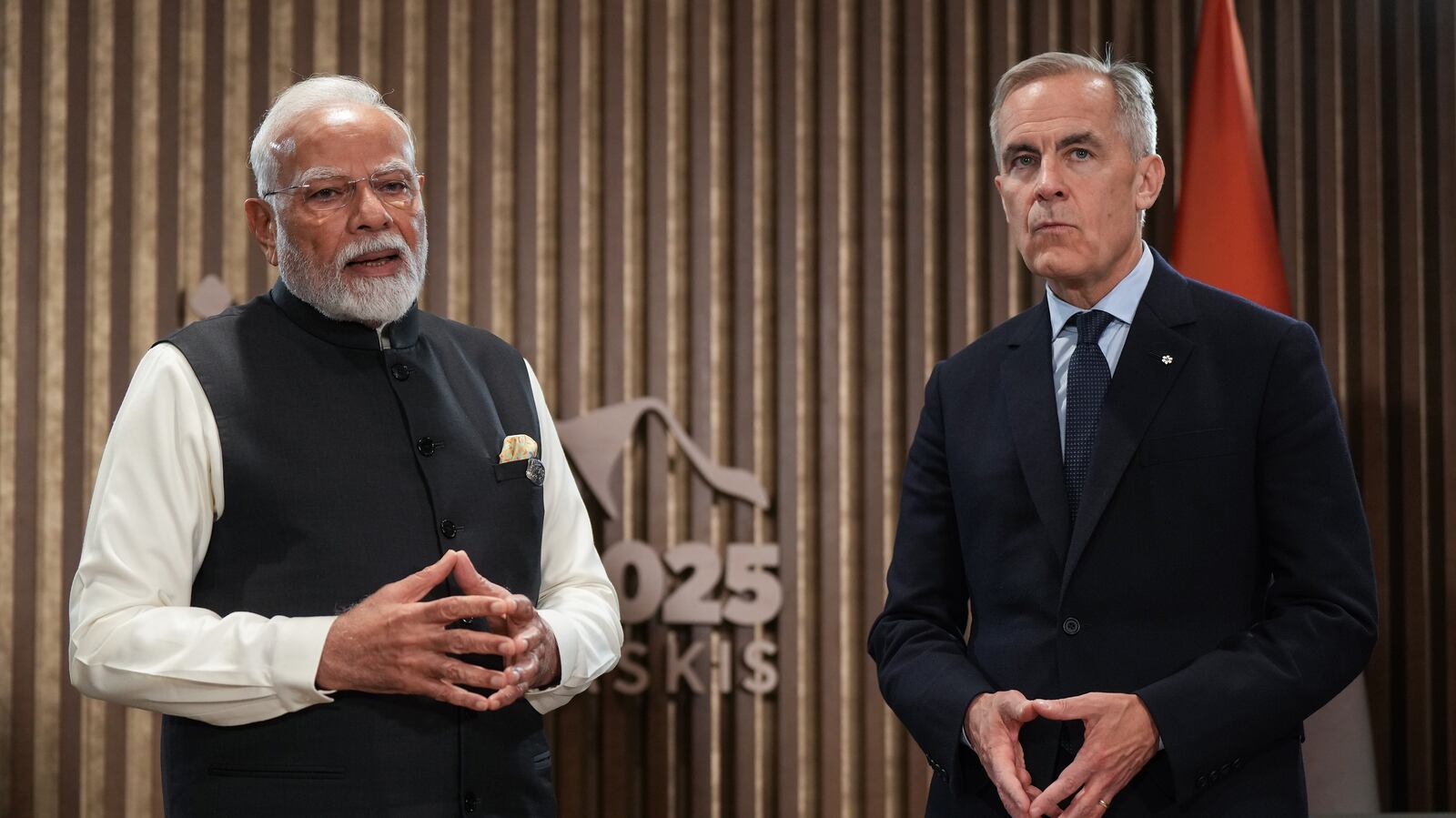
Just a day after Canadian Prime Minister Mark Carney and Indian Prime Minister Narendra Modi pledged to mend strained ties at the G7 summit in Alberta, Canada’s intelligence agency has publicly identified India as a perpetrator of foreign interference.
In a report released Wednesday, the Canadian Security Intelligence Service (CSIS) stated that India engages in activities designed to manipulate Canadian communities and political processes in alignment with its own national interests—particularly regarding Sikh separatist movements.
“Indian officials, including their Canada-based proxy agents, engage in a range of activities that seek to influence Canadian communities and politicians,” the report reads. “These activities attempt to steer Canada’s positions into alignment with India’s interests on key issues, particularly with respect to how the Indian government perceives Canada-based supporters of an independent homeland that they call Khalistan.”
The report describes India’s actions as part of a broader pattern of transnational repression. While it identifies China as the leading counter-intelligence threat to Canada, it also cites Russia, Iran, and Pakistan as actors of concern. India’s activities, the report notes, are especially focused on suppressing dissent among Canada’s Sikh diaspora and countering advocacy for Khalistan, an independent Sikh state.
The timing of the report is significant, coming just after Carney and Modi held what both governments described as “productive talks.” The two leaders agreed to restore top diplomatic representation, a move seen as a step toward normalizing relations after a turbulent period.
Tensions between the two countries escalated dramatically in 2023 when then-Prime Minister Justin Trudeau publicly accused the Indian government of involvement in the assassination of Canadian Sikh leader Hardeep Singh Nijjar in British Columbia. India has consistently denied the allegation and accused Canada of harbouring extremists who threaten India’s national unity.
The Royal Canadian Mounted Police previously disclosed that more than a dozen threats had been communicated to Sikh activists advocating for Khalistan, reinforcing concerns about India’s alleged targeting of political dissidents on Canadian soil.
Carney’s decision to invite Modi to the G7 sparked backlash from some members of the Canadian Sikh community, who remain critical of India’s human rights record and its role in global surveillance of diaspora groups.
Neither the Indian High Commission nor the Chinese Embassy in Canada responded immediately to the report or to requests for comment.
The CSIS report underscores the ongoing challenges facing Canada in balancing diplomatic outreach with the protection of democratic institutions and the rights of its diverse population.