

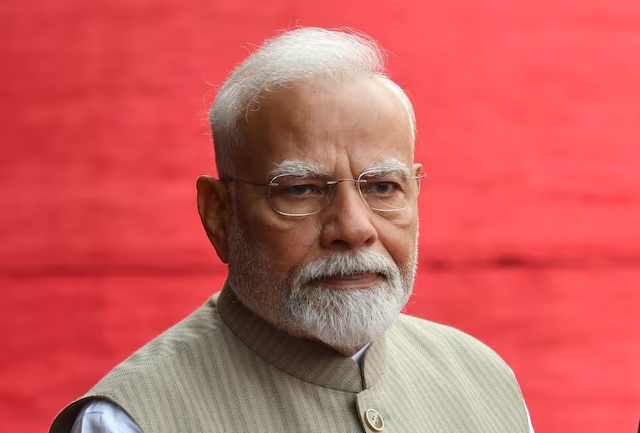
Canada and India have agreed to appoint new high commissioners and resume full diplomatic services for citizens in both countries, following a meeting between Prime Minister Mark Carney and Indian Prime Minister Narendra Modi on the sidelines of the G7 summit in Alberta. The announcement, confirmed by the Prime Minister’s Office, marks a thaw in relations that had been strained since last fall when Canada expelled six Indian diplomats after law enforcement linked Indian agents to targeted activities against Canadian citizens.
India retaliated by expelling Canada’s acting high commissioner in New Delhi along with five other Canadian diplomats. Since then, both countries had operated without full diplomatic representation, leaving key consular posts vacant. Canadian intelligence agencies have previously identified India as a significant source of foreign interference in Canada, particularly in cases involving transnational repression—a concern echoed in a joint statement issued by G7 leaders, calling such repression a growing global threat.
During their meeting, Carney welcomed Modi warmly, calling it “a great honour” to host him at the G7 summit and praising India’s leadership on global challenges such as the energy transition, AI development, and countering terrorism. Modi, speaking through a translator, emphasized the importance of the Canada-India relationship and noted that the two democracies should work together to uphold shared values of freedom and rule of law. On social media, Modi described the meeting as “excellent” and reiterated his commitment to strengthening the bilateral partnership.
Modi’s presence at the G7 summit drew loud protests from Sikh separatist groups, a reminder of the underlying tensions that remain, particularly following the 2023 killing of Canadian Sikh activist Hardeep Singh Nijjar in Surrey, B.C. At the time, former Prime Minister Justin Trudeau and the RCMP cited evidence implicating Indian officials in the crime. The RCMP later said additional evidence linked Indian agents to other activities in Canada, including coercion, extortion, and even homicide.
The G7 statement reinforced the alliance’s unified stance against transnational repression, defining it as an aggressive tactic used by states to intimidate or harm individuals outside their borders. It urged member nations to include such incidents in public reports under the G7 Rapid Response Mechanism and to develop cooperative frameworks to counter such threats.