

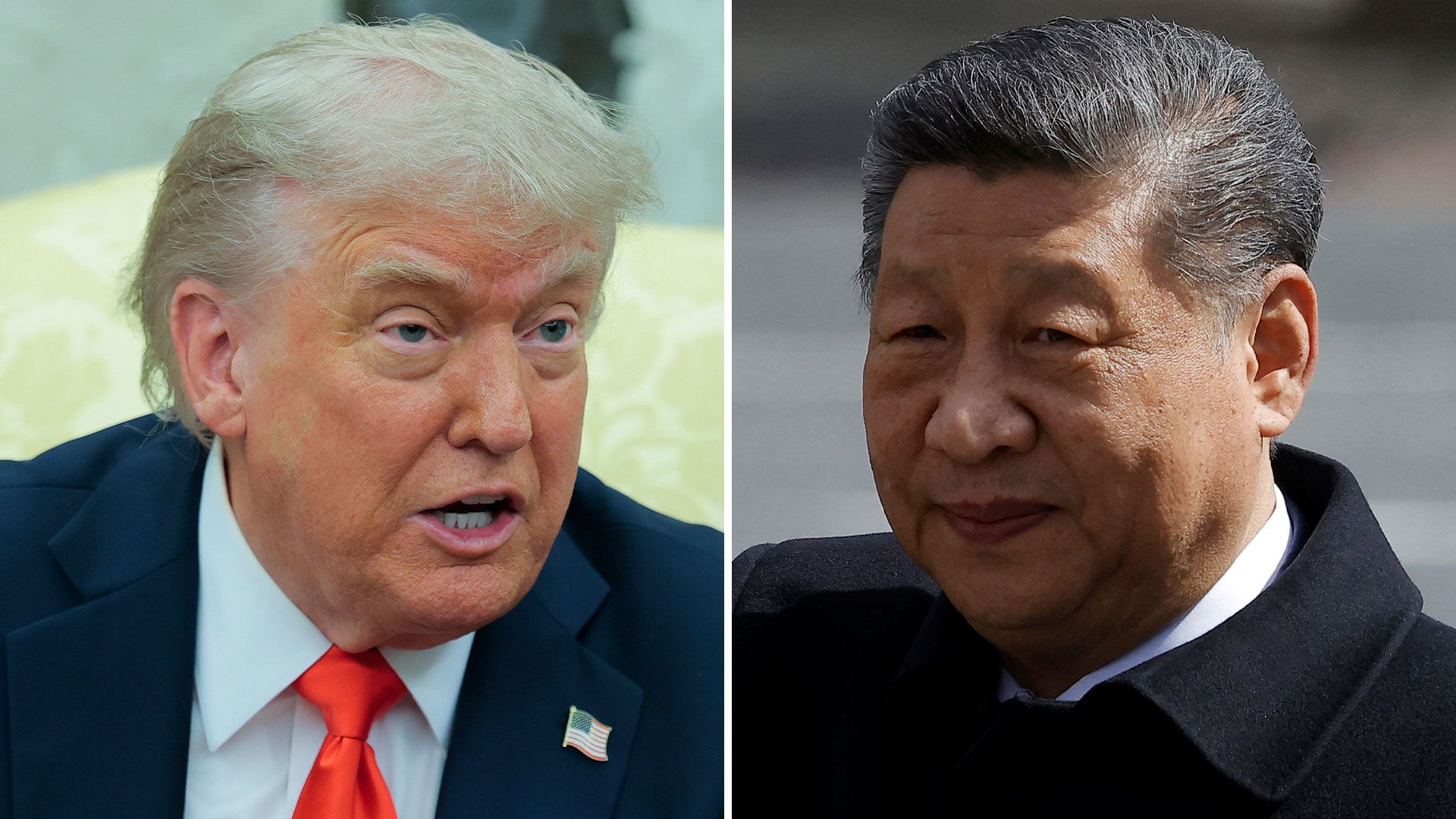
U.S. and Chinese officials have resumed high-stakes trade negotiations in London today, aiming to preserve a fragile truce amid escalating economic tensions. At the heart of the talks: China’s powerful grip on rare earth minerals and the United States’ sweeping controls on semiconductor exports.
The latest round of discussions follows a recent thaw in relations after U.S. President Donald Trump and Chinese President Xi Jinping held a long-awaited call that helped restart diplomacy following a tense spring. In May, the two countries agreed to a 90-day rollback of tariffs, but progress has since been overshadowed by renewed disputes over strategic resources and technology.
Beijing’s near-monopoly on rare earth processing—essential for electronics, electric vehicles, and defense technologies—is expected to dominate the London talks. China controls roughly 90% of global rare earth processing, and its recent imposition of a strict licensing regime has slowed exports, angering U.S. industries and prompting Trump to push Xi for a resolution.
“China’s control over rare earth supply has become a calibrated yet assertive tool for strategic influence,” said Robin Xing, Chief China Economist at Morgan Stanley. Analysts widely view rare earths as China’s most valuable leverage point in the ongoing trade conflict.
The U.S. delegation, led by Treasury Secretary Scott Bessent, Commerce Secretary Howard Lutnick, and Trade Representative Jamieson Greer, is seeking to restore steady access to these critical minerals. In return, Washington may ease some of its export controls on lower-grade U.S. technologies—but will maintain strict limits on cutting-edge microchips, especially AI-capable chips like those from Nvidia.
Beijing has signaled some flexibility. On Saturday, China’s Commerce Ministry said it had “approved a certain number of compliant applications” and was open to “dialogue and communication.” Industry insiders confirmed that some Chinese suppliers to major U.S. automakers, including General Motors and Stellantis, have received six-month export licenses.
Still, analysts caution that China is unlikely to fully loosen its grip on these materials, particularly amid broader geopolitical tensions. “Beijing is increasingly comfortable using export controls as a long-term strategic tool,” said Leah Fahy, a China economist at Capital Economics. She added that even modest concessions may be designed to temporarily cool tensions without ceding long-term control.
Meanwhile, China’s own economic indicators reveal signs of stress. Exports to the U.S. plummeted 34.5% in May, deepening a trade slump despite the temporary tariff rollback. Deflationary pressures are mounting at home, with both consumer and producer price indices showing year-over-year declines—symptomatic of weakening domestic demand and falling global commodity prices.
Despite those economic headwinds, China remains firm in using rare earth minerals as a negotiating chip, even as it continues to push for greater access to U.S. semiconductor technology—long a sticking point for both governments.
As trade teams meet in London, both sides will have to navigate not only technical hurdles, but also a geopolitical landscape rapidly being redrawn by strategic rivalry, economic uncertainty, and the scramble for control over the industries of the future.