

A rare admission by India’s Chief of Defence Staff, General Anil Chauhan, acknowledging the downing of Indian fighter jets by Pakistan during a recent military escalation, is being viewed by analysts as a subtle rebuke of Prime Minister Narendra Modi’s hardline policies.
The conflict, which erupted in the early hours of May 6, followed India’s airstrikes on multiple targets in Pakistan, including religious sites and civilian areas. The strikes were launched after New Delhi, without presenting public evidence, accused Islamabad of supporting a terror attack in Kashmir’s Pahalgam that killed 26 tourists. In retaliation, the Pakistan Air Force (PAF) reportedly downed six Indian jets within 40 minutes—including advanced Rafales and a MiG-29—without a single Pakistani aircraft crossing into Indian airspace.
Speaking to Bloomberg during the Shangri-La Dialogue in Singapore, General Chauhan confirmed that Indian jets were indeed shot down, stating that the critical issue was not the losses themselves, but the reasons behind them. He emphasized the importance of acknowledging and correcting tactical errors, noting that India’s air forces refrained from flying for two days, resuming operations on May 10 with revised strategies to avoid Pakistani engagement zones.
Security expert Ejaz Haider noted that Chauhan’s comments mark a distinct departure from the usual political messaging of Modi’s government. Rather than downplaying the losses, Chauhan spoke in the plural and made no effort to obscure the scale of the Indian setback. Haider interpreted this as a veiled pushback against the Modi government’s use of military confrontation with Pakistan for domestic political gain. He further noted that the general’s frankness could spark friction between the professional military leadership and the ruling BJP’s Hindutva-driven agenda.
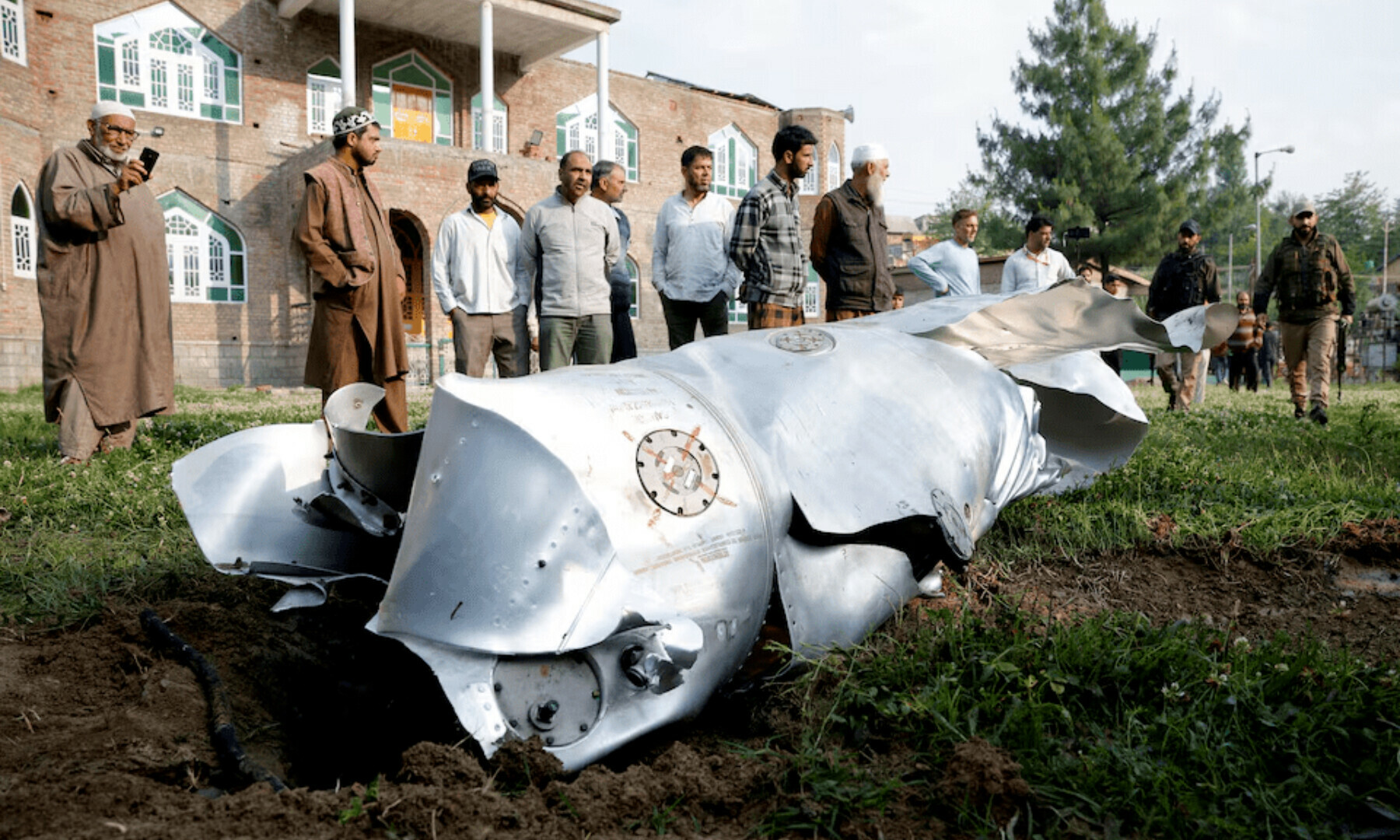
Chauhan’s candid remarks come amid a wave of international corroboration. American and French intelligence officials, along with visual analyses published by outlets like CNN and The Washington Post, have confirmed that Pakistan successfully shot down at least two French-made Indian fighter jets. These claims were reinforced by wreckage photos, satellite analysis, and independent assessments.
The admission has sparked intense debate in India, with some pro-BJP commentators calling for disciplinary action against Chauhan. Yet experts argue that his statements reflect an urgent call for restraint and strategic reassessment amid rising risks of escalation.
Western military observers have also been closely studying the confrontation, noting how Chinese weaponry used by Pakistan outperformed the NATO-supplied systems used by India. The conflict has not only exposed vulnerabilities in India’s air defence, particularly the $5 billion Russian-made S-400 system, but also offered live combat testing for rival military technologies from China, Russia, and Europe.
In Pakistan, political figures like Bilawal Bhutto Zardari claimed that the PAF had locked on to 20 Indian jets but exercised restraint by only targeting those that had released payloads on civilian areas. He also credited U.S. intervention on May 10 for brokering a ceasefire that ended a week of heightened tensions.
As public scrutiny of India’s military strategy intensifies, many are asking whether the conflict has shifted the regional power dynamic. With open acknowledgement of tactical failures now emerging from India’s top brass, the conversation around the limits of political brinkmanship—and the need for measured, professional military policy—has taken on new urgency.