

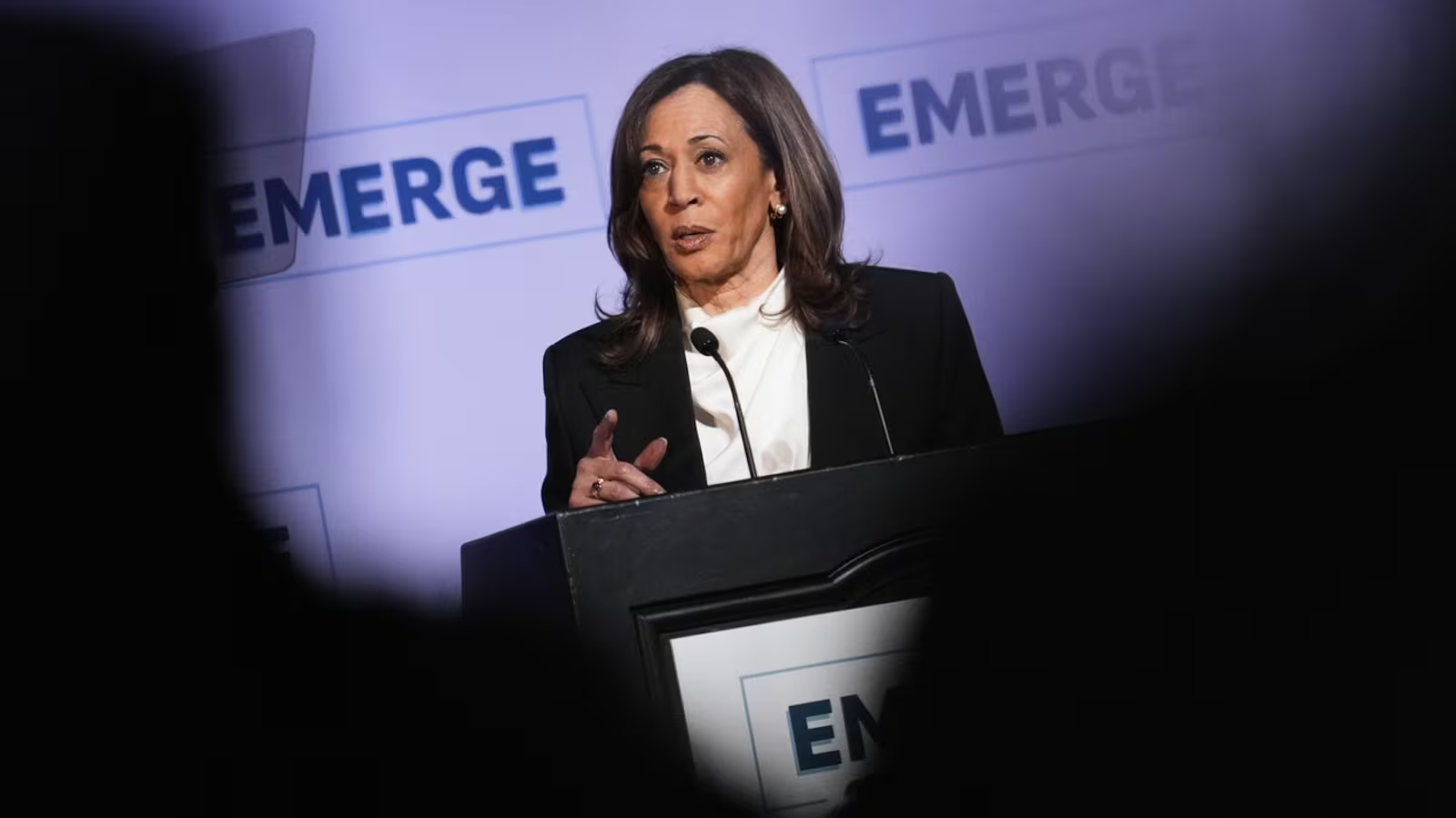
As speculation builds around the 2028 presidential race, some political strategists and Democratic insiders believe former Vice President Kamala Harris might find a more viable path by running for governor of California rather than mounting a third White House bid.
Harris, a former U.S. senator, California attorney general, and San Francisco district attorney, would enter the state race as a formidable front-runner to succeed term-limited Governor Gavin Newsom. Her deep political roots in California and high-profile national experience position her uniquely for the role—especially in a field crowded with other ambitious Democrats.
While Harris has been vague about her political future, she told supporters last month, “I’ll see you out there. I’m not going anywhere.” Newsom, for his part, said Harris would lead in a contested gubernatorial primary — “if she runs.”
So, why would Kamala Harris consider a pivot to Sacramento—and what might hold her back?
Pro: A Safer Path with Fewer Rivals
After her loss to President Donald Trump in the 2024 general election, Harris would need to convince Democrats she still represents the party’s future. However, the 2028 Democratic primary is expected to draw a crowded and combative field, possibly including Newsom himself.
Running for governor offers Harris a more direct route to leadership with fewer major opponents. Her résumé far outpaces other likely contenders such as Katie Porter, Antonio Villaraigosa, and Xavier Becerra—many of whom might defer to her candidacy altogether.
California’s governorship also holds national weight. With the world’s fifth-largest economy, the state offers a platform to shape national discourse on climate, immigration, and healthcare—all issues Harris has championed.
Pro: A Strong Homecoming Narrative
Harris is widely recognized as a proud daughter of California. A return to lead her home state, particularly in its ongoing battles with Trump-era policies, could be seen as a natural extension of her political arc. She would likely position herself as a seasoned leader ready to confront California’s toughest challenges, from homelessness and climate change to affordability and public safety.
Democratic consultant Roger Salazar said Harris may have better odds at home: “There’s just more certainty. She’s got a leg up right now.”
Con: A Polarizing Figure with Past Baggage
Despite her impressive credentials, Harris remains a polarizing figure, even among Democrats. Critics argue her past presidential campaigns failed to capture grassroots energy or connect with working-class voters. As one progressive organizer put it: “She’s had her chance.”
And as Republican strategist Kevin Madden noted, two national losses may make her an easier target in any future campaign, including a governor’s race.
Con: California’s “Jungle Primary” Could Backfire
California’s open primary system sends the top two vote-getters—regardless of party—to the general election. In a field with multiple strong Democrats, Harris could face another Democrat in the runoff who aggressively challenges her record, similar to what she’d face in a presidential contest.
Such a scenario played out in the 2024 U.S. Senate race, where Republican Steve Garvey advanced to the general election after Democrats split the primary vote.
Con: Sacramento’s Problems Are No Small Task
Even if Harris wins, she would inherit one of the nation’s most challenging political landscapes. California faces a $12 billion budget deficit, a deepening homelessness crisis, rising insurance and energy costs, and persistent threats from wildfires.
And Republicans will be quick to tie her to California’s broader reputation: high taxes, expensive housing, liberal policies, and economic strain—regardless of the facts.
So, Will She Run?
For Harris, the question may come down to political strategy and personal motivation. Is she more likely to shape the future from the White House—or from Sacramento?
Governor Newsom himself put it bluntly: “You have to have a burning ‘why?’… If you can’t enunciate that, the answer is no.”
With the clock ticking toward 2026, Harris has decisions to make—and California will be watching.