

Trump Administration Locks In Ukraine Pact, Ties Aid to Investment
The United States and Ukraine signed a long-anticipated economic agreement on Wednesday, cementing a deal that grants the U.S. access to Ukraine’s critical mineral reserves in exchange for ongoing American support in Ukraine’s war against Russia. The announcement marks a new chapter in the partnership between the two countries and follows mounting pressure from President Donald Trump for Ukraine to repay Washington for its aid in defending against the Russian invasion.
Dubbed the United States–Ukraine Reinvestment Fund, the deal will reportedly allow the U.S. to tap into Ukraine’s valuable reserves of rare earth minerals, oil, gas, and other strategic resources, while opening the door to future investment in Ukraine’s reconstruction. Though details remain scarce, officials say the deal will reinforce U.S. commitment to Ukraine’s sovereignty and send a message to Moscow that Washington remains invested in the region.
Treasury Secretary Scott Bessent praised the agreement as a Trump-led initiative rooted in strategic cooperation. “This agreement signals clearly to Russia that the Trump administration is committed to a peace process centered on a free, sovereign, and prosperous Ukraine over the long term,” he said in a statement.
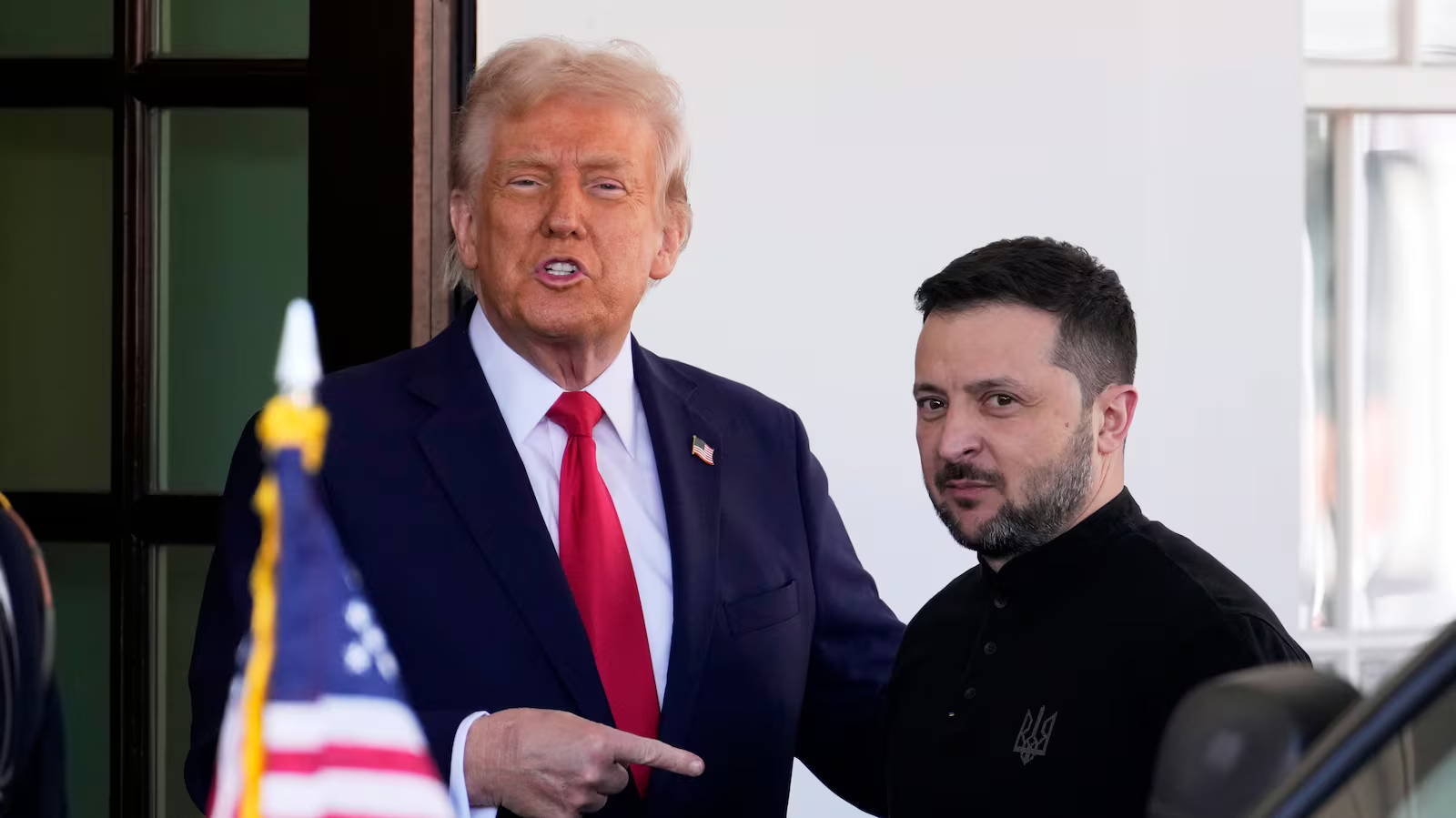
The deal comes at a delicate moment in the nearly three-year conflict. Trump, who has frequently criticized Ukrainian President Volodymyr Zelenskyy and questioned his wartime strategy, also recently condemned Russian President Vladimir Putin for escalating violence and undermining ceasefire talks. “I wanted to be protected,” Trump said Wednesday night on NewsNation, suggesting the agreement ensures the U.S. will get back more than it has given. “I didn’t want to look foolish.”
For Kyiv, the deal is not only symbolic—it is strategic. Ukrainian Prime Minister Denys Shmyhal described it as a “truly equal and good international deal,” establishing a framework for joint investment in Ukraine’s future. The Ukrainian Cabinet approved the agreement earlier in the day, empowering Economy Minister Yulia Svyrydenko to sign the deal in Washington. She hailed the fund as a tool to attract global investment to Ukraine and ensure continued U.S. military assistance.
Still, negotiations leading up to the signing were fraught with tension. A previous version of the deal collapsed during a heated Oval Office exchange between Trump, Vice President JD Vance, and Zelenskyy. Reports also suggest Ukraine introduced last-minute changes to rebalance terms that initially tilted too heavily in favor of U.S. interests. Bessent noted the edits but stopped short of detailing the revisions, saying only, “We are ready to sign this afternoon if they are.”
Key to the agreement are Ukraine’s untapped deposits of titanium, uranium, lithium, graphite, and manganese—resources critical to the aerospace and electric vehicle industries. According to Ukrainian officials, the revised terms ensure the agreement won’t conflict with Ukraine’s path toward European Union membership. Contributions to the joint fund will be made in cash, and only new U.S. military aid will count toward Washington’s stake—previous assistance will not be factored in.
The agreement must still be ratified by Ukraine’s Parliament before it takes effect.
In the background, the broader geopolitical crisis continues to escalate. Kremlin spokesperson Dmitry Peskov said President Putin supports a ceasefire ahead of peace negotiations, but added that Russia still expects answers to key questions before making commitments. While Moscow has signaled openness to direct talks, it continues to demand a halt to Ukraine’s military mobilization and Western arms shipments.
The war’s toll on civilians remains staggering. A U.N. Human Rights Office report released this week confirmed that 2,641 Ukrainian civilians were killed or wounded in the first quarter of 2025—nearly 900 more than the same period last year. From April 1–24 alone, casualties rose by 46 percent over the previous year.
Russian drone strikes continue to batter Ukrainian cities, with at least 45 civilians injured in a recent attack on Kharkiv. Ukrainian authorities also claimed responsibility for a drone strike on a Russian military facility in the Vladimir region, though the claim remains unverified.
The U.S. has urged both sides to accelerate peace negotiations, with Secretary of State Marco Rubio warning that America could withdraw from talks if no progress is made. Despite widespread calls for de-escalation, the war drags on, and the new economic deal may prove a pivotal move in shaping Ukraine’s long-term resilience and the West’s role in the region.