

Trump Says Carney Wants to ‘Make a Deal’ as Tensions Simmer
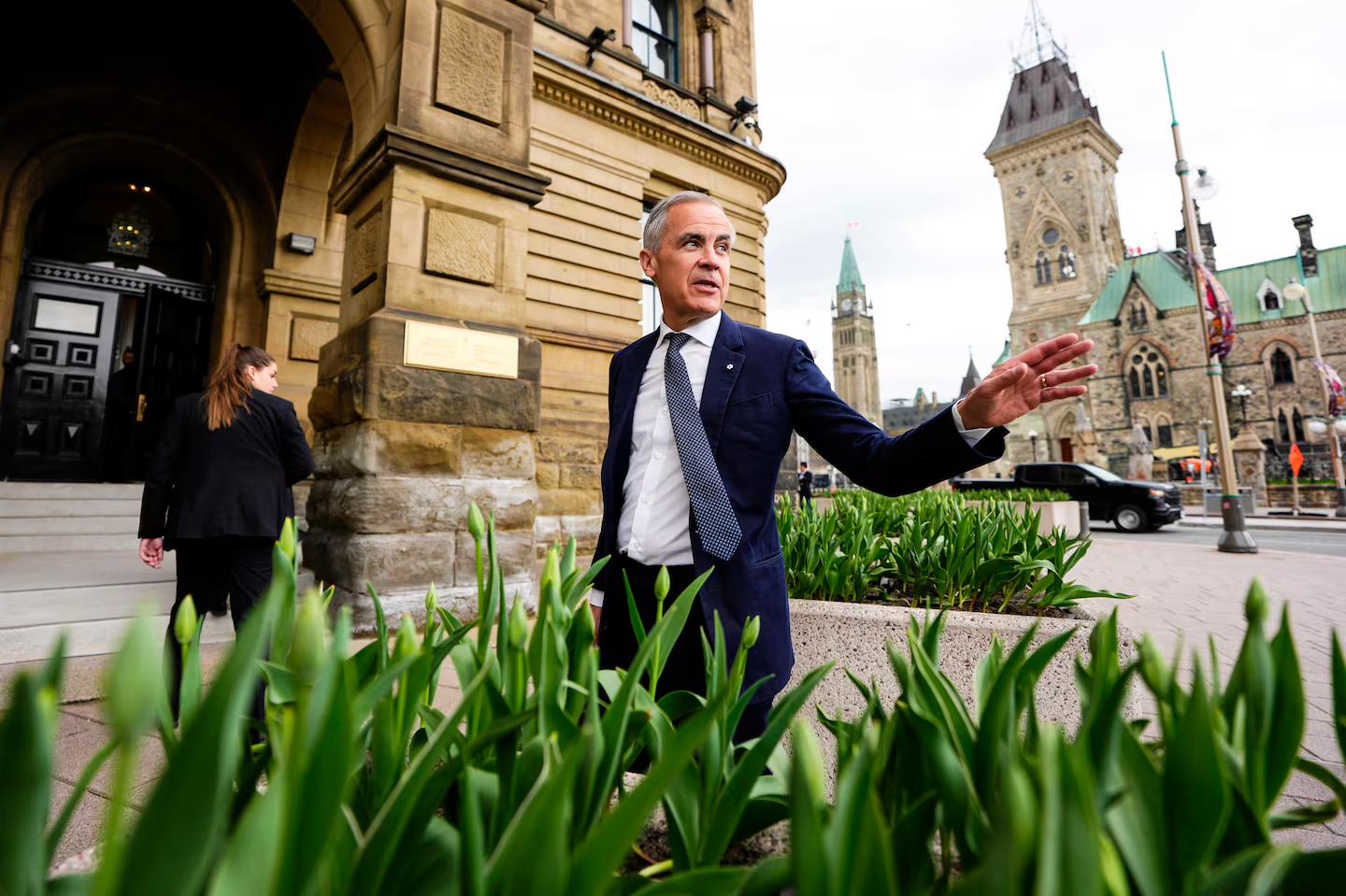
Prime Minister Mark Carney is set to visit the White House in the coming days after U.S. President Donald Trump revealed the two leaders have agreed to meet to discuss the strained Canada-U.S. relationship. Calling Carney “a very nice gentleman,” Trump confirmed Wednesday that the visit would happen “within the next week or less,” suggesting the two countries may soon try to ease mounting tensions caused by an escalating trade war.
The announcement came during an exchange with reporters about the ongoing economic rift between the two neighbors, which has intensified under Trump’s presidency. The friction has played out in tit-for-tat tariffs on everything from automobiles to juice, aluminum to cosmetics. Trump has previously floated the idea of Canada becoming a U.S. state and referred to former Prime Minister Justin Trudeau as a “governor,” adding to the frayed diplomatic ties.
Dealing with Trump became a defining issue in Canada’s recent federal election, with leaders from every party offering their own strategies. Carney, running as a Liberal, pledged to diversify Canada’s trade partnerships and reduce the country’s economic dependence on its southern neighbor. But with his victory secured, Carney appears ready to reengage with Washington.
According to Trump, Carney reached out directly. “He called me up yesterday, he said, ‘let’s make a deal,’” Trump recounted. A statement from Carney’s office confirmed the conversation, noting the leaders agreed on the importance of working together “as independent, sovereign nations” for mutual economic benefit.
As Carney prepares for his first high-stakes meeting with Trump, veteran Liberal strategist Geoff Turner warned that optics will be crucial. Turner said Carney’s team must approach the meeting with caution, avoiding the missteps seen in past summits. He pointed to Ukrainian President Volodymyr Zelenskyy’s March visit, during which Trump and Vice President JD Vance publicly chastised him for being insufficiently grateful for American aid.
Turner emphasized the need for a structured, diplomatic tone. “No Mar-a-Lago,” he said. “No fireside chat.”
Carney enters the meeting with a clear mandate but a complex backdrop. The U.S. currently imposes 25 percent tariffs on most Canadian goods and 10 percent on energy and potash not covered under the Canada-United States-Mexico Agreement (CUSMA). Additional 25 percent levies apply to Canadian steel, aluminum, and non-CUSMA-compliant autos. In response, Canada has hit back with its own measures, targeting nearly $60 billion in American exports.
The impact has rippled across the economy. Stock markets have fluctuated wildly, automakers have paused production, and many companies have withheld earnings forecasts amid the uncertainty. The crisis dominated the final stretch of Trudeau’s tenure and became central to the election campaign. Carney, in his election night speech, declared that Canada must chart a new path forward.
“Our old relationship with the United States, a relationship based on steadily increasing integration, is over,” he told supporters. “These are tragedies, but it’s also our new reality.”
As Carney steps into his role on the international stage, his upcoming White House meeting could set the tone for a redefined partnership—or further solidify Canada’s need to go it alone.