

In a move aimed at easing pressure on North America’s automobile sector, U.S. President Donald Trump signed two executive orders Tuesday to provide temporary relief from a series of aggressive tariffs that have impacted supply chains and raised alarm within the highly integrated auto manufacturing industry.
The new measures include a rebate of up to 15 per cent of a vehicle’s retail value on imported auto parts for manufacturers completing vehicles in the United States. The rebate is intended to soften the impact of a 25 per cent auto parts tariff set to take effect next month. The rebate will drop to 10 per cent the following year, according to a U.S. Commerce Department official.
“We just wanted to help them endure this little transition,” said Trump, referencing the parts shortage faced by manufacturers. “In some cases, they can’t get the parts fast enough—we didn’t want to penalize them.”
The second executive order signed Tuesday ensures that tariffs on automobiles will not be stacked with additional duties on steel, aluminum, or other imported components, a move designed to streamline costs and mitigate compounded financial strain on manufacturers.
Trump’s administration has implemented a broad range of tariffs in recent months, including:
- 25% on all vehicle imports
- 25% on aluminum and steel
- 10% universal import tariff
- 145% on certain Chinese imports
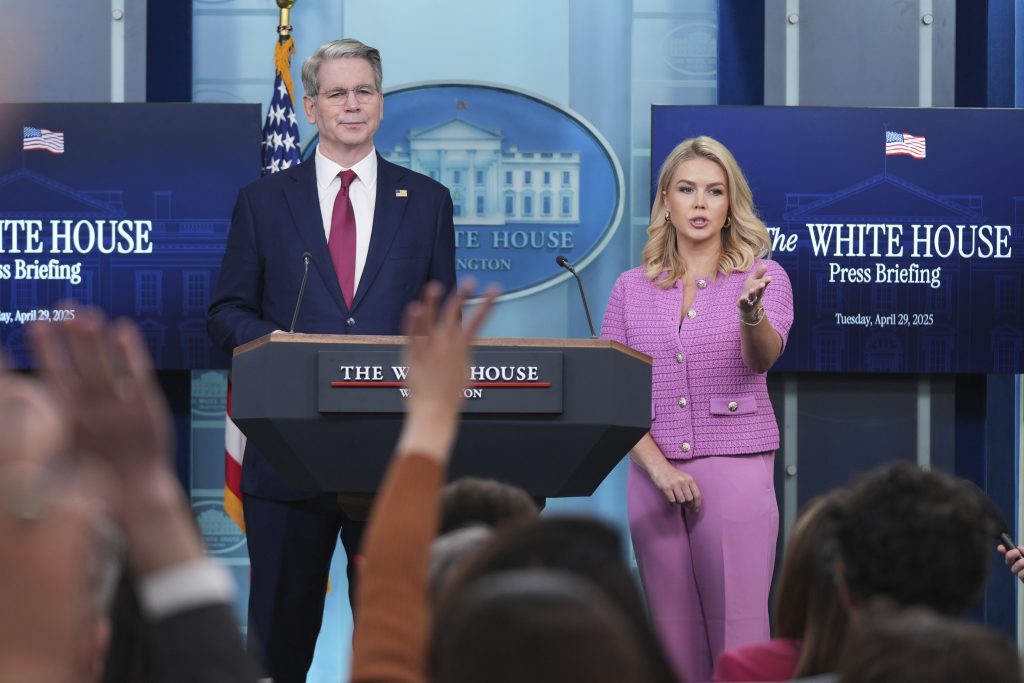
Treasury Secretary Scott Bessent, speaking at a White House briefing, said the administration is committed to revitalizing U.S. auto production. “We want to give the automakers a path to do that quickly, efficiently, and create as many jobs as possible,” Bessent said.
The impact of these policy changes on Canada’s auto sector remains unclear. While vehicles compliant with the Canada-U.S.-Mexico Agreement (CUSMA) are partially shielded, Canadian automakers are still subject to duties on the value of non-American parts in their vehicles.
Candace Laing, President and CEO of the Canadian Chamber of Commerce, criticized the unpredictability of the U.S. tariff strategy: “Business plans are delayed. Pricing pressure is rising. North American autoworkers, plants, and investors can’t predict how the U.S. administration will wake up and feel on any given morning,” she said.
The changes follow high-level meetings between Trump and both domestic and international auto manufacturers. In a statement, GM CEO Mary Barra welcomed the dialogue: “We appreciate the productive conversations with the president and his administration and look forward to continuing to work together.”
The tariff relief comes amid growing concern from industry leaders and trade associations. A joint letter from six of the largest automotive lobbying groups warned that many suppliers are already under financial strain, with risks of production stoppages, layoffs, and bankruptcies looming without policy relief.
The announcement coincided with President Trump’s visit to Michigan, where he marked his administration’s first 100 days with a rally in the heart of the U.S. auto industry. The state is home to the Detroit Three — Ford, General Motors, and Chrysler (now part of Stellantis) — all of whom have urged the administration to reconsider tariffs that threaten to fracture cross-border supply chains.
Matt Blunt, President of the American Automotive Policy Council, said multiple overlapping tariffs on the same product were “causing significant concerns.” Stellantis Chairman John Elkann echoed the sentiment, saying his company welcomes tariff relief as it continues to assess its impact on North American operations.
Despite Trump’s claims that Canada is siphoning American auto jobs, both countries have collaborated on auto production since the 1965 Auto Pact. The CUSMA agreement, negotiated during Trump’s first term, was intended to modernize those ties, but current tariffs have created new uncertainty.
“Whether the U.S. administration likes it or not, we’re in this together,” said Laing. “And supply chains don’t heal quickly once broken.”
Analysts from Anderson Economic Group estimate that recent tariffs could add $5,000 to $12,000 to the price of new vehicles, depending on the model. With the new executive orders, some of that cost pressure may be temporarily alleviated—but manufacturers and consumers remain cautious amid rapidly shifting trade policies.