

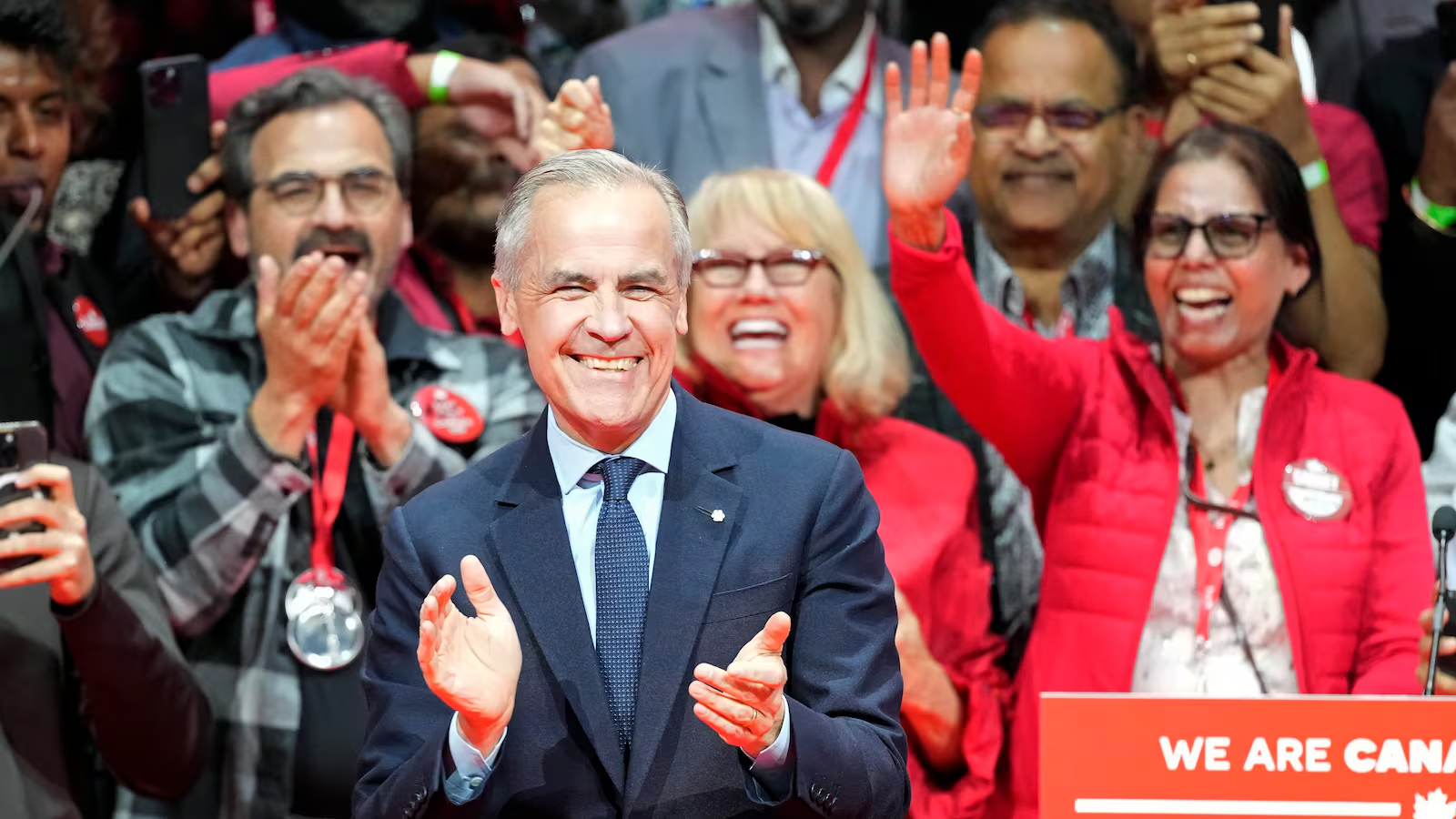
Mark Carney has led the Liberal Party to a fourth consecutive mandate, winning a minority government in a closely watched election defined by affordability concerns, rising nationalism, and tensions with the United States under President Donald Trump.
Standing before an enthusiastic crowd in Ottawa early Tuesday, the prime minister-elect vowed to govern for all Canadians, acknowledging the divisions across the country. “Millions of our fellow citizens preferred a different outcome,” Carney said. “Let’s put an end to the division and anger of the past. We are all Canadian.”
By early morning, the Liberals were leading or had secured 168 seats—just four shy of the 172 needed for a majority—while the Conservatives trailed with 144. The outcome ensures the Liberals will continue governing, but once again from a minority position.
Carney’s own election marks a series of historic firsts: he becomes the first Canadian prime minister never to have previously held elected office and the first to hail from the Northwest Territories. He also becomes only the third PM born west of Ontario.
The former Bank of Canada and Bank of England governor took the reins of the Liberal Party in March, following Justin Trudeau’s resignation amid declining public support. Carney’s campaign message centered on stability, experience, and sovereignty in the face of U.S. pressure—particularly in response to threats from Trump, whom Carney accused of seeking to “own” Canada. “These are not idle threats,” he warned. “President Trump is trying to break us so that America can own us. That will never, ever happen.”
The Liberals positioned Carney as a fresh start, a political outsider with proven economic leadership. His main rival, Pierre Poilievre, led a campaign focused on affordability and government overreach but suffered a devastating blow as he lost his Ottawa-area seat of Carleton to Liberal challenger Bruce Fanjoy. Fanjoy won with over 50 per cent of the vote, unseating Poilievre after nearly two decades in office.
The loss makes Poilievre the fourth consecutive Conservative leader to fall short against the Liberals and will almost certainly spark a reckoning within his party, despite the Conservatives gaining more than 20 seats and achieving their highest vote share since 1988.
Addressing supporters before his own defeat was confirmed, Poilievre congratulated Carney and pledged to continue leading the opposition. “To the millions of people who voted for the Conservative Party and put their hopes and dreams in our vision, thank you,” he said. “It will be an honour to continue to fight for you.”
The election also saw major setbacks for smaller parties. The NDP, led by Jagmeet Singh, is projected to win just seven seats—well below the 12 needed to retain official party status. After losing his Burnaby Central seat to a Liberal challenger, Singh announced he would step down as leader. “I’m disappointed that we could not win more seats, but I’m not disappointed in our movement,” he said, holding back emotion. “I know we will always choose hope over fear.”
The Bloc Québécois is projected to lose several seats, potentially falling to 23 from 33. Bloc Leader Yves-François Blanchet retained his seat, but his party’s diminished role may shift the balance of power in Parliament. Meanwhile, the Green Party is expected to return to the House with just one MP—leader Elizabeth May—after co-leader Jonathan Pedneault failed to unseat the Liberal incumbent in Montreal’s Outremont riding.
This election marked a decisive moment in Canadian politics. With Trudeau gone and Carney rising as a new kind of Liberal leader, Canadians were faced with a choice between seasoned economic expertise and populist calls for change. Voters turned out in record numbers, with more than 7.3 million Canadians casting advance ballots—up from 5.8 million in 2021.
While the Liberals will now need to negotiate support from other parties to govern effectively, Carney’s message remains clear: unity, ambition, and humility will define his leadership. “I chose to enter politics because I felt we needed big changes in this country,” he said. “Big changes guided by strong Canadian values. And those include humility—it’s Canada, after all. Ambition—it’s Canada, after all. And unity. Because it’s Canada, after all.”