

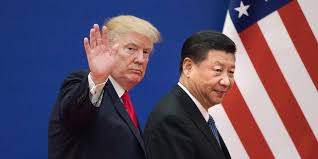
As trade tensions between the world’s two largest economies intensify, China and the United States remain locked in a diplomatic standoff over who should initiate dialogue, despite escalating economic fallout on both sides.
On Thursday, China’s Ministry of Commerce called on the United States to halt its campaign of “extreme pressure” and to approach trade talks with “mutual respect and equality.” The remarks come after U.S. President Donald Trump sharply raised tariffs on Chinese imports, with a new fact sheet from the White House indicating duties could reach as high as 245% on some goods.
Speaking at a weekly news briefing, Ministry spokesperson He Yongqian said the U.S. was solely responsible for the deterioration in trade relations, accusing Washington of initiating the “unilateral tariff increases.”
“The United States must immediately stop its coercive tactics and resolve differences with China through equal dialogue,” He said. “The person who tied the bell must be the one who unties it.”
Beijing has refused to engage in trade talks under duress, insisting that negotiations can only take place on a foundation of parity and mutual respect — a position that marks a contrast to several other countries that have sought to strike deals with the Trump administration in the face of similar tariffs.
While the U.S. has signaled its willingness to engage, it maintains that the onus is now on Beijing to make the first move. A White House official on Tuesday said, “The ball is in China’s court.”
China, however, has retaliated with its own levies on U.S. goods and shows no signs of softening its stance without a recalibration of tone from Washington. Commerce officials in Beijing have dismissed the current tariff “numbers game” as meaningless and warned that China “will fight to the end” to defend its economic interests.
Despite the public impasse, the commerce ministry said it has maintained working-level communication with U.S. counterparts and remains open to trade consultations.
As the economic standoff deepens, businesses and global markets are left bracing for uncertainty. With neither side willing to take the first formal step toward renewed dialogue, the prospect of de-escalation remains distant.