

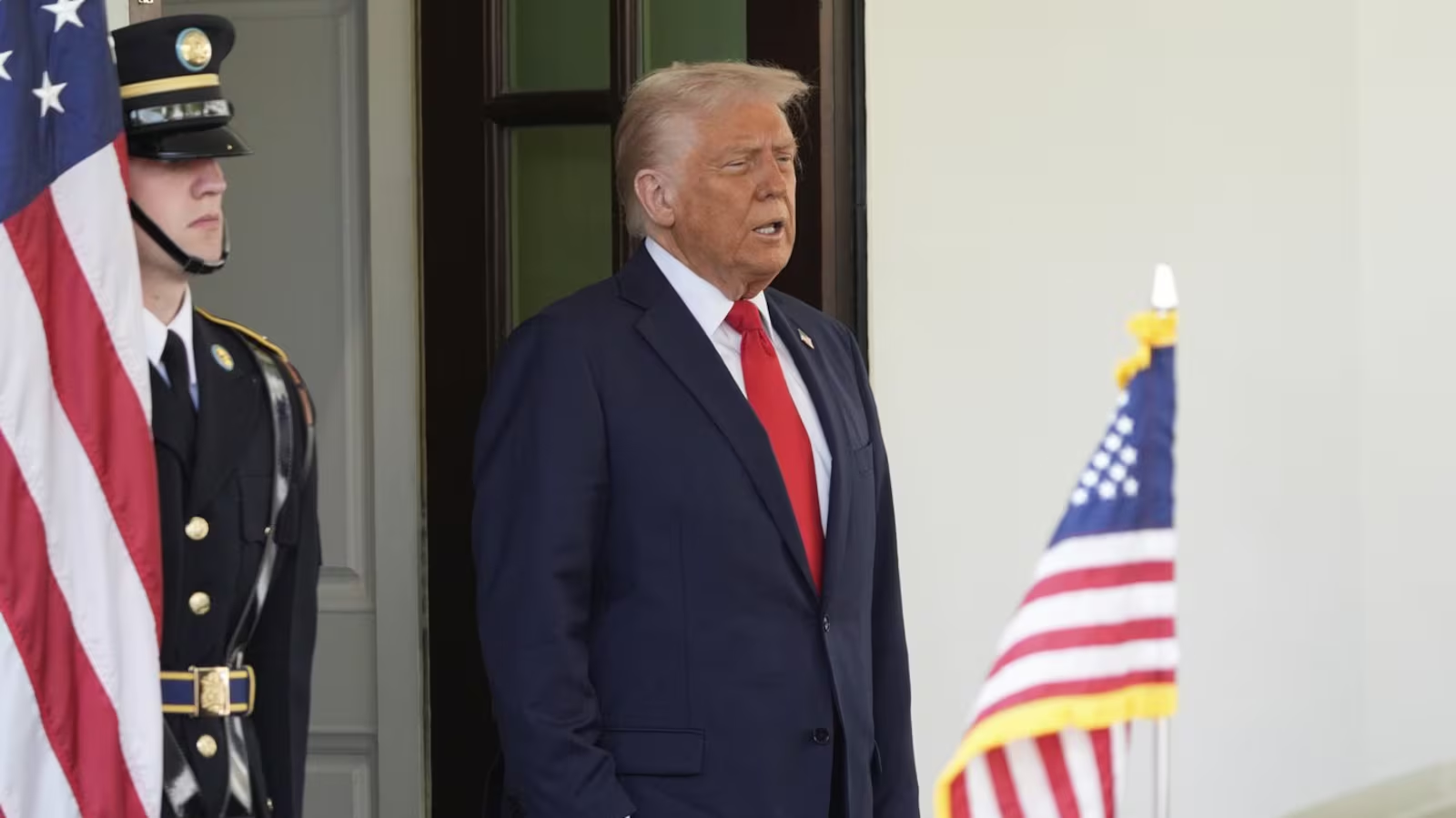
In yet another signal of wavering trade policy, U.S. President Donald Trump suggested Monday that he may temporarily suspend the controversial auto tariffs he imposed just weeks ago, offering carmakers a brief window to adjust their global supply chains. Speaking from the Oval Office, Trump said auto companies needed more time to shift production from Canada, Mexico, and elsewhere back to American soil. “They’re going to make them here, but they need a little bit of time,” he said.
The remark marks another surprising shift in Trump’s aggressive tariff strategy, which has rattled global markets and stoked fears of a potential recession. Matt Blunt, president of the American Automotive Policy Council, which represents Ford, General Motors, and Stellantis, welcomed the possible pause. He emphasized that broad tariffs on automotive parts could disrupt shared goals to bolster U.S. manufacturing, adding that adjusting supply chains would take time.
Trump’s original 25 per cent tariff announcement on March 27 was billed as a permanent fixture of his trade agenda. But mounting economic pressure has led to a more flexible, if erratic, approach. Last week, a sharp sell-off in U.S. bonds led Trump to slash his broader tariffs to a temporary 10 per cent for 90 days, buying time for negotiations. Simultaneously, he jacked up tariffs on Chinese imports to 145 per cent — only to walk some of it back by exempting electronics and reducing their rate to 20 per cent.
“I don’t change my mind, but I’m flexible,” Trump told reporters with characteristic bravado, even as investors and analysts expressed growing frustration over his unpredictability. The S&P 500 rose 0.8 per cent on Monday, buoyed by hopes of tariff relief, but remains down nearly 8 per cent for the year. Ten-year Treasury bond yields hovered around 4.4 per cent, reflecting continued investor anxiety.
Carl Tannenbaum, chief economist at Northern Trust, quipped that the volatility had been so intense that he “might need a neck brace.” In a sobering note, he warned that consumer and market confidence could be irreparably damaged.
International allies are watching closely. European trade chief Maroš Šefčovič confirmed on social media that he had met with U.S. officials in Washington to discuss a possible deal on industrial goods and non-tariff barriers. “The EU remains constructive and ready for a fair deal,” he said, referring to a zero-for-zero tariff offer.
Technology companies, particularly Apple, also remain on edge. Trump noted he recently spoke with Apple CEO Tim Cook and “helped” him — likely referencing the temporary exemption on electronics. Apple did not comment publicly, but its stock rose two per cent Monday, despite earlier gains as high as seven per cent. Investors remain wary that the reprieve could be short-lived and that iPhones, assembled mostly in China, could still face steep tariffs in coming weeks.
Dan Ives, a tech analyst at Wedbush Securities, said Apple’s position had improved compared to last week, but he cautioned that the company is still navigating “mass uncertainty, chaos, and confusion.” Apple has already begun relocating parts of its production to India, a shift that could accelerate if tariff threats persist.
As Trump touts the impact of tariffs on isolating China, Beijing is forging closer ties in the region. On the same day, Chinese leader Xi Jinping met with Vietnamese Communist Party General Secretary To Lam in Hanoi, reiterating that no one wins in trade wars. When asked about the meeting, Trump accused China and Vietnam of plotting to undermine the U.S. economy. “They’re trying to figure out how do we screw the United States of America,” he said.
Whether the auto tariff suspension becomes official remains unclear, but the growing pattern of threats followed by partial walk-backs has only deepened concerns that Washington’s trade policy is being written on the fly — with the global economy caught in the crossfire.