

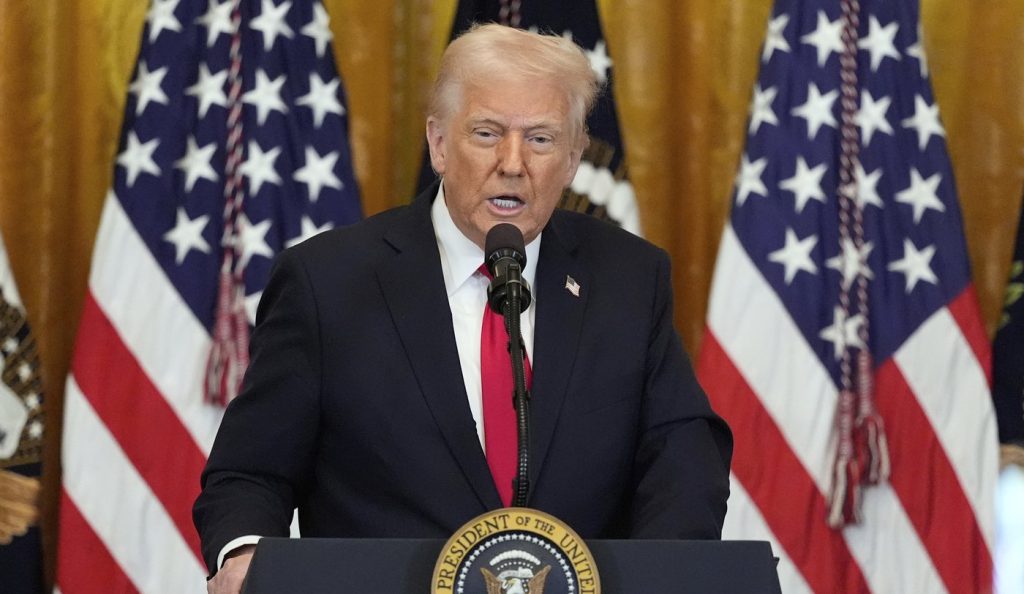
As global markets reel from escalating trade tensions and the U.S. stock market suffers one of its worst downturns in modern presidential history, President Donald Trump took to Truth Social on Monday to defend his economic policies and argue that the U.S. economy remains fundamentally strong.
In a defiant post, the President listed indicators he said reflect economic health despite widespread investor concerns:
“Oil prices are down, interest rates are down (the slow-moving Fed should cut rates!), food prices are down, there is NO INFLATION,” Trump wrote. “And the long-time abused USA is bringing in Billions of Dollars a week from the abusing countries on Tariffs that are already in place.”
Trump reiterated his belief that the tariff strategy will generate massive revenue for the U.S., even as analysts warn that higher import costs and retaliatory measures may deepen the risk of a global recession.
The President also took direct aim at China, calling it the “biggest abuser,” after Beijing announced a 34% retaliatory tariff on U.S. imports over the weekend. In his post, Trump blasted previous administrations for what he called decades of economic mismanagement.
“They’ve made enough, for decades, taking advantage of the Good OL’ USA!” Trump wrote. “Our past ‘leaders’ are to blame for allowing this, and so much else, to happen to our Country. MAKE AMERICA GREAT AGAIN!”
Speaking to reporters aboard Air Force One on Sunday, Trump acknowledged the market volatility but shrugged off concerns, saying:
“I don’t want anything to go down, but sometimes you have to take medicine to fix something.”
Despite mounting pressure from business leaders and global allies, the White House has sent mixed signals on whether the administration is open to re-negotiating its trade strategy. Markets, meanwhile, continue to experience massive sell-offs, with global investors unnerved by uncertainty, rising tariffs, and deteriorating international relations.
As the tariff war shows no sign of slowing, the President remains resolute—framing the economic pain as a necessary step toward restoring America’s manufacturing base and long-term strength.