

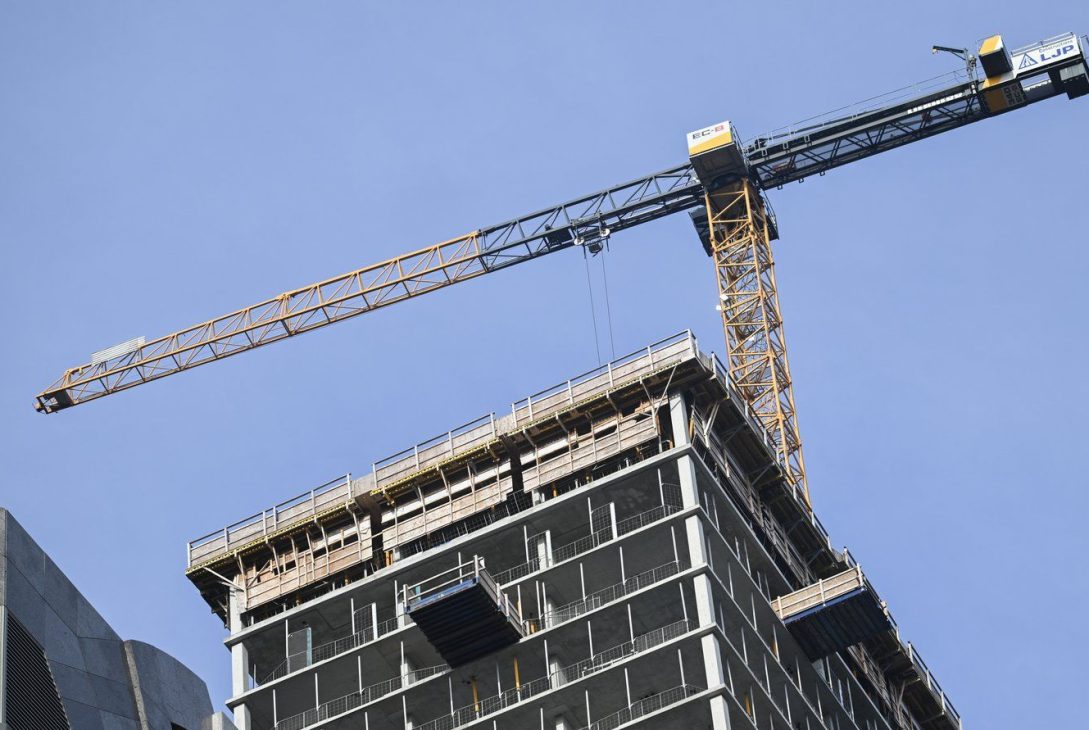
Ontario’s housing industry is staring down “severe consequences” as U.S. President Donald Trump’s broad tariffs on Canadian goods take hold, triggering a fierce response from Canadian leaders.
The Ontario Home Builders’ Association (OHBA) issued the stark alert Tuesday after Trump made good on his promise, hitting Canadian and Mexican imports with a 25% tariff as of midnight—though Canadian energy got a softer 10% jab. China also faces a 10% levy. Canada’s counterattack, led by Prime Minister Justin Trudeau, includes immediate 25% tariffs on $30 billion in U.S. goods, with another $125 billion slated for three weeks out.
Ontario Premier Doug Ford isn’t holding back either. On Monday, he signaled readiness to scrap a $100-million SpaceX Starlink deal for rural internet and ordered the Liquor Control Board of Ontario (LCBO) to yank American alcohol from shelves and its website, which briefly crashed Tuesday as the purge began. Ford’s also floated a “Buy Ontario” law and, on U.S. TV, warned of cutting energy to states like New York if tariffs bite. His team says any retaliation will roll out in stages.
The OHBA says the mere specter of tariffs has already rattled the sector for months, sowing “deep unease.” Now, with tariffs locked in and Canada hitting back, the group fears the housing market’s foundation is crumbling. “I talked to a builder who sold just two homes all last year—the market’s already shaky, and this could be a knockout blow,” said OHBA CEO Scott Andison in a statement. “Builders province-wide are clinging on, and this unjustified economic jab could crush them.”
Richard Lyall of the Residential Construction Council of Ontario doubled down on the warning. “Housing on both sides of the border is already reeling from a brutal mix of woes—this reckless tariff gamble will heap on more pain,” he said. “The U.S. National Association of Home Builders agrees: tariffs tank affordability everywhere. Building materials will cost more, and buyers will bear the brunt, slowing construction and worsening our affordability mess.”
The tariffs’ shockwaves won’t stop at housing. Ontario’s auto sector, woven tightly with the U.S. for decades, faces a potential meltdown. “In autos alone, we’d see a industrial upheaval like nothing I’ve witnessed—it could grind the industry to a halt in a week,” Unifor president Lana Payne told Global News last month, speaking for nearly 22,000 Canadian autoworkers.
The Canadian Vehicle Manufacturers Association, representing Ford, GM, and Stellantis, notes parts ping-pong across the U.S.-Canada-Mexico borders up to eight times before cars roll out. U.S. unions like the United Auto Workers slam this setup, arguing free trade has siphoned jobs to Canada and Mexico, a grievance Trump’s eager to fix. Ford’s snap election platform countered with a $5 billion “Protect Ontario Account” for key industries, plus $38 million for “action centres” to retrain workers and bolstered severance for those laid off by tariff fallout.