

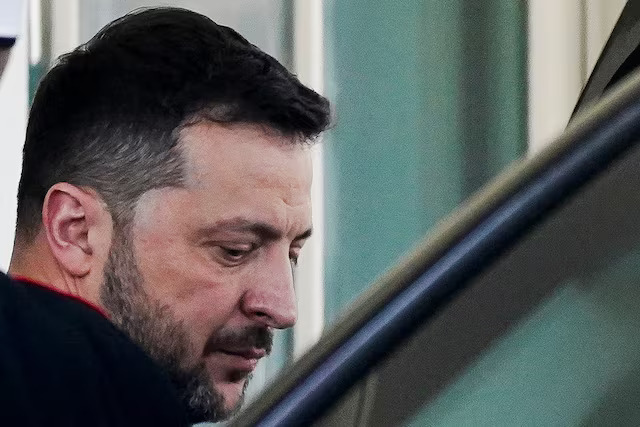
A fiery Oval Office clash between Ukrainian President Volodymyr Zelenskiy and U.S. President Donald Trump on Friday has ignited a worldwide chorus of reactions, exposing deep divides over the Russia-Ukraine war. The contentious meeting in Washington, D.C., abruptly ended hopes of a unified front, leaving Ukraine’s plea for continued support hanging in the balance.
Zelenskiy, departing the White House after a canceled press conference, took to X to express gratitude and resolve. “Thank you America, thank you for your support, this visit, @POTUS, Congress, and the American people,” he wrote. “Ukraine needs just and lasting peace, and we are working exactly for that.” In a follow-up post Saturday, he stressed the need for Ukraine’s voice to endure globally, saying, “It’s vital that people in Ukraine know they’re not alone, that their interests echo worldwide.”
A Wave of Solidarity
World leaders swiftly rallied behind Ukraine, condemning Russia’s aggression and urging resilience. Canadian Prime Minister Justin Trudeau posted on X, “Russia’s illegal invasion sparked this war. For three years, Ukrainians have fought bravely for democracy and freedom—a cause that matters to us all. Canada stands firm with Ukraine for a just peace.” German Chancellor Olaf Scholz echoed this, declaring, “No one yearns for peace more than Ukrainians. Germany and Europe are committed to that path alongside them.”
French President Emmanuel Macron, speaking to reporters in Portugal, framed the conflict starkly: “Russia is the aggressor, Ukraine the victim. Supporting Ukraine and sanctioning Russia was right then and remains right now—across the U.S., Europe, Canada, Japan, and beyond. They fight for dignity, independence, and Europe’s security.” Australian Prime Minister Anthony Albanese vowed unwavering support, calling it “a democratic nation’s stand against Putin’s imperial ambitions.”
European leaders emphasized collective resolve. Italian Prime Minister Giorgia Meloni warned, “Western division weakens us all, favoring those who’d see our principles crumble. We need an urgent summit with the U.S. and allies to confront this crisis head-on, starting with Ukraine.” British Prime Minister Keir Starmer’s spokesperson affirmed his “unwavering backing” for Ukraine’s sovereignty and security. Dutch Prime Minister Dick Schoof added, “The Netherlands stands by Ukraine now more than ever, pushing for peace against Russia’s aggression.”
Estonian Foreign Minister Margus Tsahkna pinpointed the root issue: “Putin’s war of aggression is the sole barrier to peace. If Russia stops, the war ends. If Ukraine stops, Ukraine vanishes. Europe must rise to the occasion.” Polish Prime Minister Donald Tusk offered a personal note on X: “Dear @ZelenskyyUa, dear Ukrainian friends, you are not alone.”
Not all reactions aligned. Hungarian Prime Minister Viktor Orban praised Trump on X, saying, “Strong men forge peace, weak men fuel war. Trump stood boldly for peace today—thank you, Mr. President!” Former Russian President Dmitry Medvedev, now deputy chairman of Russia’s Security Council, gloated on Telegram, calling the exchange “a brutal dressing down in the Oval Office.” Georgian Prime Minister Irakli Kobakhidze criticized the backlash against Trump, arguing it revealed a “war party” callously prolonging the conflict.
Norwegian Prime Minister Jonas Gahr Støre, in a statement to TV2, called the White House scenes “serious and disheartening.” He defended Zelenskiy’s leadership and rejected Trump’s claim that Ukraine risks World War III as “deeply unreasonable,” urging the U.S. to prioritize a lasting peace. Italian Deputy Prime Minister Matteo Salvini implored Trump on X, “Aim for PEACE, stop this war!”
European Commission President Ursula von der Leyen lauded Zelenskiy’s dignity on X, writing, “You honor Ukraine’s bravery. You are never alone. We’ll keep pushing for peace.” Swiss President Karin Keller-Sutter and Spanish Prime Minister Pedro Sánchez also reaffirmed their nations’ solidarity with Ukraine.
The fallout has left Ukraine’s reliance on U.S. support uncertain, prompting calls for Europe to step up. Czech President Petr Pavel tweeted, “Time for Europe to amplify its efforts,” while Greek Foreign Minister George Gerapetritis noted the need for stronger European defense alongside U.S. aid. Denmark’s Foreign Minister Lars Løkke Rasmussen lamented the public spat, warning, “When it’s aired like that, only the Kremlin wins.”
As the dust settles, the world watches whether this rupture will reshape the West’s stance—or leave Ukraine more exposed than ever.