

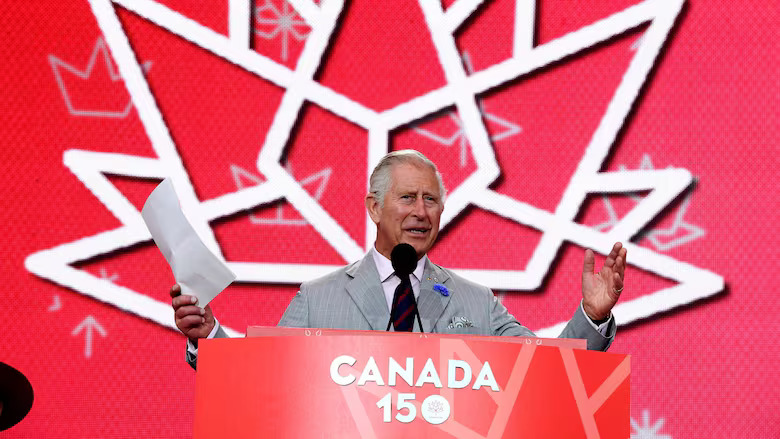
Amid U.S. President Donald Trump’s repeated assertions that Canada should become the “51st state,” questions have arisen about why King Charles has not weighed in on the debate. Buckingham Palace has clarified that any comment on the matter is not within the King’s purview, explaining that he acts on the advice of the Canadian government.
Trump’s remarks have sparked a mix of indignation and national pride north of the border, with many Canadians dismissing the idea as a non-starter and a challenge to their independent identity. Yet, while public and political voices have had their say, King Charles has remained silent.
A spokesperson for Buckingham Palace told that the issue falls squarely within the realm of Canadian government policy. “As Canada is a constitutional monarchy, the King’s role is strictly ceremonial. He acts on the advice of Canada’s elected officials, and any comment on Canada’s status is a matter for them,” the spokesperson said.
Royal commentator Justin Vovk of McMaster University noted that this arrangement is by design. “The overlap between the King’s responsibilities and Parliament is intentionally very limited. This has been the case for nearly 400 years to ensure that no monarch can interfere with elected governance,” Vovk explained.
Constitutional expert Craig Prescott added that even if circumstances escalated into a constitutional crisis, it would be the responsibility of the Canadian government to guide the sovereign’s actions. “If King Charles were to step in uninvited, it could not only blur constitutional lines but also risk complicating relations between Canada, the United Kingdom, and even the United States,” Prescott remarked.
While some in the media have speculated about potential remarks or visits that might signal a stronger royal stance, Buckingham Palace confirms that King Charles has been keeping a low profile on this issue. Recently, he did mark Flag Day with a message praising the Maple Leaf as a symbol of Canada’s proud, resilient identity—a gesture meant to reaffirm his connection to the country without overstepping his ceremonial bounds.
In a system where the monarch remains apolitical, King Charles’s silence on Trump’s comments underscores the careful balance maintained by constitutional protocols. As debates continue over Canada’s place on the international stage, the message is clear: commentary on matters of national governance is best left to Canada’s elected officials.