

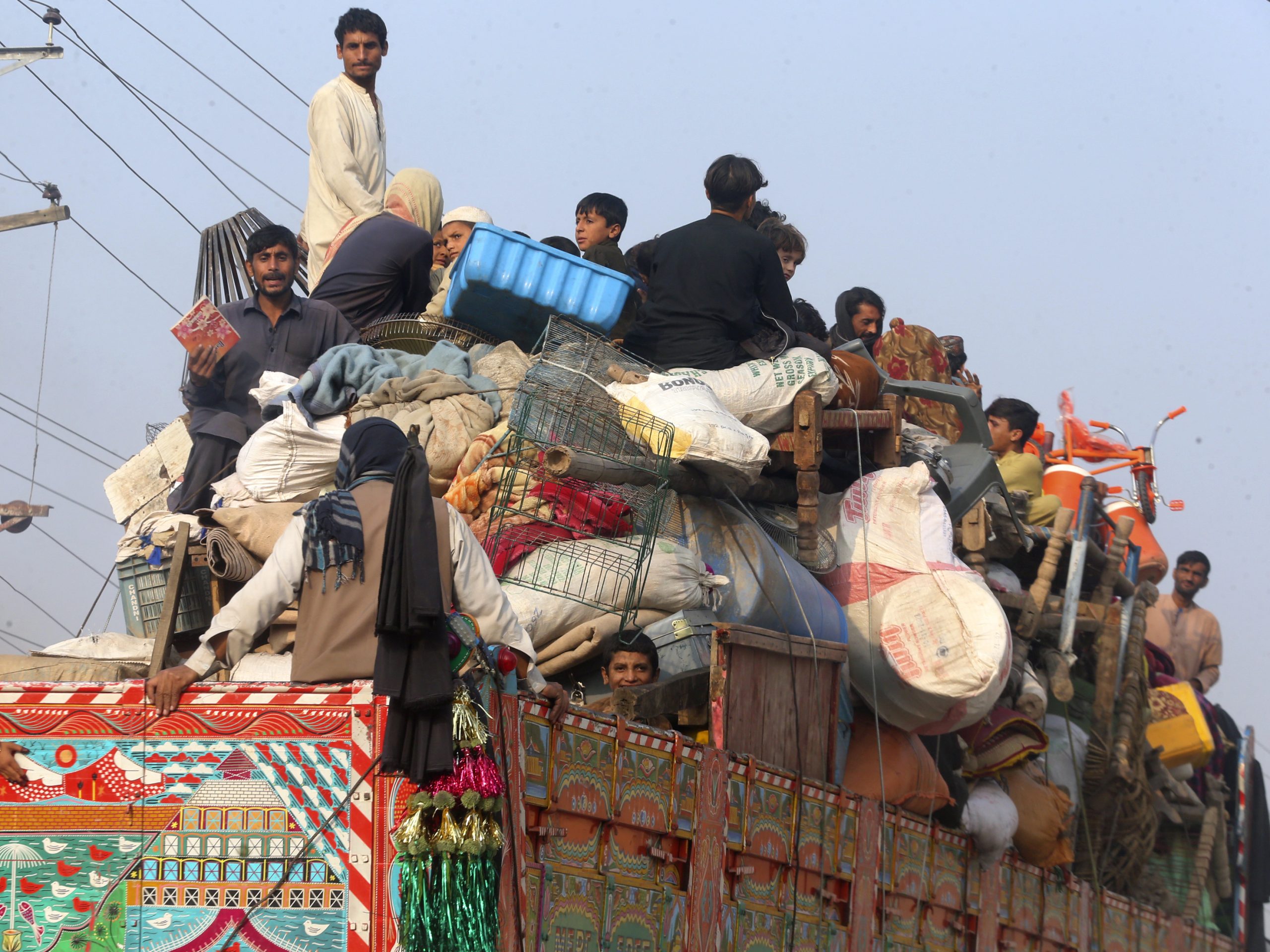
The Ministry of Foreign Affairs of Pakistan today announced that, if Afghan nationals residing in Pakistan and awaiting resettlement in the United States are not processed in a timely manner or have their cases rejected, they will be deemed illegal immigrants and may be repatriated to Afghanistan.
Speaking at a media briefing in Turkey, Foreign Minister Ishaq Dar stated,
“If a refugee has to be taken by another country after due process but that country refuses to do so, for us, that refugee will be an illegal immigrant in Pakistan, and he will be sent to his country of origin. Then he will be a refugee in his country of origin. We may be forced to send them back.”
This decisive measure comes as part of Pakistan’s commitment to uphold its national policies and ensure that refugee processing adheres to due process. The announcement follows recent developments in the United States—most notably, an executive order signed by President Donald Trump last month suspending the US refugee admissions programme unless it aligns with American interests.
Pakistan’s action is expected to further strain relations with Kabul, where longstanding tensions already run high. Observers note that the measure is likely to draw sharp criticism from the Taliban government, which reclaimed power in Afghanistan in 2021, and may provoke strong reactions from Afghan communities who have sought refuge in Pakistan for decades.
In a related development, the Pakistani government is also preparing to repatriate Zahra Mousavi, a prominent human rights activist and member of the Afghan women’s justice movement, who is currently in custody in Islamabad. This move underscores the government’s broader policy to address what it views as irregularities in refugee processing and to enforce its national immigration regulations.
Pakistan remains committed to engaging in diplomatic dialogue with all concerned parties to ensure that both humanitarian considerations and national security imperatives are respected. Further updates on this matter will be provided as the situation evolves.