

The Canadian government has formally urged the United States to exclude Canadian goods from proposed tariffs linked to forced labour concerns, arguing that Canada has already implemented strong measures to prevent products made with forced labour from entering its supply chains.
In a written submission to the Office of the United States Trade Representative (USTR), Ottawa stated that Canada remains fully committed to working alongside the United States to eliminate forced labour from global supply chains. The government emphasized that existing Canadian laws banning the import of goods produced through forced labour, together with new legislation introduced in Parliament, provide no justification for imposing additional tariffs on Canadian exports.
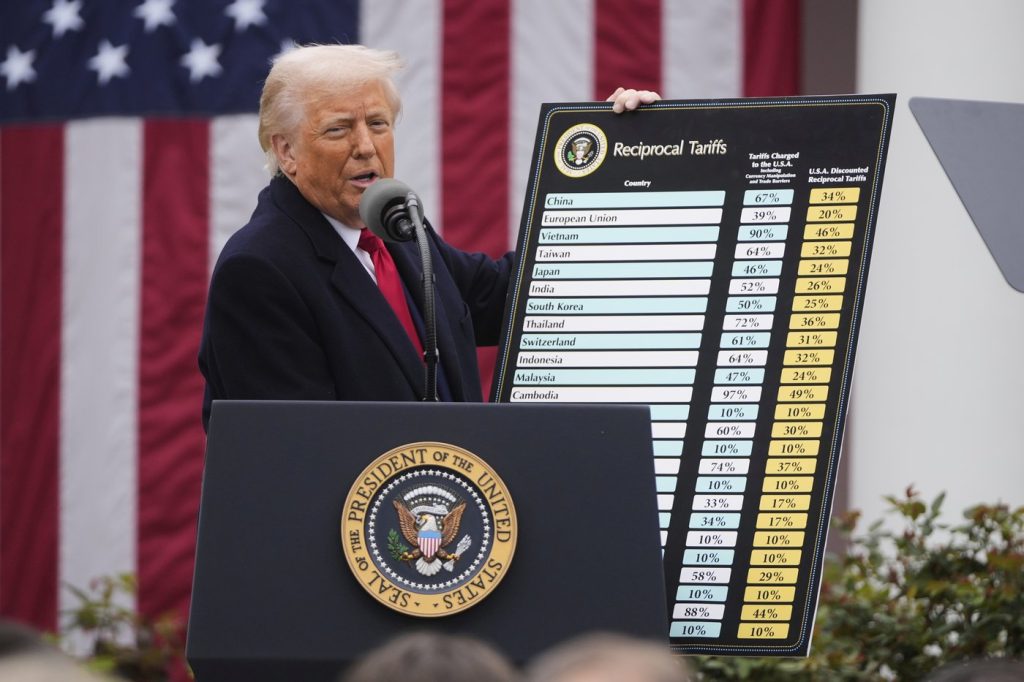
Canada’s submission was one of more than 1,500 responses received ahead of public hearings in Washington examining U.S. President Donald Trump’s proposal to use Section 301 of the U.S. Trade Act of 1974 to impose new tariffs on imports from dozens of countries.
Earlier this year, U.S. Trade Representative Jamieson Greer announced investigations into 60 countries, including Canada. The U.S. administration has proposed a 10 per cent tariff on countries such as Canada, Mexico and the United Kingdom, arguing they have not done enough to enforce bans on forced labour. An even higher tariff of 12.5 per cent has been proposed for countries with weaker or no restrictions on forced labour in supply chains.
Canada responded that it has already enacted legislation requiring companies to report annually on efforts to prevent forced labour within their supply chains. In addition, the federal government recently introduced Bill C-35, which would strengthen enforcement by creating a public registry identifying products and regions associated with forced labour. Importers would also be required to demonstrate that products originating from those regions were not manufactured using forced labour before they could enter Canada.
Canadian business organizations also urged Washington to pursue greater bilateral cooperation rather than imposing broad-based tariffs. The Canadian Chamber of Commerce argued that Canada should be assessed separately under the Section 301 investigation and requested that any decision on tariffs be postponed until Canada’s new enforcement measures have been fully implemented and evaluated.
Trade experts noted that the latest investigation follows a U.S. Supreme Court decision earlier this year that struck down President Trump’s preferred legal authority for imposing many of his previous tariffs, including duties related to Canada, Mexico and China. In response, the administration introduced temporary worldwide tariffs under another provision of U.S. trade law, although those measures are scheduled to expire unless extended by Congress.
Canada has so far avoided many of the broader U.S. tariffs because of protections available under the Canada-United States-Mexico Agreement (CUSMA). However, Canadian industries such as steel, aluminum, automobiles and cabinetry continue to face separate U.S. tariffs.
Numerous Canadian organizations stressed that CUSMA protections should remain intact regardless of the outcome of the current investigation. The Canadian Federation of Agriculture warned that additional tariffs would seriously disrupt the highly integrated agricultural trade between the two countries, increasing costs, slowing cross-border supply chains and reducing competitiveness for farmers and food processors on both sides of the border.
Similar concerns were echoed by the U.S.-based National Foreign Trade Council, which argued that broad tariffs are an ineffective way to combat forced labour because they penalize companies that have already invested heavily in ensuring ethical supply chains. The organization maintained that targeted enforcement and cooperation would be far more effective than blanket country-wide tariffs.
The outcome of the U.S. trade investigation is expected later this year and could have significant implications for North American trade and cross-border supply chains.