

Canada is falling behind in the global competition to attract top international students, according to the head of Universities Canada, as sharp declines in study permit approvals create growing financial and economic concerns across the country’s post-secondary sector.
Gabriel Miller, President and CEO of Universities Canada, said Canada’s ambitions to lead in areas such as energy, artificial intelligence and agri-business will depend heavily on access to world-class talent.
He warned that while Prime Minister Mark Carney promotes Canada as a future leader in innovation and economic growth, the country risks weakening its own talent pipeline by discouraging international students.
The federal government has introduced measures to reduce the number of temporary residents, citing pressures on housing, healthcare and public services. However, educational leaders say international students have become unintended casualties of that broader policy shift.
Recent data analyzed by recruitment firm ApplyBoard found that new post-secondary study permit approvals dropped dramatically in 2025. While more than 209,000 permits were approved in 2024, that number reportedly fell to just over 75,000 in 2025 — a decline of roughly 64 per cent. By comparison, approvals exceeded 435,000 in 2023.
The sudden reduction has created major financial strain for colleges and universities that had come to rely on international tuition revenue to offset years of limited public funding.
Miller said institutions across Canada are feeling the pressure in different ways, from layoffs to restructuring and program cuts.
In Ontario, Fleming College and St. Lawrence College recently announced a historic merger aimed at improving long-term sustainability.
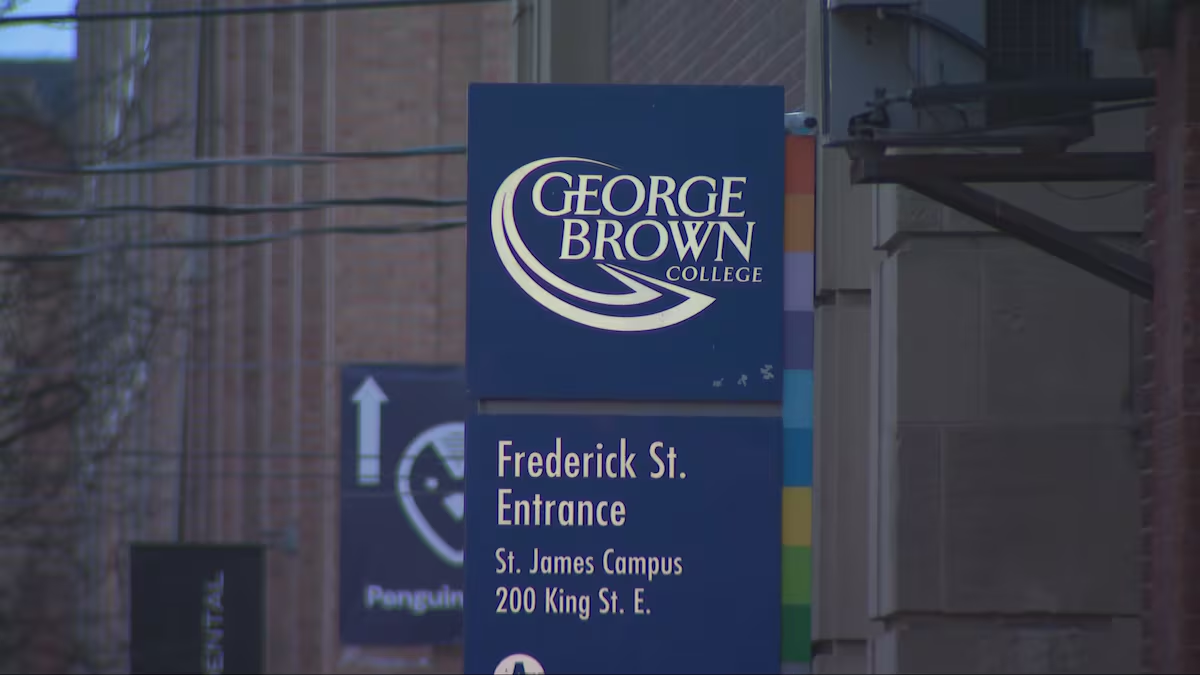
Meanwhile, George Brown Polytechnic in Toronto issued dozens of layoff notices, following earlier staff reductions. In Alberta, Lethbridge Polytechnic reported a 40 per cent drop in revenue from international student tuition.
Sector leaders also worry that rapid policy changes and uncertainty are damaging Canada’s reputation abroad, making top students think twice before choosing Canada over competing destinations such as the United States, the United Kingdom or Australia.
Miller is now calling for a coordinated national strategy involving both federal and provincial governments to rebuild confidence and attract highly skilled students needed for the economy of the future.
He said Canada cannot afford to treat talent attraction as an afterthought and must act quickly if it hopes to remain competitive in a rapidly changing global economy.