

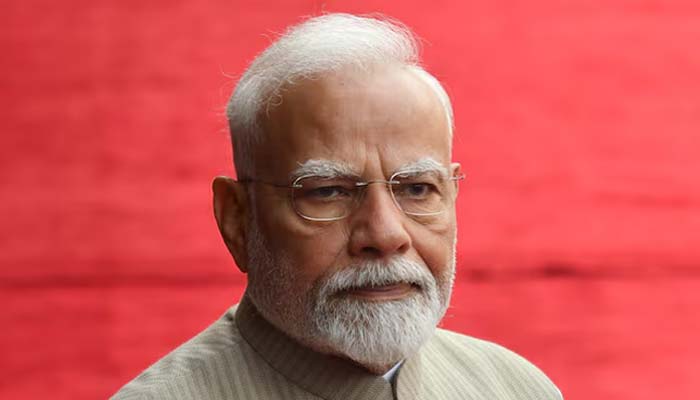
The unprecedented wave of youth-led protests across India has emerged as one of the most significant political challenges to Prime Minister Narendra Modi’s leadership since he assumed office in 2014. What began as public outrage over alleged examination irregularities, paper leaks and declining employment opportunities rapidly evolved into a nationwide movement, compelling the government to make a series of rare concessions that many political observers describe as a major setback for the ruling Bharatiya Janata Party (BJP).
The protests, spearheaded by the rapidly growing online movement known as the Cockroach Janta Party (CJP), spread from New Delhi to cities across the country, drawing hundreds of thousands of students and young job seekers. The movement reflected mounting frustration over repeated competitive examination paper leaks, delayed recruitment processes and concerns about transparency in public employment. As public pressure intensified, the government accepted the resignation of Education Minister Dharmendra Pradhan, announced legal reforms to curb examination fraud and assured that protesters detained during the demonstrations would not face prosecution.
Political analysts believe these decisions represent one of the very few occasions during Narendra Modi’s political career where sustained public pressure has forced his government to retreat. Since becoming Chief Minister of Gujarat in 2001 and later Prime Minister in 2014, Modi has cultivated an image of decisive leadership and political resilience. The government’s willingness to reverse its position has therefore been viewed as a significant departure from its established style of governance.
According to political observers, the developments have raised questions about the BJP’s political strategy at a crucial time, as the party prepares for important Assembly elections in Punjab, Gujarat and Uttar Pradesh. These elections are expected to test whether the recent public discontent remains confined to the issue of examination reforms or develops into broader political dissatisfaction among India’s youth and middle-class voters.
The protests gained further momentum after police attempted to disperse demonstrators marching toward Parliament in New Delhi. Images and videos of police action circulated widely across social media platforms, generating sympathy for the protesters and transforming the movement into a larger expression of frustration over unemployment, governance and accountability. Opposition parties and several civil society organizations subsequently extended their support, increasing political pressure on the central government.

Political commentator Ajay Bose observed that the movement demonstrated the growing confidence of young Indians to challenge authority through peaceful mass mobilisation. He argued that the protests have weakened the long-standing perception that the BJP and Prime Minister Modi are politically invincible, showing that sustained public mobilisation can compel policy changes even from a government known for its firm stance.
The protests have also highlighted a significant shift in India’s digital political landscape. For years, the BJP maintained one of the country’s strongest and most sophisticated social media operations. However, analysts suggest that newer digital platforms driven by short-form videos, memes and user-generated content are reshaping political communication, particularly among Generation Z voters.
The Cockroach Janta Party, launched only a few months ago, has rapidly built a massive online following, surpassing the BJP’s official Instagram audience. Protest videos, satirical reels and viral memes spread rapidly across Instagram and X (formerly Twitter), making it increasingly difficult for the government to control the public narrative.
In an apparent effort to reconnect with younger audiences, Prime Minister Modi released selfie-style videos promising stricter action against those responsible for examination paper leaks and reaffirming his government’s commitment to educational reforms. While the videos reflected an attempt to adopt the communication style popular among younger users, they also attracted widespread satire online, illustrating the challenges political leaders now face in an increasingly decentralized social media environment.
Experts note that social media has become one of the few spaces where public criticism can spread rapidly and organically across urban and rural India alike. With smartphones and internet access reaching even smaller towns, digital platforms have become a powerful vehicle for political mobilisation, public debate and grassroots activism.
Despite the recent setbacks, Prime Minister Modi remains India’s most influential political leader, and the BJP continues to possess a formidable electoral organization nationwide. The government has responded by promising comprehensive legal reforms, faster investigations into examination paper leaks and stricter punishment for those responsible for compromising recruitment examinations.
Whether the recent protests represent a temporary political setback or the beginning of a broader shift in India’s political landscape will become clearer in the coming months. Much will depend on the government’s ability to restore public confidence, address youth unemployment and educational concerns, and convince voters that meaningful reforms are being implemented. At the same time, the opposition faces the challenge of transforming public dissatisfaction into sustained electoral support by presenting a united and credible alternative.
The youth movement has nevertheless demonstrated the growing political influence of India’s younger generation. By compelling one of the world’s most powerful political leaders to respond to sustained public pressure, the protests have underscored that digital mobilisation, combined with peaceful street demonstrations, can significantly influence national political discourse. As India moves toward another cycle of important state elections, the government’s response to the aspirations and frustrations of millions of young Indians may prove decisive in shaping the country’s political future.