

Relations between Bangladesh and India have come under renewed strain after the Bangladeshi government formally protested the treatment of a senior adviser to Prime Minister Tarique Rahman who was reportedly detained and questioned for several hours upon arrival at New Delhi’s international airport.
The incident has sparked diplomatic concern in Dhaka, with Bangladeshi officials describing the episode as both unexpected and unfortunate. The government has summoned India’s Deputy High Commissioner in Dhaka to formally convey its dissatisfaction and seek clarification regarding the circumstances surrounding the questioning of the senior official.
According to Bangladeshi authorities, government strategy adviser Zahed Ur Rahman had travelled to India to attend an international conference when he was stopped by officials upon arrival in New Delhi. Reports indicate that he was questioned for several hours before eventually being allowed to proceed with his visit.
Bangladesh Foreign Minister Khalilur Rahman expressed concern over the incident and emphasized that such treatment of a senior government adviser was not consistent with the spirit of cooperation that both countries have sought to maintain in recent years.
As of now, India’s Ministry of External Affairs has not publicly commented on the matter or provided an explanation regarding the questioning.
The controversy emerges at a particularly sensitive moment in India-Bangladesh relations. Although bilateral ties showed signs of improvement following the election victory of Prime Minister Tarique Rahman earlier this year, several unresolved issues continue to complicate relations between the two neighbouring countries.
One of the most significant sources of tension remains the status of former Bangladeshi Prime Minister Sheikh Hasina, who has remained in India since the political upheaval and mass protests of 2024 that led to her removal from office. Bangladesh has repeatedly sought her extradition, while India has yet to act on those requests, creating a continuing point of disagreement between the two governments.
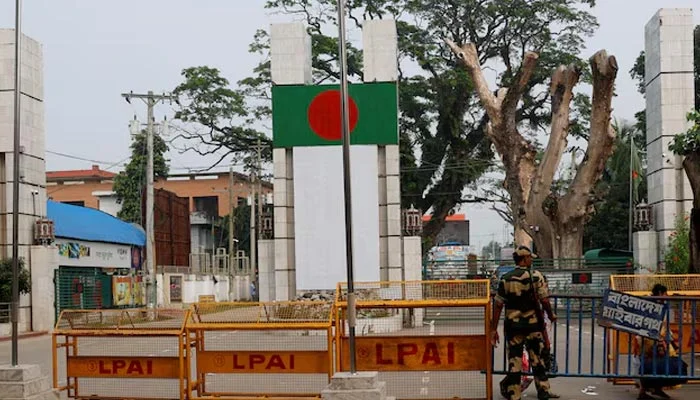
Border management has also become an increasingly contentious issue. Bangladesh has accused Indian authorities of attempting to return undocumented migrants across the border without following agreed-upon repatriation procedures. Bangladeshi officials claim that border security personnel have prevented several such attempts in recent months.
The issue was reportedly discussed during recent meetings between Bangladesh Border Guard officials and India’s Border Security Force in New Delhi. While both countries agreed to strengthen cooperation through increased intelligence sharing and coordinated patrols, disagreements over migration and border management remain unresolved.
Political analysts suggest that the airport incident may further complicate efforts to improve bilateral relations at a time when both governments are attempting to manage a range of sensitive political and security issues.
Despite occasional tensions, India and Bangladesh share extensive economic, cultural, and strategic ties. The two nations cooperate closely on trade, security, water-sharing discussions, and regional development initiatives. However, incidents involving political figures and border-related disputes often attract significant public attention and can quickly escalate into broader diplomatic concerns.
Observers will now be watching closely to see whether India provides an official explanation and whether diplomatic engagement between the two countries can prevent the issue from developing into a larger bilateral dispute.
For now, the questioning of a senior adviser to Bangladesh’s prime minister has added another layer of complexity to an already delicate relationship between two of South Asia’s most important neighbours.