

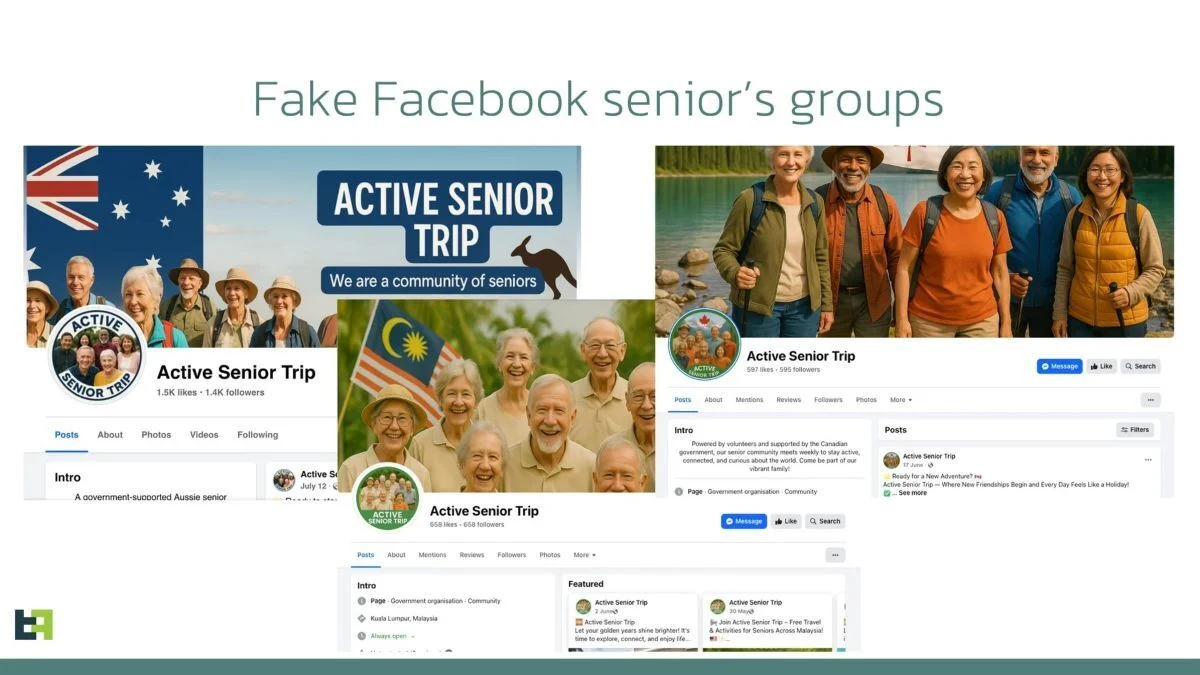
Canadian cybersecurity experts are warning seniors and their families to be extremely cautious when joining Facebook groups that advertise travel opportunities, social gatherings, dance events, and community activities. What appears to be a friendly invitation to connect with others could actually be a sophisticated cybercrime operation designed to steal personal information, banking credentials, and even take complete control of a victim’s phone.
Cybersecurity researchers have uncovered a growing international scam targeting older adults through fake Facebook groups that promote “active senior trips,” social activities, and community events. The scam has already been detected in several countries, including Canada, Australia, Singapore, Malaysia, South Africa, and the United Kingdom.
According to cybersecurity experts, the criminals behind these schemes use artificial intelligence to create realistic-looking Facebook groups filled with attractive photographs, event promotions, and fake member interactions. The pages appear legitimate and are specifically designed to appeal to older adults seeking companionship, travel opportunities, and community involvement.
The fraud begins when a person joins one of these groups or expresses interest in an advertised activity. Shortly afterward, the victim is contacted through Facebook Messenger, WhatsApp, or another messaging platform. The fraudsters then encourage the individual to download a mobile application supposedly needed to register for events, communicate with group members, or access trip information.
However, the application is actually malicious software known as Datzbro, a powerful form of malware that combines spyware and banking fraud capabilities. Once installed, experts warn that the victim’s smartphone can effectively become controlled by cybercriminals.
The malware is capable of remotely controlling the device, allowing criminals to operate the phone as if they were physically holding it. Hackers can open banking applications, transfer funds, access personal accounts, and perform transactions without the victim’s knowledge.
To conceal their actions, the malware can display blank or fake screens while criminals operate the device in the background. Victims may believe their phone is inactive while unauthorized transactions are taking place.
The software can also record keystrokes, capture passwords, steal banking credentials, access cryptocurrency wallets, and create fake login screens that trick users into entering sensitive information. Beyond financial theft, the malware can activate cameras and microphones, take screenshots, access photos, and monitor virtually every activity performed on the device.
Cybersecurity experts describe the threat as particularly alarming because the malware’s source code has reportedly become widely available online. This means criminal organizations around the world can create their own versions of the scam and launch new attacks with relative ease.
In addition to the fake Facebook group scheme, experts warn that older Canadians continue to be targeted by several other highly damaging frauds.
Investment scams remain among the most financially devastating. Victims are often persuaded to invest money through professional-looking websites that display fake profits and impressive returns. Many people continue investing additional funds until they attempt to withdraw their money, only to discover the entire operation was fraudulent.
The so-called “grandparent scam” has also evolved dramatically with advances in artificial intelligence. Criminals can now clone the voice of a grandchild using only a few seconds of audio collected from social media videos. Victims receive phone calls that sound exactly like a loved one claiming to be in trouble and urgently requesting money.
Romance scams continue to target seniors who may be experiencing loneliness or social isolation. Fraudsters spend weeks or months building emotional relationships online before eventually asking for financial assistance. Victims often suffer not only financial losses but also significant emotional trauma when the deception is uncovered.
Experts emphasize that protecting seniors begins with awareness and open communication. Families are encouraged to establish secret code words that can be used to verify emergency situations involving relatives. Any request for money should be independently confirmed through another phone call or communication channel before action is taken.
Canadians are also advised never to install applications from links sent through social media messages, emails, or text messages. Legitimate apps should only be downloaded from official sources such as the Apple App Store or Google Play Store.
Cybersecurity professionals stress that victims should never feel embarrassed about reporting suspicious activity or asking for advice. Modern fraud operations use advanced technology, artificial intelligence, psychological manipulation, and highly sophisticated tactics that can deceive even experienced internet users.
Experts say the greatest weapon scammers possess is silence and shame. Many victims never report incidents because they fear being judged. By talking openly about fraud and encouraging family discussions about online safety, Canadians can help protect themselves and their loved ones from becoming the next targets of these increasingly sophisticated scams.
As cybercriminals continue to exploit new technologies, vigilance, education, and communication remain the strongest defenses against fraud targeting seniors and other vulnerable members of society.