

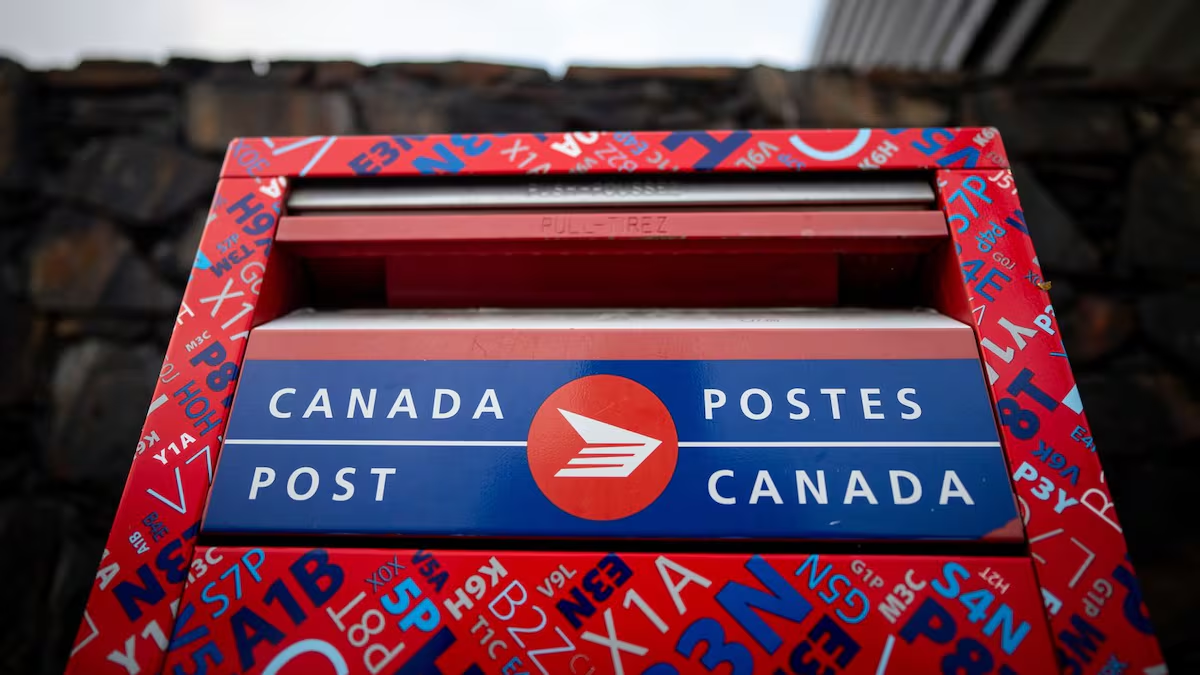
Canada Post has announced a major expansion of its community mailbox program that will see nearly 500,000 additional Canadian households lose door-to-door mail delivery beginning in 2027, as the Crown corporation continues efforts to reduce costs and address ongoing financial challenges.
The move affects approximately 485,000 residential addresses across seven provinces and is part of a broader national modernization strategy designed to improve efficiency and restore the financial sustainability of Canada Post.
The newly announced conversions come in addition to 136,000 addresses in 13 communities that were previously identified for transition to community mailboxes in late 2026 and early 2027.
According to Canada Post, the latest phase of the program will impact 37 communities located in Nova Scotia, New Brunswick, Quebec, Ontario, Manitoba, Alberta, and British Columbia.
Ontario will experience the largest number of conversions, with more than 158,000 households expected to transition from home delivery to centralized community mailboxes. Quebec follows with approximately 139,000 addresses, while British Columbia will see about 81,000 conversions and Alberta approximately 56,000. Nova Scotia, New Brunswick, and Manitoba will each have roughly 17,000 affected addresses.
Over the coming months, Canada Post says it will begin consultations with municipal governments and local officials to identify suitable locations for community mailbox installations and prepare residents for the transition.
The initiative forms part of a five-year national plan under which Canada Post intends to convert approximately four million addresses from door-to-door delivery to community mailbox service.
Officials say the transition process is complex and can take several months to complete, requiring site selection, municipal approvals, construction, and public consultation before new mailboxes become operational.
The announcement reflects the significant financial pressures facing Canada’s postal service. Canada Post reported a pre-tax loss of approximately $205 million during the first quarter of 2026, continuing a trend of declining mail volumes and increasing operating costs.
Traditional letter mail has steadily decreased as Canadians increasingly rely on electronic communication, while parcel delivery has become more competitive due to private-sector logistics providers.
Canada Post argues that community mailboxes provide a more cost-effective delivery model. Delivering mail to a centralized location requires fewer resources than servicing individual homes, allowing postal carriers to serve larger areas more efficiently.
The corporation says it will remain responsible for maintaining community mailbox sites, including snow removal, repairs, accessibility improvements, lock replacements, and general upkeep to ensure safe access for residents throughout the year.
The announcement comes amid broader discussions about the future of Canada’s postal system and follows recent labour tensions involving the Canadian Union of Postal Workers. Questions about service levels, modernization efforts, and financial sustainability continue to shape debate around the future role of Canada Post.
For affected residents, the change means daily mail delivery will shift from individual mailboxes at their homes to shared community mailbox locations. While some Canadians may view the change as an inconvenience, Canada Post maintains that the transition is necessary to preserve long-term postal services while adapting to changing consumer habits and economic realities.
Residents whose addresses are scheduled for conversion will receive further information from Canada Post as local planning progresses. The corporation has also indicated that a complete list of postal codes and communities affected by future conversions is available through its official channels.
As Canada Post continues its transformation, the shift toward community mailboxes represents one of the most significant changes to residential mail delivery in decades, affecting millions of Canadians and reshaping how postal services are delivered across the country.