

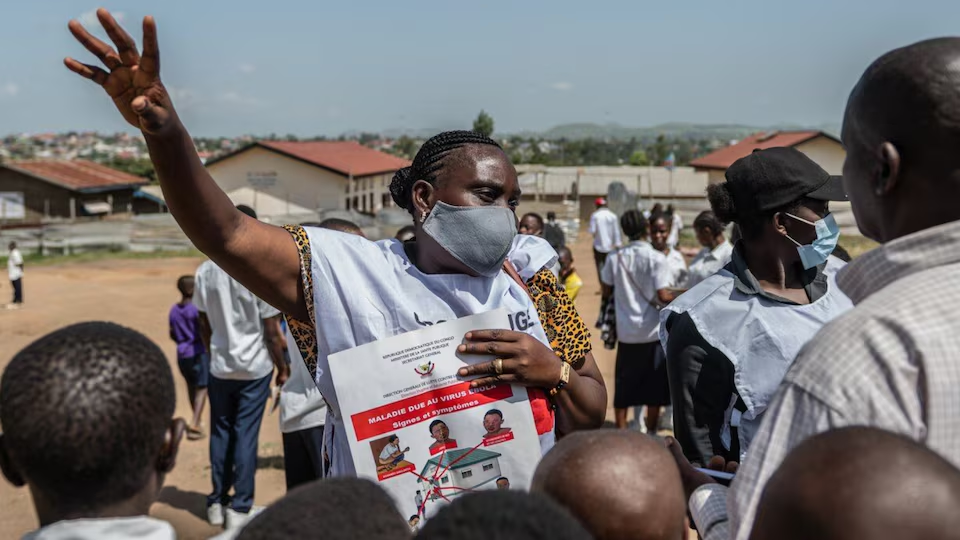
Health experts are warning that the rapidly expanding Ebola outbreak in Central Africa may take years to fully contain, prompting Canada to introduce strict precautionary measures aimed at preventing the deadly virus from reaching Canadian communities.
The warning comes as federal authorities require travellers who have recently been in the Democratic Republic of the Congo (DRC), Uganda, or South Sudan to undergo a mandatory 21-day quarantine upon arrival in Canada. The move follows a worsening outbreak that has already claimed at least 246 lives in the DRC and raised concerns among international health agencies.
According to infectious disease specialist Dr. Isaac Bogoch, the outbreak presents extraordinary challenges that make a quick resolution unlikely. Speaking with CTV News, Bogoch explained that ongoing security instability in eastern Congo continues to hinder public health efforts, making it difficult for healthcare workers to reach affected communities, conduct contact tracing, and implement containment measures.
Adding to the concern is the fact that the strain of Ebola responsible for the current outbreak has no approved vaccines or specific treatments available. Without the tools that helped control previous outbreaks, health officials face a much more complex battle against the virus.
The situation has become even more complicated as cases have emerged beyond the borders of the DRC, including in neighbouring Uganda. The international spread increases pressure on health authorities and requires coordinated action among multiple countries and global health organizations.
Dr. Bogoch cautioned that the outbreak could resemble a previous Ebola crisis in eastern Congo that required nearly two years of sustained effort before it was finally brought under control. He noted that the combination of security concerns, limited healthcare access, and cross-border transmission could prolong the current emergency.
While Canada’s new quarantine requirements may appear stringent, Bogoch emphasized that they are not travel bans. Canadians and foreign nationals can still travel between the affected countries and Canada. The purpose of the quarantine policy, he explained, is to further reduce the already low risk of an imported Ebola case entering the country.
Health experts stress that the likelihood of Ebola spreading widely in Canada remains extremely small due to strong infection-control systems, rapid diagnosis capabilities, and public health surveillance. Nevertheless, additional precautions help ensure that any imported case can be identified and isolated before transmission occurs.
Bogoch argued that the most effective way to protect Canadians is not solely through border measures but by supporting efforts to contain the virus at its source. Canada has already committed approximately $8 million to international response efforts, helping provide frontline medical workers, protective equipment, transportation logistics, and other critical resources needed in affected regions.
He described such assistance as both a humanitarian responsibility and a practical public health investment. By helping reduce the severity and duration of the outbreak overseas, countries like Canada can also reduce the risk of future cases being exported internationally.
As global attention focuses on Ebola, public health officials are also preparing for another potential challenge closer to home. With the FIFA World Cup set to begin in less than two weeks, experts are monitoring the risks associated with large international gatherings that bring together millions of people from around the world.
Surprisingly, Bogoch said Ebola is not the disease Canadian health officials are most worried about. Instead, measles remains the greater concern. Canada reported approximately 5,000 measles cases last year and has already recorded more than 1,000 cases this year, with most infections originating domestically rather than through international travel.
Mass gatherings such as the World Cup create ideal conditions for infectious diseases to spread because large numbers of people spend extended periods in close contact. While imported infections can occur, experts believe measles poses a far greater threat due to its extremely high transmissibility and ongoing circulation within Canada.
As the Ebola outbreak continues to unfold in Central Africa, health authorities stress that vigilance, international cooperation, and sustained support for affected countries will be critical to preventing a wider global health crisis. For Canada, the lesson remains clear: the strongest defence against emerging infectious diseases begins with helping contain them where they originate.