

The United States Central Command has firmly denied claims that Iran struck a U.S. Navy vessel, as tensions continue to rise in the strategically critical Strait of Hormuz amid ongoing conflict in the region.
Iranian state-linked media had reported that a U.S. vessel was hit near an ایرانی port and forced to retreat, accusing it of violating maritime security. However, U.S. officials rejected the claim outright, stating that no American naval ships had been attacked.
The denial comes as the administration of Donald Trump pushes forward with a new initiative aimed at reopening the vital shipping corridor, where hundreds of vessels have been stranded since the escalation of the Iran war. The plan, described as “Project Freedom,” could involve guided-missile destroyers, more than 100 aircraft and up to 15,000 service members to help escort commercial ships safely through the waterway.
The Strait of Hormuz remains one of the world’s most critical energy chokepoints, handling a significant share of global oil and gas shipments. Disruptions there have already sent shockwaves through global markets, contributing to rising fuel prices and broader economic uncertainty.
Iran has warned that any foreign military presence in the strait would be considered hostile, with senior officials threatening to target vessels that do not coordinate with Iranian authorities. Tehran has also labelled the U.S. initiative a violation of the fragile ceasefire that has held for several weeks.
Meanwhile, maritime security agencies have urged extreme caution for ships attempting to transit the area, citing risks including naval mines and potential missile or drone attacks. Industry groups remain uncertain about the feasibility and safety of the U.S.-led escort plan, raising concerns about whether shipping companies and insurers will be willing to resume operations under such volatile conditions.
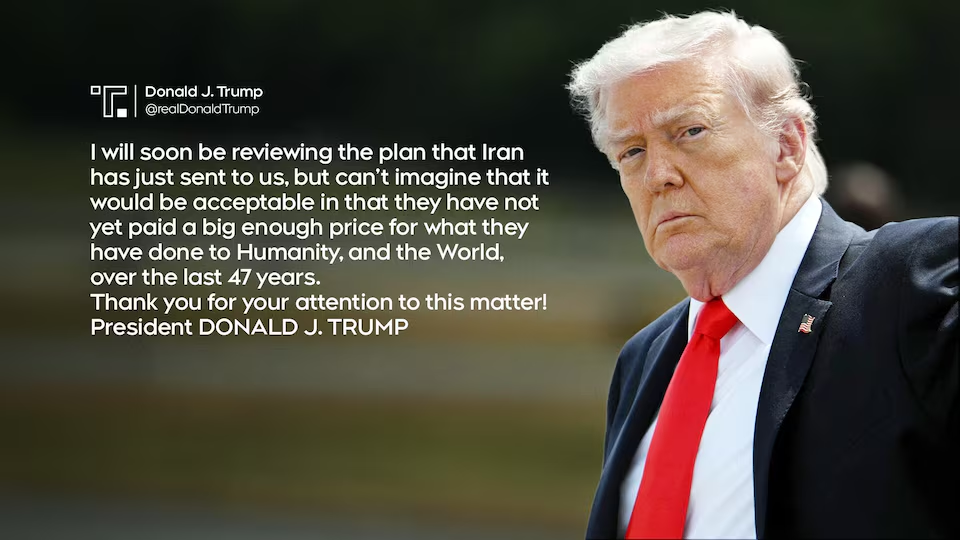
The situation underscores Iran’s strategic leverage over global energy flows, as its control over the strait continues to exert pressure on international markets despite its relative military disadvantage. At the same time, Washington hopes that economic pressure — including a naval blockade on Iranian ports — will force Tehran back to negotiations.
With diplomatic efforts ongoing but uncertain, the risk of renewed hostilities in the region remains high, leaving global trade and energy supplies in a precarious position.