

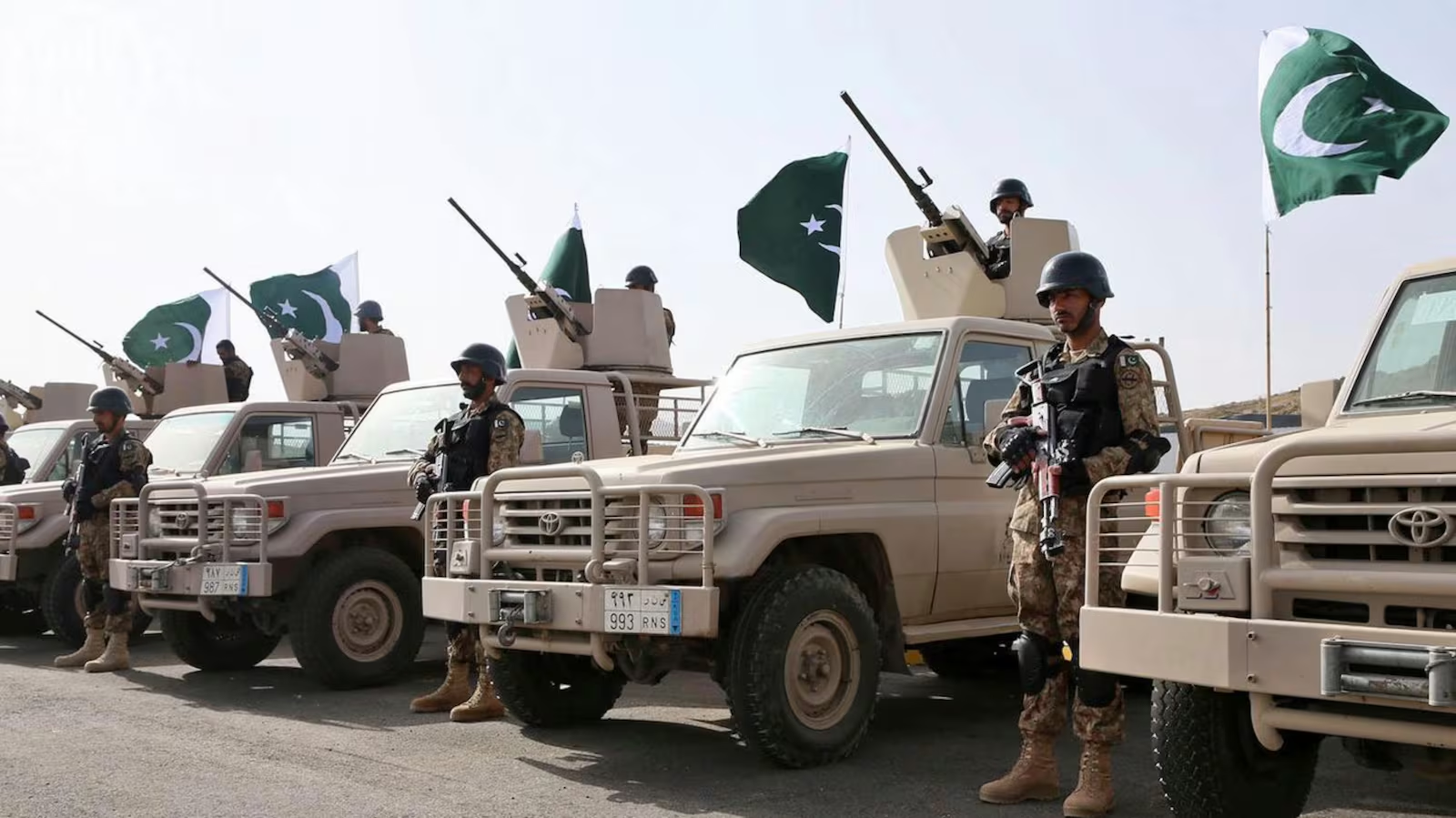
Pakistan and Saudi Arabia have signed a landmark strategic defence agreement that pledges mutual support in the event of aggression against either country, potentially reshaping South Asia’s security landscape and forcing India to recalibrate its foreign policy.
The pact, signed Wednesday by Saudi Crown Prince Mohammed bin Salman and Pakistan Prime Minister Shehbaz Sharif, declares that “any aggression against either country shall be considered an aggression against both,” according to the Saudi Press Agency.
Strengthening Regional Deterrence
The deal seeks to deepen defence cooperation and create a unified deterrent at a time of rising instability across the Gulf. It comes just days after an Israeli strike killed Hamas leaders in Qatar — a move that shook the security calculus of Gulf nations historically reliant on U.S. protection.
“This agreement is intended to develop aspects of defence cooperation between the two countries and strengthen joint deterrence against any aggression,” the statement read.
Fallout from May’s India-Pakistan Clash
The announcement follows May’s four-day conflict between India and Pakistan — their deadliest since 1999 — which left more than 70 dead in missile, drone, and artillery fire. Saudi Arabia was widely credited with playing a quiet but crucial mediating role to prevent further escalation.
India’s Prime Minister Narendra Modi was in Riyadh weeks before the conflict but cut short his trip following a terror attack on Indian tourists that ignited the clashes.
Impact on India and Modi’s Foreign Policy
The pact complicates Modi’s diplomatic balancing act with the Gulf. India relies on Saudi Arabia as its third-largest oil supplier, a vital partner in energy security and a growing trade relationship. The new Riyadh-Islamabad defence alignment could embolden Pakistan diplomatically, giving it additional leverage in disputes with India — particularly over Kashmir.
Analysts warn that India may need to intensify its own strategic engagement with Gulf states, diversify its energy sources, and deepen defence and intelligence cooperation with partners such as the United States, France, and Israel to counterbalance this emerging axis.
“This deal strengthens Pakistan’s deterrence posture and sends a message to New Delhi that Riyadh is willing to back Islamabad politically, and potentially militarily, in times of crisis,” said a South Asia security expert.
Strategic and Economic Ties
Despite the challenges, Saudi Arabia is unlikely to jeopardize its economic ties with India, whose rapidly expanding economy represents a key market. Experts say Riyadh may try to maintain a careful balancing act, seeking to keep both New Delhi and Islamabad within its orbit.
The agreement could accelerate a realignment in the region, pushing India to double down on multilateral partnerships like the I2U2 group (India-Israel-U.S.-UAE) and to court Saudi investment in sectors beyond energy. Modi’s foreign policy team is likely to focus on preventing the pact from translating into coordinated diplomatic pressure on India at international forums.