

WASHINGTON — President Donald Trump ignited a fresh round of global economic turbulence on Friday, threatening to impose a 50% tariff on all European Union imports and a 25% penalty on smartphones made outside the U.S., including popular devices like the iPhone.
In a flurry of social media posts, Trump accused the EU of dragging its feet in trade negotiations and announced sweeping tariffs set to begin June 1 — unless manufacturing moves to American soil.
“Our discussions with them are going nowhere!” Trump posted on Truth Social. “Therefore, I am recommending a straight 50% tariff on the European Union. There is no tariff if the product is built or manufactured in the United States.”
The president later doubled down during a press session in the Oval Office, stating plainly: “I’m not looking for a deal. We’ve set the deal. It’s at 50%.”
Smartphones in the Crosshairs
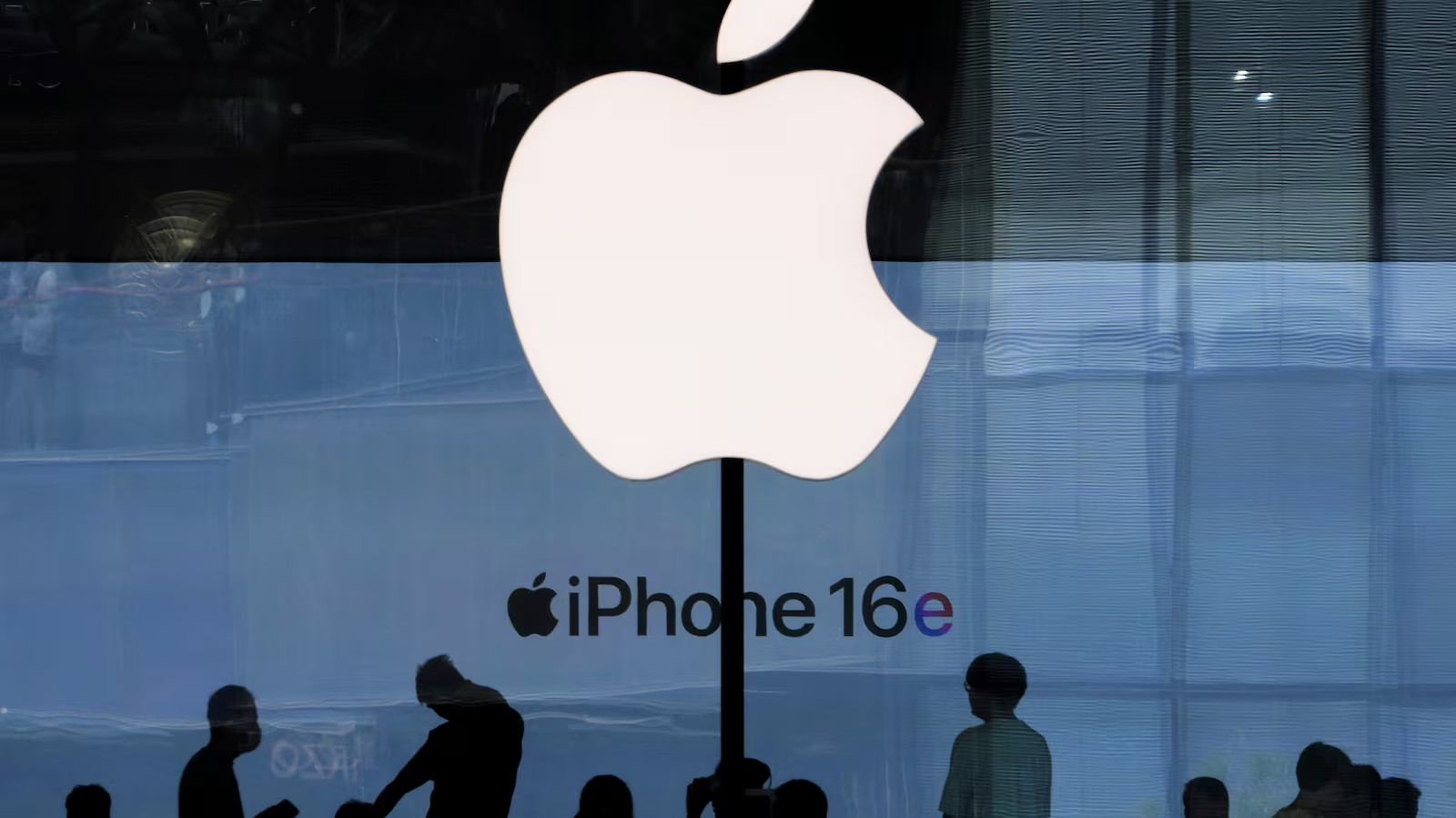
The surprise twist? Trump’s tariff threats go beyond Europe — targeting all smartphones assembled abroad. Apple, in particular, was singled out.
“I expect their iPhones to be made in the United States — not India or anyplace else,” Trump wrote, warning of a 25% tariff on all foreign-assembled smartphones.
He later clarified that the measure would apply across the board, saying: “It would be also Samsung and anybody that makes that product. Otherwise, it wouldn’t be fair.”
Trump’s latest move signals a reversal of earlier claims that foreign nations would bear the brunt of tariffs. In reality, importers — and ultimately, consumers — absorb the costs. Analysts warn that a $1,200 iPhone could spike to as high as $3,500 if production is forced stateside.
Markets React, Allies Push Back
The announcement sent markets into a modest tailspin, with the S&P 500 shedding nearly 0.67% as investors digested the potential disruption.
EU Trade Commissioner Maros Sefcovic responded diplomatically but firmly: “EU-U.S. trade is unmatched and must be guided by mutual respect, not threats. We stand ready to defend our interests.”
German officials expressed dismay, with Foreign Minister Johann Wadephul warning, “Such tariffs help no one and will hurt both economies.”
Meanwhile, U.S. Treasury Secretary Scott Bessent criticized the EU’s negotiation structure, blaming Brussels for stalling progress. “The underlying countries don’t even know what the EU is negotiating on their behalf,” he told Fox News.
Apple Caught in the Crossfire
Apple finds itself once again entangled in Trump’s tariff saga. Despite the company pledging a $500 billion U.S. investment in AI development, Trump criticized CEO Tim Cook for expanding production in India and Vietnam.
“I treated you very good,” Trump reportedly told Cook during a speech in Qatar. “But now I hear you’re building all over India. I don’t want you building in India.”
Apple had benefited from past exemptions but now faces the threat of losing them — along with new tariffs on chips and other imported tech components.
Experts remain skeptical that Apple can swiftly shift its manufacturing back to the U.S. due to deeply entrenched supply chains in China. “It’s extremely difficult for companies to plan their business under such unpredictability,” said Ben Wood, chief analyst at CCS Insight.
A Risky Trade Gambit
Economists and global leaders alike are questioning the strategy. Trump’s tactics may be aimed at forcing negotiations, but critics say they erode confidence in the U.S. as a reliable trading partner.
“This strategy of threats and retreat damages long-term trust,” said Mary Lovely of the Peterson Institute. “It suggests the U.S. operates on whim, not on rule of law.”
With tensions rising and global firms bracing for disruption, the question now is whether this latest tariff blitz is another high-stakes bluff — or a new chapter in an economic standoff that could reshape international trade.