

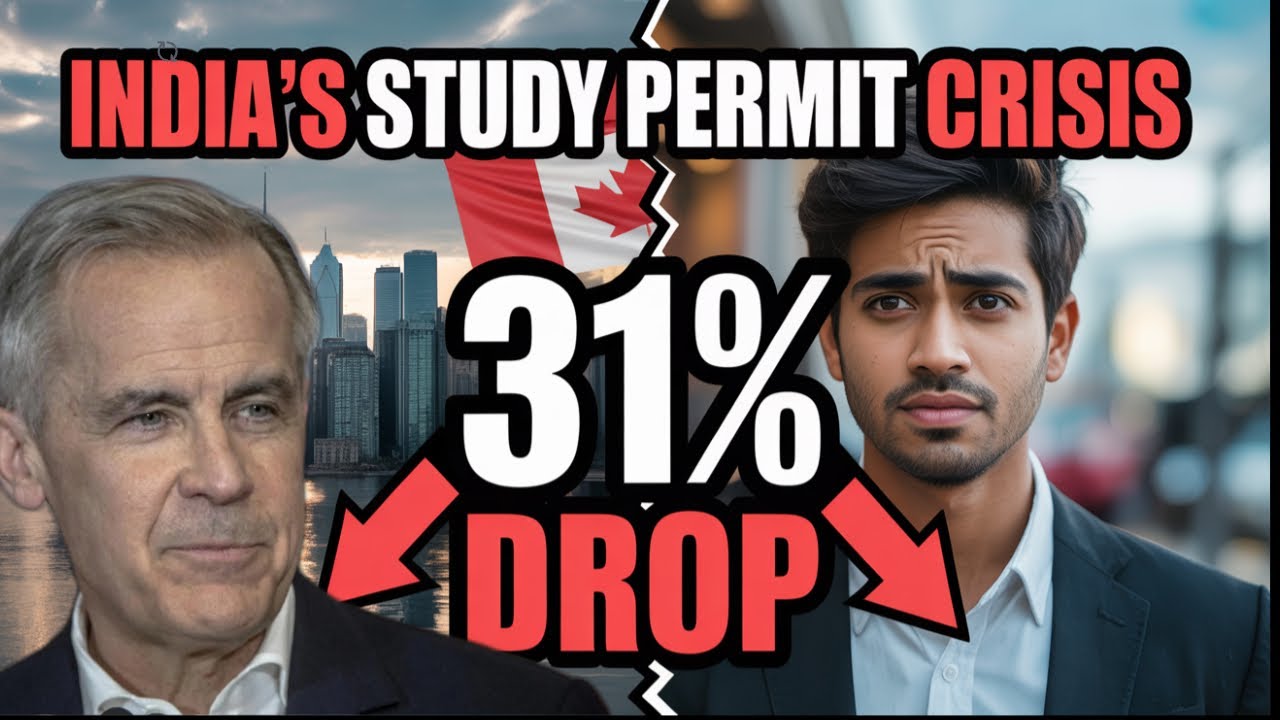
NEW DELHI — Canada has issued 31% fewer study permits to Indian nationals in early 2025 as a wave of new immigration rules, tougher financial criteria, and additional document verification procedures reshape the landscape for international students.
According to newly released data from Immigration, Refugees and Citizenship Canada (IRCC), only 30,640 Indian students were granted study permits between January and March — a steep drop from 44,295 during the same period in 2024.
This decline comes as part of a broader nationwide tightening of temporary immigration. In total, Canada issued 96,015 study permits in the first quarter of 2025, down from 121,070 a year earlier.
Indian Students Still Lead, But the Decline Is Sharp
Despite the decline, Indian students continue to be the largest group of international learners in Canada. In 2023, Indian nationals received a record 278,045 study permits, accounting for nearly 41% of all such permits issued. That number dropped to 188,465 in 2024, as the total number of study permits also fell to 516,275.
Carney’s Cap on Migration
The policy shift follows Prime Minister Mark Carney’s efforts to curb temporary migration — a key election promise. Sworn into office on April 28, 2025, Carney has committed to limiting temporary residents, including international students and foreign workers, to 5% of the total Canadian population by 2027.
As part of that effort, the IRCC has imposed a new annual cap of 437,000 study permits for 2025, down from 485,000 the previous year. This limit is expected to remain unchanged into 2026.
Higher Costs, Stricter Scrutiny
Applying to study in Canada is also getting significantly more expensive. Since January 1, 2024, international students must now prove financial access to at least CA$20,635 (₹12.7 lakh) — more than double the previous threshold of CA$10,000 (₹8 lakh).
Moreover, a new acceptance letter verification system, rolled out in December 2023, requires every Canadian Designated Learning Institution (DLI) to confirm the authenticity of each letter of admission before a study permit is approved.
Why the Crackdown?
Canadian officials argue the reforms are necessary to ease pressure on strained public systems, including housing, healthcare, and education infrastructure.
Still, critics warn that the new policies may discourage talent from countries like India — a market long seen as central to Canada’s international education economy.
India has yet to issue an official response, though relations between Ottawa and New Delhi remain sensitive following recent diplomatic tensions.