

Pausing many duties for 90 days
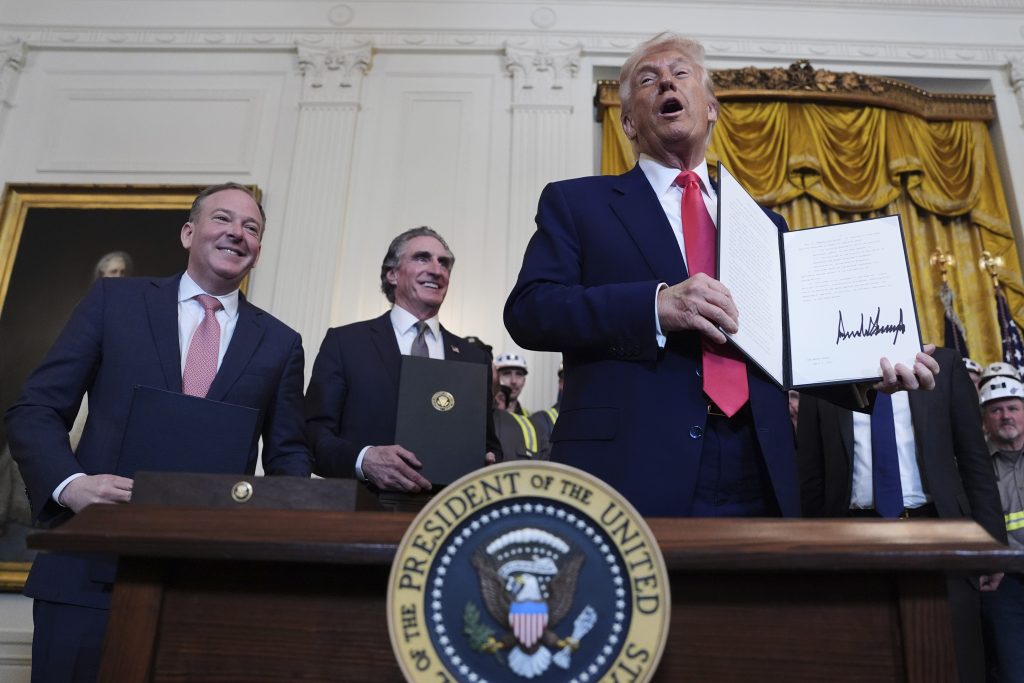
U.S. President Donald Trump reversed course on some of his most controversial trade tariffs Wednesday, pausing many duties for 90 days amid growing global economic instability. However, the tariffs targeting Canada will remain in full effect, according to White House officials.
In an executive order signed earlier today, Trump suspended heightened tariffs on dozens of nations under his “reciprocal tariff” framework. A 10 per cent baseline levy on imports will remain in place for most countries, but Canada continues to face elevated duties on key exports including automobiles, steel, aluminum, and select energy products.
Trump defended the initial wave of tariffs, stating, “People were jumping a little bit out of line,” but added that over 75 countries reached out to negotiate, prompting the partial rollback. Yet he made clear that Canada and China remain exceptions.
Trump has now increased tariffs on Chinese goods to 125 per cent, accusing Beijing of showing a “lack of respect.” The president maintained that Canada’s retaliatory actions could provoke further penalties, warning Ottawa not to escalate tensions further.
“If Canada decides to keep their retaliatory move, which I would suggest having watched how it went with China, would be a really, really bad choice,” said U.S. Commerce Secretary Howard Lutnick.
In response, Canada implemented matching tariffs on U.S.-made vehicles, but spared auto parts and Mexican components in an effort to maintain regional trade stability.
Prime Minister Mark Carney called the partial tariff pause “a welcome reprieve” but emphasized that serious discussions are ahead.
“As President Trump and I have agreed, the U.S. President and the Canadian Prime Minister will commence negotiations on a new economic and security relationship immediately following the Federal election,” Carney said on social media.
Meanwhile, the U.S. Senate confirmed former congressman Pete Hoekstra as America’s new Ambassador to Canada. Hoekstra pledged to prioritize cooperation with Canada, despite Trump’s increasingly aggressive rhetoric.
“Canada is our most valuable trading partner, our largest source of foreign investment, and our largest source of energy imports,” said Hoekstra in a statement.
On Capitol Hill, bipartisan criticism of Trump’s trade strategy is mounting. Democratic Congressman Richard Neal called the tariffs “not only dumb, but unconstitutional,” while Republican Claudia Tenney noted a 23 per cent drop in Canadian visitors to New York’s wine region, warning of further economic fallout.
Despite Trump’s insistence that “everything is going to work out,” trade experts and lawmakers warn that the U.S.–Canada relationship may face long-term strain if the tariffs persist.
As global markets react and negotiations loom, the future of CUSMA, cross-border commerce, and diplomatic cooperation between the two countries hangs in the balance.