

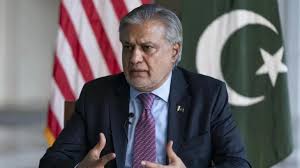
Pakistan’s Foreign Minister Ishaq Dar said his country never considered deploying nuclear weapons during the recent escalation with India, calling the ceasefire reached on Saturday a necessary step to prevent further devastation. In an exclusive interview with CNN, Dar defended Pakistan’s retaliatory strikes as “self-defense” after Indian air raids crossed the border on May 7.
The past week marked the worst fighting between India and Pakistan since 1971, with both sides launching air and ground attacks that killed dozens and pushed the two nuclear powers dangerously close to full-scale war. Dar referred to India’s military action as a “war” and “a wishful attempt to establish its hegemony” in Kashmir, but insisted that Pakistan’s response remained within the realm of conventional warfare.
“There are moments that demand serious decisions,” Dar told CNN. “But we were confident that our conventional capabilities—both in the air and on the ground—were sufficient. The nuclear option was never on the table.”
Pakistan claimed its forces used Chinese-made fighter jets to shoot down five Indian aircraft, including three Rafales—claims Indian officials have neither confirmed nor denied. A French intelligence source reportedly told CNN that at least one Rafale was lost.
The ceasefire, brokered by the United States, took hold Saturday after one final flurry of explosions across the Line of Control. Dar said long-term negotiations between India and Pakistan remain pending. “We still hope sense will prevail,” he said.
However, Indian Prime Minister Narendra Modi delivered a sharply different tone in his own remarks Monday. He declared that India’s military response, dubbed Operation Sindoor, had created “a new normal” in the fight against terrorism and warned that any future attacks would be met with “jaw-breaking” force. “India will not tolerate any nuclear blackmail,” Modi said.
India also accused Pakistan of calling for a ceasefire only after suffering significant losses. Pakistan’s Ministry of Foreign Affairs swiftly rejected Modi’s claims as “provocative, inflammatory, and a blatant lie.”
While Indian and Pakistani officials have offered competing narratives, Dar insisted there was no direct contact between the two governments. He said the message to de-escalate came via U.S. Secretary of State Marco Rubio, who, along with Vice President JD Vance, held urgent talks with both sides to prevent further escalation. Dar credited U.S. efforts and stressed Pakistan’s willingness to engage in long-term peace talks that ensure “dignity for both sides.”
At the heart of the latest crisis is the decades-long dispute over Kashmir, which both nations claim in full. Dar reiterated Pakistan’s call for Kashmiri self-determination, calling the region “the root cause of regional instability.” He also denied Pakistan’s involvement in the April 22 attack on Indian tourists in Pahalgam, which triggered India’s initial airstrikes. “We condemn terrorism in all forms and manifestations,” Dar said.
He added that U.S. President Donald Trump’s support has helped strengthen Pakistan’s counter-terrorism posture. “If they didn’t believe in our commitment, they would not have engaged with us as they have,” Dar noted, referencing Trump’s recent remarks about helping find a lasting solution to the Kashmir conflict.
But Dar warned the fragile truce could be endangered if the issue of Kashmir’s water resources isn’t resolved. Pakistan alleges India has diverted river flows vital to its agriculture and economy, particularly through the Baglihar dam on the Chenab River. “Failure to resolve the water issue,” Dar said, “will amount to an act of war.”
For now, the ceasefire holds—but the underlying tensions remain unresolved, with both governments vowing to protect their national interests and no clear path yet to a lasting peace.